


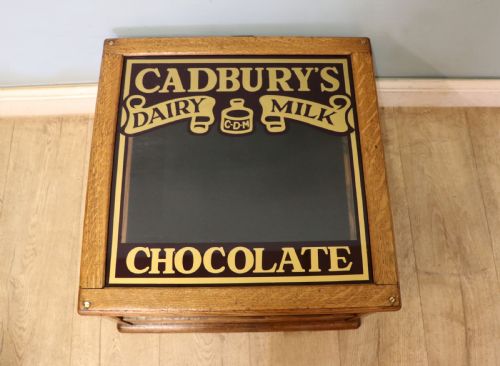


Glass Shop Display Box
A glass shop display box puts trade history on your tabletop, offering practical storage with genuine period character.
Glass Shop Display Box
A glass shop display box brings commercial utility into the home, designed originally to showcase goods from chocolate and tea to sewing cottons and pencils upon a counter. These pieces span from the mid-nineteenth century through the Edwardian era and into the 1920s and 1930s, reflecting the changing face of retail over several decades.
You are most likely to encounter countertop display cabinets and small tabletop cases framed in mahogany, oak, or hardwood. Commercial examples often bear the names of prominent makers or confectioners such as Rowntree's, Fry's, and Cadbury's, marking their specific origins in sweet shops and tea rooms.
The assortment includes specialised forms like apothecary countertop cabinets, jewellery cases lined with felt and fabric, and pencil dispensers. Their proportions are intended for eye-level customer engagement, making them suited for modern tabletop display.
Materials and construction
Makers utilised sturdy timber frames of mahogany and oak to house large panes of clear glass, ensuring structural stability alongside maximum visibility. Hardwood and brass fittings provided the necessary hardware for hinged doors and secure closures.
Interiors frequently incorporate tactile elements such as felt or fabric linings to protect delicate merchandise. Sign-writing on the glass or timber surfaces identifies the original commercial contents of the box.
Some boxes kept pencils moving and chocolate selling before finding a quiet retirement on a living room sideboard.
Assessing quality and condition
The distinction between standard commercial units and superior examples rests upon the integrity of the original timber framing and the clarity of the glass panes. Cabinets retaining original sign-writing, branded chocolate lettering, or specialised brass hardware hold greater historical interest.
Proportion and execution define the hierarchy of these pieces, distinguishing simpler utility boxes from purpose-built haberdashery cabinets and branded sweet shop display cases. Original linings and untouched surfaces elevate the integrity of a piece.
Ermen & Roby·Cadbury's
The Glass Shop Display Box Glossary
- Countertop display cabinet
- A glazed box designed to sit upon a shop counter for customer browsing. These units keep goods visible while protecting them from handling.
- Haberdashery cabinet
- A set of enclosed compartments or drawers utilised for small sewing items and notions. They feature glass elements to display stock efficiently.
- Sign-written
- Painted lettering on glass or wood identifying the original commercial contents or manufacturer. This technique was standard for advertising merchandise on shop counters.
- Apothecary cabinet
- A small storage unit originally intended for medicines and medical goods. They often incorporate tight compartments and glazed doors.
Glass Shop Display Box: Frequently Asked Questions
What were glass shop display boxes used for?
Merchants utilised these glazed boxes on shop counters to showcase small goods including chocolates, tea, sewing cottons, and pencils. The design kept merchandise visible to customers while protecting stock from dust and handling.
Over time, these commercial units transitioned from active retail environments into domestic spaces, prized for organising and displaying personal collections.
How do I date a glass shop display box?
Dating relies upon timber choices, construction techniques, and any surviving commercial sign-writing. Mahogany frames often point towards Victorian or Edwardian origins, while later 1920s and 1930s examples utilise different hardwoods and distinct hardware styles.
Specific brand names and typographic styles on the glass or wood provide further chronological clues, linking the piece to known eras of retail history.
How should I clean the glass and brass?
Maintain the glass panes with standard glass cleaner applied to a cloth rather than sprayed directly, preventing moisture from seeping into aged timber frames. Brass hardware benefits from gentle wiping to preserve its existing finish.
Take care around original sign-writing or painted lettering on the glass, as aggressive cleaning agents can damage historical surfaces.
Can I use these cabinets for modern displays?
These tabletop boxes suit the display of small personal items like jewellery, watches, or miniatures in a domestic setting. Their glazed panels and compact footprints fit neatly onto desks, sideboards, and shelves.
Interior fabric and felt linings provide a soft base for delicate objects, continuing their original function of presentation and protection.