
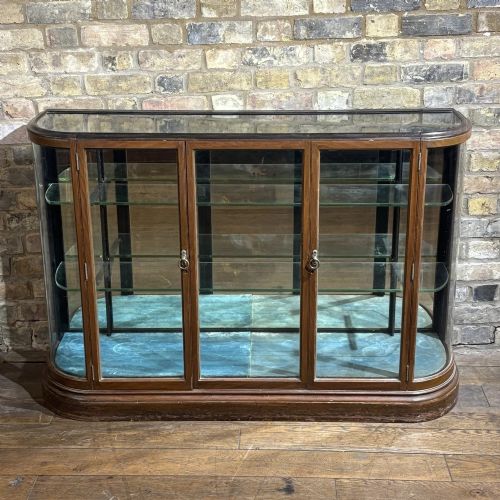


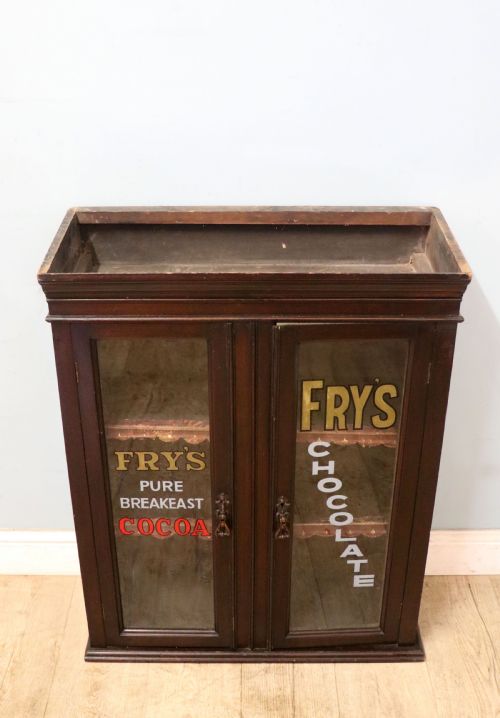


Dark Wood Shop Showcase
These dark wood shop showcase examples are commercial display cabinets built to hold goods safely while offering customers a clear view.
Dark Wood Shop Showcase
When you search for a dark wood shop showcase, you look at commercial display furniture originating from the late Victorian, Edwardian, and 1920s periods. These pieces include freestanding shop display cabinets, countertop vitrines, and serving counters used by merchants to present confectionery, tobacco, and writing instruments.
The versions you meet most frequently on this page are mahogany countertop cabinets and bow front display units bearing historic trade lettering. Many of these commercial fittings carry remnants of period advertising for chocolate manufacturers and gunsmiths on their glazed doors or timber frames.
Materials and construction
Makers built these commercial display pieces using solid mahogany and other hardwoods selected for their strength under daily retail use. Large glass panes fitted into the doors and sides ensured maximum visibility for the merchandise inside.
Brass hardware and hinges secured the opening sections, while interiors often featured fabric or felt linings to cushion delicate wares. Hand sign writing applied directly to the timber or glass completed the retail branding for firms such as Rowntree and Cadbury.
Listings feature commercial display furniture spanning the Victorian, Edwardian, and 1920s periods, constructed primarily from mahogany, glass, and brass.
Assessing quality
Quality in a dark wood shop showcase rests on the proportion of solid timber versus secondary woods and the integrity of the original glazing. Superior examples retain their heavy brass fittings and unbroken panes of curved or flat glass.
The presence of authentic period sign writing elevates a piece, particularly when the hand lettering connects directly to recognisable historic brands. Original fabric linings and sound structural restoration further distinguish better commercial cabinets.
F. Sage & Co. London·Rowntree’s·Fry’s·Cadbury's·Venus Pencil
The Dark Wood Shop Showcase Glossary
- Vitrine
- A glass-sided display cabinet designed to protect and exhibit objects. These cases often feature multiple glazed sides to let light reach the interior.
- Bow front
- A cabinet front that curves outwards in a convex arc. This shape added visual presence and extra interior space to countertop displays.
- Haberdashery cabinet
- A set of drawers or a tall case built with glass elements to display small clothing items and notions. They formed a staple of traditional drapery shops.
- Countertop display cabinet
- A compact showcase designed to sit directly upon a shop serving counter. Merchants used them to tempt buyers with smaller goods at the point of sale.
- Hand sign written
- Lettering applied manually to glass or wood using traditional signwriting paints. Commercial cabinets often featured this technique to display maker names and product brands.
Dark Wood Shop Showcase: Frequently Asked Questions
What were dark wood shop showcases used for?
Merchants used these cabinets in retail shops to display valuable goods while keeping them secure from handling. They sat on counters or stood on shop floors to highlight confectionery, pencils, and specialty items.
The large glass areas allowed customers to inspect products clearly from across the room. Interior shelves helped organise stock neatly within the timber frames.
How do I date a shop display cabinet?
Dating relies on examining the timber species, construction methods, and hardware style. Pieces from the late Victorian and Edwardian eras typically feature solid mahogany and traditional joinery.
Commercial advertising painted on the glass or frame also offers clues to the active trading years of brands like Cadbury or Rowntree. Comparing the brass hinges and glass thickness to known production periods helps narrow down the decade.
Can I use a shop showcase at home?
These cabinets adapt well to domestic interiors for displaying collections of ceramics, books, or small antiques. Their deep timber frames and glass panels protect delicate items from dust in living rooms or studies.
Countertop models fit easily onto sideboards, while larger floor cabinets provide substantial vertical storage. The historic branding adds character to modern or traditional home settings.
How do I care for antique mahogany cabinets?
Maintain the timber by dusting regularly with a soft, dry cloth and avoiding harsh chemical polishes. Keep the cabinet away from direct sunlight and radiators to prevent the wood from drying out or splitting.
Glass panels require gentle cleaning with standard glass cleaner applied to a cloth rather than sprayed directly onto the surface. Check the brass fittings periodically to ensure the doors hang correctly.