
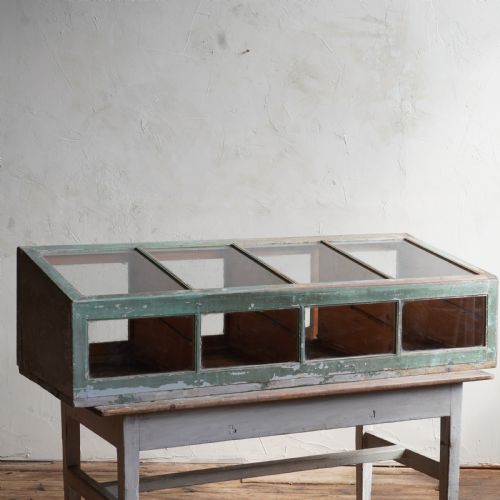


Antique Countertop Cabinet
An antique countertop cabinet puts small collections or retail goods on show, bringing glass and timber shop fittings straight into a modern interior.
Antique Countertop Cabinet
An antique countertop cabinet is a compact display piece built for tabletop use or retail service counters. These items serve to hold and present small goods, needlework supplies, chocolates, cigars, or jewellery behind glazed panels.
The versions most frequently met on this page belong to the Victorian, Edwardian, and interwar commercial periods. They take the form of display cases, shop cabinets, haberdashery drawers, and tabletop boxes.
Makers designed these fixtures for commercial interiors and apothecary shops. Today, collectors place them on sideboards or desks to display small curiosities and precious objects.
How they were made
Makers constructed these cabinets using sturdy timbers such as mahogany, oak, walnut, and assorted hardwoods. Frameworks often incorporate brass hinges, handles, and glazing bars to secure glass panels around the display area.
Interiors frequently feature mirrored backs or surfaces lined with felt or velvet to highlight the contents. Some examples display hand sign-written advertising on the glass for brands like Fry's, Rowntree's, Cadbury, and OXO.
Listings feature oak, mahogany, and walnut woods paired with glass, brass, and felt.
What varies in quality
Quality rests upon the integrity of the original glazing, timber framing, and hardware. Cabinets retain higher standing when they preserve original glass panes, functional drawers, and period brass fittings without excessive structural replacement.
The presence of authentic trade labelling or period sign-written advertising adds distinction to commercial pieces. Simpler utility boxes sit at the other end of the range, offering straightforward glazed storage without specialised retail branding.
John Stow Ltd of Bradford·Manoah Rhodes & Sons Ltd·F. Sage & Co. London
The Antique Countertop Cabinet Glossary
- Haberdashery cabinet
- A multi-drawer storage unit originally used in drapery shops for ribbons, threads, and small sewing accessories. These often feature glass fronts or pull-out trays.
- Bijouterie case
- A table-top display box with a glazed lid designed specifically for jewellery and small ornaments. They typically sit on low legs or directly on a counter.
- Ebonized
- Wood finished with a dark stain or lacquer to imitate expensive ebony. This technique appears frequently on nineteenth-century and interwar display pieces.
- Glazed
- Fitted with glass panels to protect contents from dust while maintaining visibility. Most countertop display cabinets rely on glazed sides and doors.
- Sign-written
- Lettering painted by hand directly onto glass or timber surfaces for commercial advertising. Surviving examples often name confectionery or tobacco brands.
Antique Countertop Cabinet: Frequently Asked Questions
What were antique countertop cabinets used for?
Merchants used these tabletop cabinets on shop counters to display small retail goods, tobacco, sewing threads, and confectionery. The glass protected merchandise from handling while keeping items visible to customers.
Over time, these commercial fixtures migrated into domestic interiors. Collectors now utilise them to organise and exhibit small personal treasures on tabletops.
How do I date an antique countertop cabinet?
Dating relies on timber choices, construction methods, and hardware styles found across the piece. Victorian examples often feature solid mahogany framing, whilst Edwardian and interwar pieces frequently utilise oak or ebonized wood.
Commercial lettering and brand names painted on the glass also provide strong clues. Reference to specific early twentieth-century firms helps narrow down the decade of production.
Are the advertising signs on these cabinets original?
Some cabinets retain their original hand sign-written commercial advertising for confectionery and household brands. Other pieces feature later sign-written decoration applied during subsequent restorations.
Examining the wear patterns on the paint and glass helps determine whether the lettering dates from the active retail period of the cabinet.
How should I clean a glass display cabinet?
Glass panels require gentle cleaning with standard glass cleaner applied to a soft cloth rather than directly sprayed onto the wood. This prevents moisture from damaging antique timber frames and painted surfaces.
Internal velvet or felt linings respond best to careful surface dusting with a soft brush. Harsh chemical cleaners must be avoided to protect aged brass fittings and original finishes.