



Grey Pewter Tankard
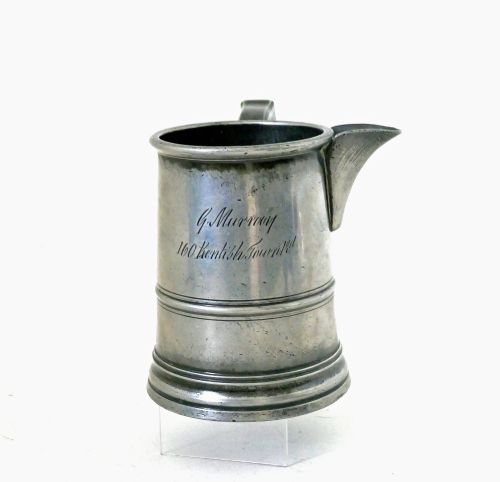
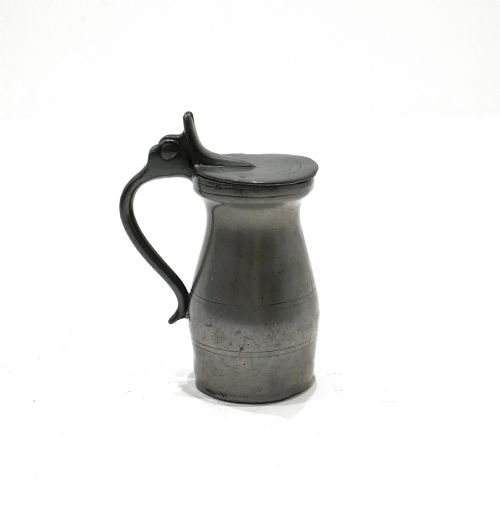
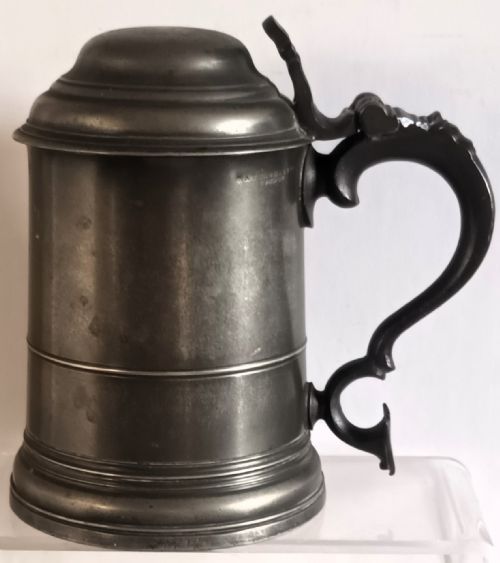
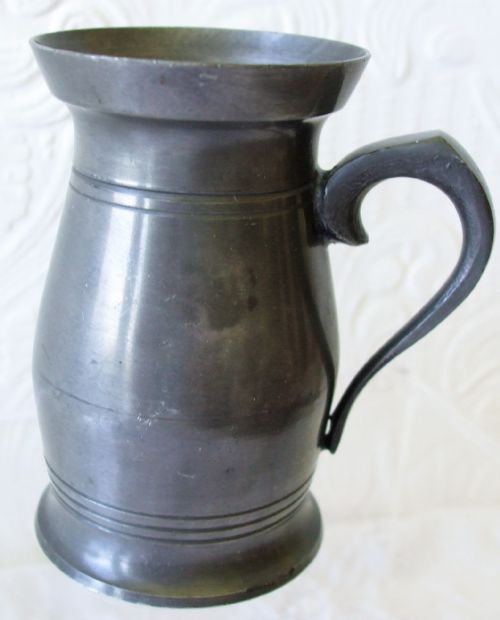
These grey pewter tankard examples span the eighteenth and nineteenth centuries, offering tactile drinking vessels and tavern measures for daily use.
Grey Pewter Tankard
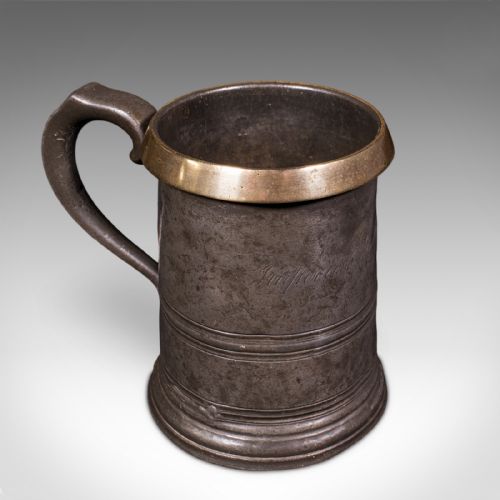
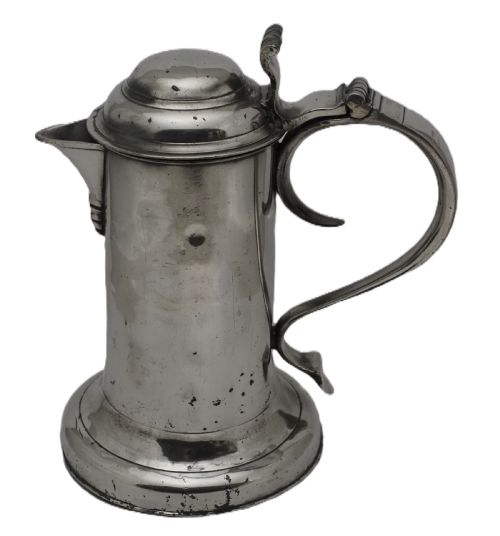
A grey pewter tankard encompasses a range of drinking vessels, measures, and flagons originating from English, Irish, Scottish, and continental makers. The selection centres on traditional forms from the eighteenth and nineteenth centuries, including flat-lidded tankards, spire flagons, and tavern measures.
Buyers will encounter capacity-stamped public house pieces alongside church flagons and decorative Arts and Crafts designs. These drinking vessels trace the evolution of tavern culture and domestic drinking habits across Victorian and Georgian eras.
Materials and construction
Pewter serves as the primary metal, varying in surface tone from dark grey patination to a bright polished finish. Items combine cast body components with soldered handles, lids, and thumbpieces, occasionally incorporating brass details.
Makers shaped these vessels using traditional casting and hammering techniques, applying touchmarks, ownership engravings, and capacity verification stamps directly into the metal.
Grey Pewter Tankard Retail Price Guide 2026
Typical asking prices for grey pewter tankard among the pieces listed under this phrase on Sellingantiques today, from the lower quarter to the upper quarter. They describe what is for sale here now, not the wider market.
Thirsty drinkers in Scottish taverns once hoisted a crested bird-named jug known simply as a tappit hen.
Factors of quality
Quality rests upon the crispness of maker touchmarks, the integrity of original soldering, and the survival of clear capacity stamps or touchmarks. Finer examples retain their original balance, uncompromised lid hinges, and an undisturbed grey metal surface.
Provenance and maker attribution elevate certain flagons and measures, particularly when linked to documented workshops in London, Dublin, or regional centres. Pieces featuring detailed chased decoration or bespoke civic engravings show a higher grade of craftsmanship.
Watts and Harton·John Heaney·Frederic Sanders·Thomas Phillips I·Robert Iles·Burgum and Catcott·John De St Croix
The Grey Pewter Tankard Glossary
- Touchmark
- The maker's personal stamp struck into the pewter to signify standard quality and workshop origin. These marks are vital for dating and attributing pieces.
- Flagon
- A large drinking vessel or pitcher, often with a lid, used in domestic, tavern, or ecclesiastical settings. Spire versions feature tapering, pointed lids.
- Gill measure
- A standardised public house liquid measure holding a fraction of a pint. These diminutive vessels bear verification stamps denoting legal capacity.
- Tappit hen
- A traditional Scottish pewter measure and jug style fitted with a lid and a crested thumbpiece. They typically held precise imperial or Scots capacity.
- Westerwald
- A German ceramic style produced in salt-glazed stoneware, appearing alongside metalware. These imported jugs feature cobalt blue incised decoration.
Grey Pewter Tankard: Frequently Asked Questions
How do I clean a grey pewter tankard?
Wash the vessel gently using warm water and mild washing-up liquid with a soft cloth. Dry thoroughly to prevent water spots.
Avoid abrasive metal polishes and harsh scrubbing pads, which strip the historic grey surface patination. Let the metal age naturally without aggressive intervention.
Can I drink from an antique tankard?
Many historic pewter vessels contain small quantities of lead, depending on the alloy mixture and production period. It is generally advisable to treat them as decorative objects rather than functional drinking vessels.
Cold beverages pose less risk than hot or acidic drinks, but testing for lead content is recommended before any culinary use.
What do the touchmarks mean?
Touchmarks act as a workshop signature, pressed into the soft metal by the maker to guarantee the alloy standard. They often include initials, symbols, or town names.
Guild regulations required master pewterers to register these stamps, allowing modern collectors to trace origins and approximate manufacturing dates.
Why are some tankards stamped VR?
Stamps such as VR indicate Victoria Regina, marking official government inspection and capacity verification for public house use. These crowned cyphers confirm the vessel held accurate measure for trade.
Inspectors applied these marks across successive reigns to ensure customers received honest pints and gills in taverns.