

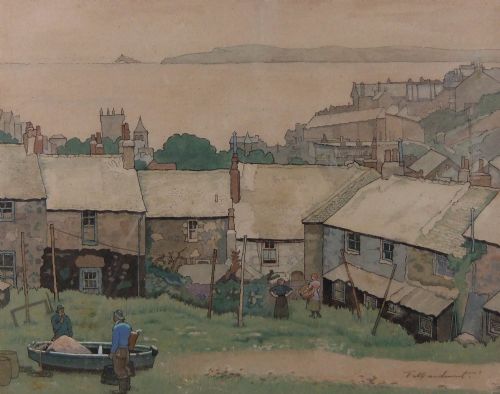


Grey Maritime Picture
Grey maritime picture works depict vessels and coastal scenes in muted tones, offering a calm window into historic seafaring life.
Grey Maritime Picture
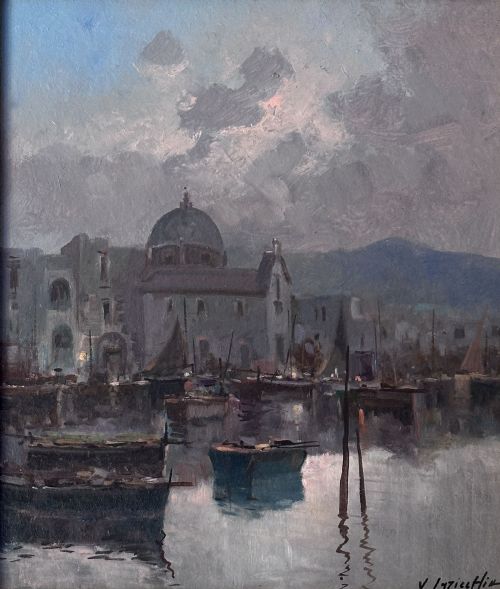
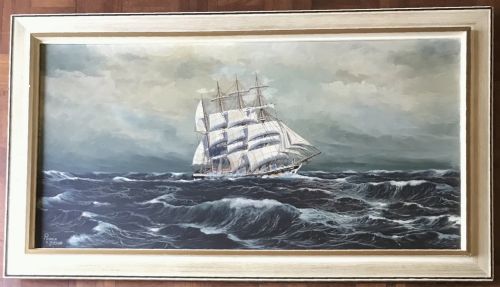
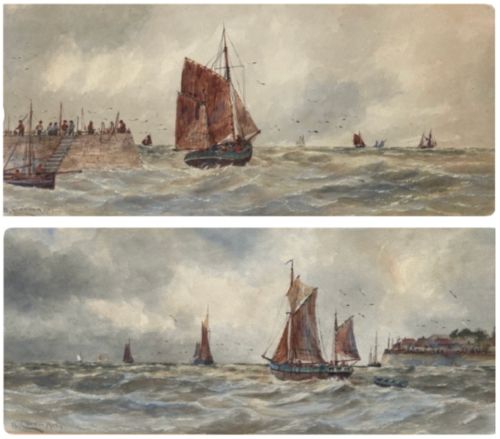
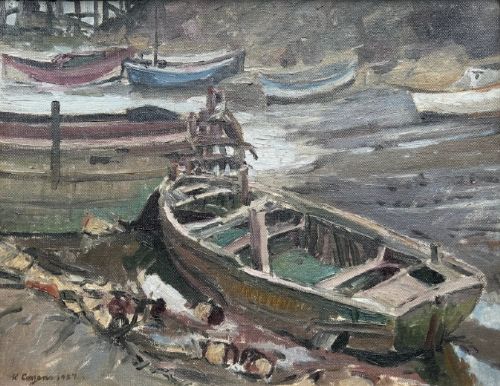
A grey maritime picture captures coastal scenes, harbours, and vessels across the nineteenth and twentieth centuries. These works range from early Victorian watercolours to mid-century British oils and post-impressionist pastels.
Subjects include fishing boats, ironclad battleships, barges on rivers, and busy ports from Staithes to Whitby. Painters render these subjects with an emphasis on atmospheric marine conditions and tonal restraint.
Pieces span decades from the eighteen-hundreds to nineteen-sixty, encompassing framed art, wall art, and gouache tributes by named artists and regional painters alike.
Materials and technique
Artists apply oil paint on canvas and board, watercolour pigment on paper, and gouache to render marine atmosphere. Works also utilise pastel and lithography to capture coastal light and shadow.
Pigments combine with paper, canvas, wood, and glass framing to preserve these watercolours and oils. Skill in handling watercolour pigment or oil paint determines how effectively artists depict choppy waters and distant hulls.
Grey Maritime Picture Retail Price Guide 2026
Typical asking prices for grey maritime picture among the pieces listed under this phrase on Sellingantiques today, from the lower quarter to the upper quarter. They describe what is for sale here now, not the wider market.
One French naval gouache records a sailor's sentimental tribute to his ironclad battleship and shipmates.
Distinctions in quality
Quality rests on the precision of the brushwork and the artist's command of light and atmosphere across the sea or harbour. Stronger examples convey movement in vessels and water with economy and confidence.
The condition of the paper, canvas, and original framing influences the overall integrity of the piece. Works with clear provenance and strong compositional balance stand apart from routine topographical sketches.
Kenneth Cozens·William Cannon·Thomas Maidment·Vincenzo D’Esposito·James Watson·John Mitchell·Don Wilson·Thomas Bush Hardy·William Kay Blacklock·Rowland Henry Hill·Owen Bowen·Frederick William Booty·Carleton Grant·Frank Myers Boggs·Robert Leslie Howey·Fred Dade·Edward Wesson·Henry Bright·R I Barrow
The Grey Maritime Picture Glossary
- Watercolour
- Painting method where finely ground pigments are suspended in a water-based solution. This technique allows for translucent washes that suit coastal skies and water.
- Gouache
- An opaque water-based paint that includes white pigment to create solid areas of colour. It appears frequently alongside watercolour in maritime scenes.
- Ironclad
- A steam-propelled warship protected by iron or steel armour plates. These vessels date from the nineteenth century and feature in naval paintings.
- Lithography
- A planographic printing process used to produce multiple impressions of ship illustrations. It relies on the repulsion of oil and water on a flat surface.
- Pastel
- A dry medium of powdered pigment and a binder formed into sticks. Artists apply it to paper to achieve soft textures, visible in French post-impressionist harbour views.
Grey Maritime Picture: Frequently Asked Questions
What periods do these pictures cover?
The works span from the early nineteenth century through the Victorian and Edwardian eras into the mid-twentieth century.
Paintings capture changing artistic styles from British Impressionism to Post-War British movements.
How were these maritime artworks framed?
Many pieces retain period wooden frames and protective glass to safeguard the paper or canvas underneath.
Original framing often complements the age and style of the watercolour or oil painting.
Where do the coastal scenes originate?
Depictions include British coastal locations such as Whitby, Staithes, Scarborough, and the Scottish borders, alongside French and Mediterranean ports.
Artists recorded specific vessels, from fishing cobles and barges to Royal Navy battleships.
How do I care for antique watercolours?
Keep watercolours away from direct sunlight to prevent fading of the pigment and discolouration of the paper support.
Ensure framing remains sealed to protect the painting from humidity and atmospheric dust.