



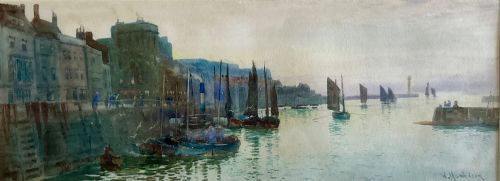
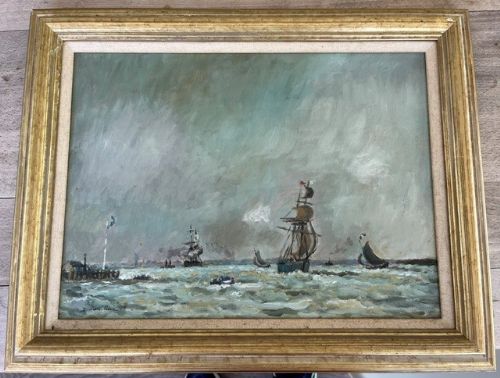
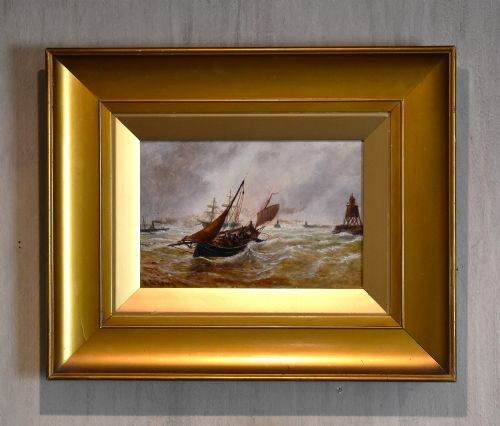
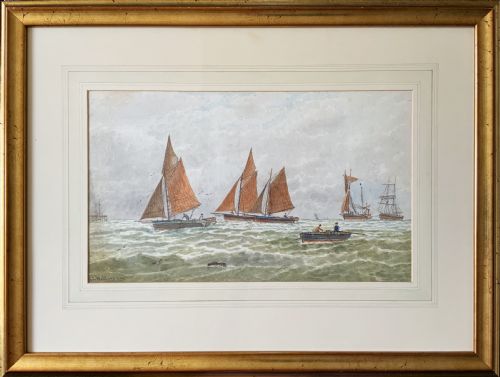
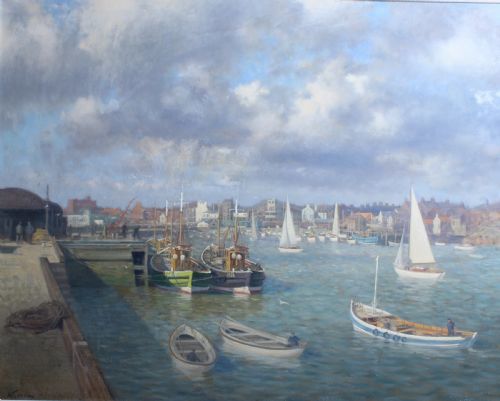
Original Boat Painting
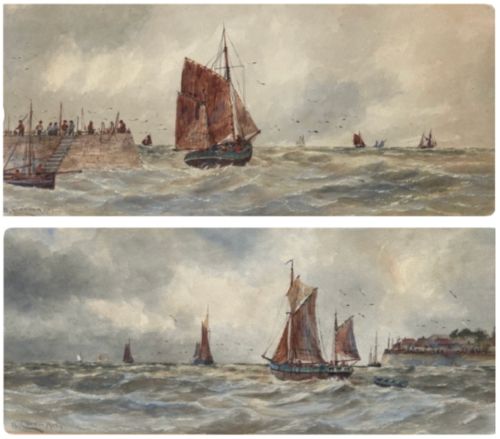
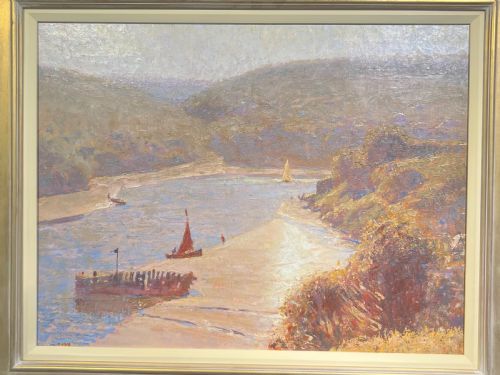
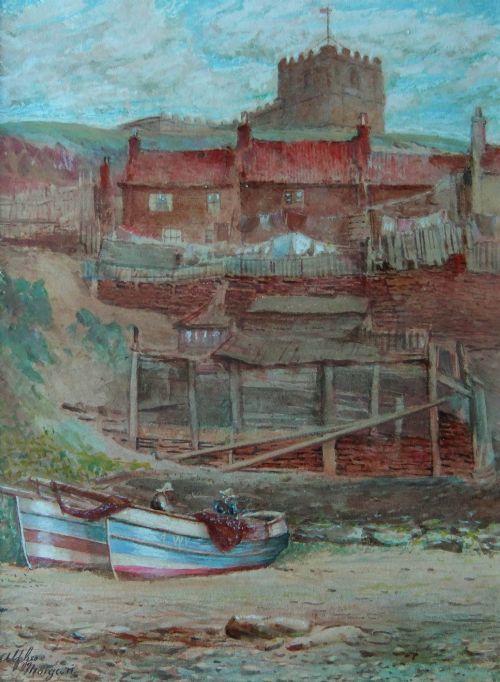
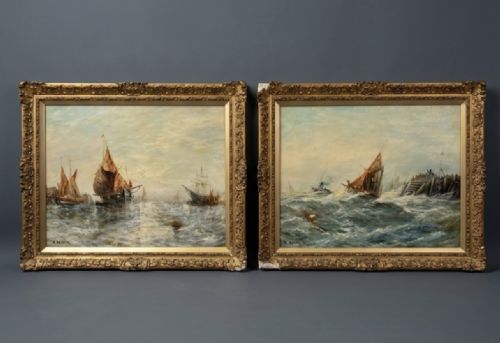
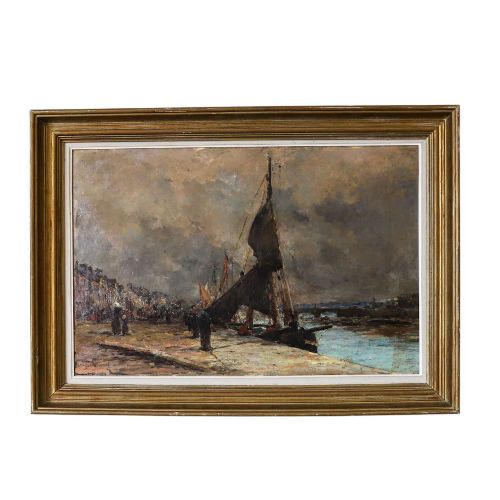
An original boat painting captures maritime heritage on canvas, paper, or board through historical scenes of coastal life and working vessels.
Original Boat Painting
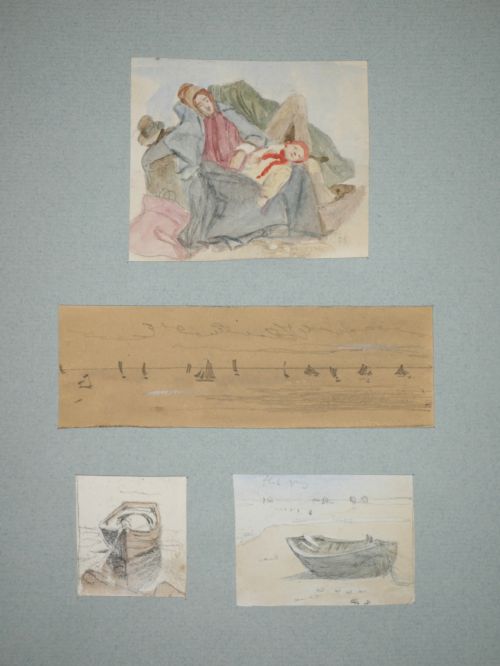
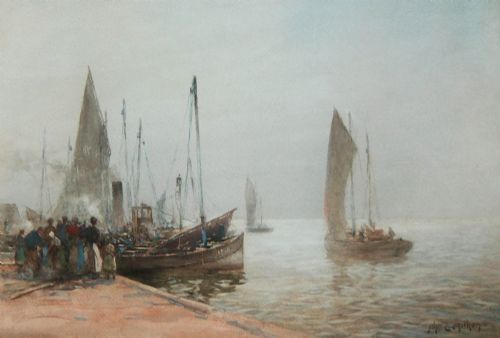
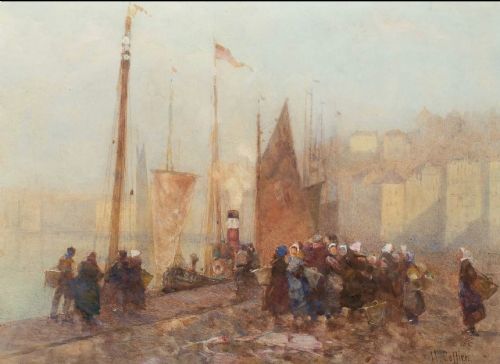
An original boat painting focuses on maritime subjects, ranging from working fishing vessels in British harbours to tranquil European coastal scenes. Buyers exploring original boat painting options encounter both detailed watercolours and robust oil works created during the nineteenth and twentieth centuries.
The selection encompasses Victorian coastal views, Edwardian harbour studies, and mid-century interpretations of sailing vessels. These pieces record historical maritime trades, local shorelines, and changing marine environments across Britain and continental Europe.
How They Were Made
Artists painted on stretched canvas, prepared wooden panels, thick card, or heavy watercolour paper using traditional pigment formulations. Oil paints provided rich textures for turbulent seas, while watercolours offered transparent washes suited to atmospheric coastal light.
Works often featured hand-carved or gilded frames that secured the paper or canvas support. Painters applied brushwork and washes directly from life or studio sketches to record specific coastal locations.
Listings feature works spanning the nineteenth century through the 1960s, executed in oil, watercolour, canvas, paper, and wood.
What Varies in Quality
Quality depends upon the artist's ability to render the weight and movement of water alongside the correct rigging of vessels. Accomplished works demonstrate confident handling of light reflecting off harbour surfaces and tidal mud flats.
Signatures, exhibition records, and documented provenance distinguish notable marine artists from anonymous regional painters. The precision of spatial depth and atmospheric perspective marks the distinction between standard topographical records and superior artistic compositions.
Thomas Bush Hardy·Edward Seago·Bernard Benedict Hemy·Abraham Hulk I·Gustave De Bréanski
The Original Boat Painting Glossary
- Canvas
- A heavy woven fabric stretched across a wooden frame to serve as a painting surface. It provides durability and texture for oil applications.
- Watercolour
- A paint consisting of pigment suspended in a water-soluble binder, traditionally applied to paper. It allows for luminous, translucent effects.
- Board
- A rigid flat wooden or card support used by artists instead of stretched canvas. Painters frequently utilised panels for smaller plein air studies.
- Impressionism
- A nineteenth-century style focusing on accurate depiction of light and fleeting visual moments. Artists utilised visible brush strokes and unblended colour.
- Seascape
- A work of art depicting the sea, coastal views, shipping, or marine vessels. These compositions form the core of maritime visual history.
Original Boat Painting: Frequently Asked Questions
How do I date an antique marine painting?
Stylistic clues, costume details of figures on the shore, and the rigging style of the vessels help establish the period. Framing materials and historical labels on the reverse also provide chronological markers.
Comparison with documented works by known artists listed in the archive assists in confirming creation dates.
What is the difference between oil and watercolour boat paintings?
Oil paintings utilise heavy pigments on canvas or board, offering rich textures and deep colour saturation. Watercolours employ translucent washes on paper, creating bright and atmospheric coastal effects.
Both mediums captured maritime life, with watercolours frequently created outdoors and oils finished in studio settings.
Where were most nineteenth-century British harbour scenes painted?
Artists worked along active fishing ports in Yorkshire, Cornwall, and East Anglia, recording local cobles and trading vessels. Whitby, St Ives, and Scarborough served as primary locations for marine painters.
Painters also travelled to French and Dutch ports to document continental shipping fleets.
How should I display a vintage maritime painting at home?
These works require placement away from direct sunlight and excessive humidity to protect paper supports and oil pigments. Appropriate wall space allows the gilt frames and coastal colours to complement interior lighting.
Stable indoor temperatures ensure the canvas or wood panel remains preserved over time.