




Impressionist Port Landscape
Impressionist port landscape paintings capture the bustle of maritime life through light and colour, offering a vibrant window into historic coastal hubs.
Impressionist Port Landscape
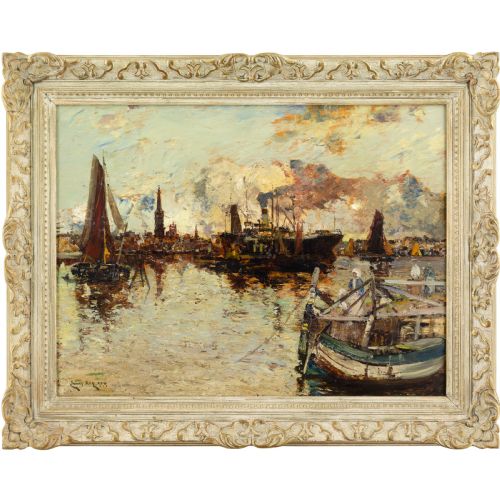
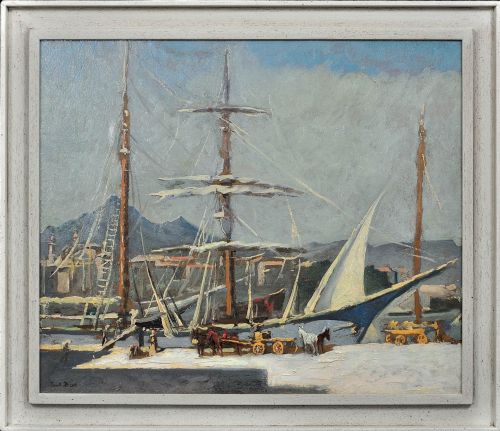
An impressionist port landscape brings together the bustling activity of harbours and the atmospheric play of natural light across water. When searching for this phrase, buyers encounter coastal scenes ranging from Victorian depictions to mid twentieth century views.
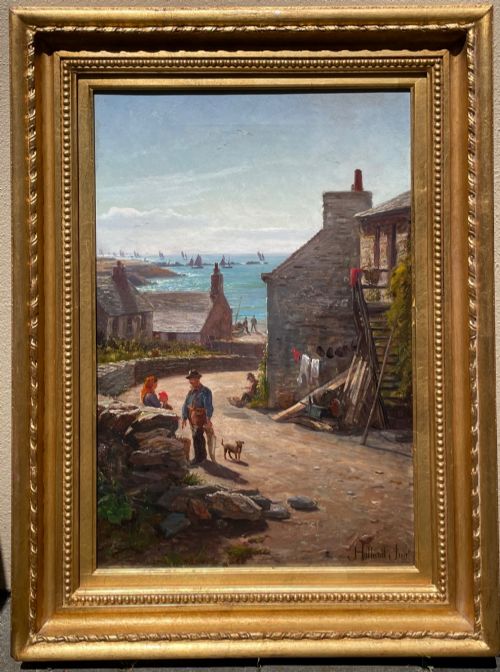
The pieces on this page lean heavily towards oil on canvas and watercolour paintings created during the late nineteenth and early twentieth centuries. French and British examples predominate, recording harbours from Cornwall to the Mediterranean with loose brushwork.
Subjects vary from busy commercial quays and fishing ports to quiet coastal inlets. Works span multiple decades, incorporating Victorian pieces alongside twentieth century British and French schools.
How They Were Made
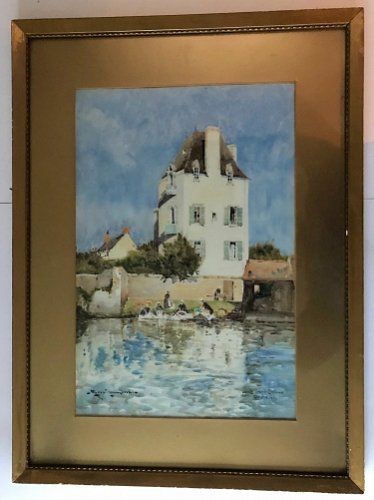
Artists painted primarily with oil paint on canvas, applying pigment to capture shifting atmospheric conditions at the water's edge. Some works utilise watercolour on paper, offering a lighter handling of maritime light.
Finished canvases were housed in wood frames, frequently finished in gilt wood or giltwood to complement the maritime subject matter. These frames range from simple wooden profiles to ornate gilded surrounds.
One canvas preserves a quiet moment of reading on a French seafront while ships unload nearby.
What Varies in Quality
Quality rests upon the artist's handling of light and brushwork to convey movement on the water and atmosphere in the air. Stronger works demonstrate a confident command of colour and composition rather than mere topographical recording.
The integration of the original frame alters the integrity of the piece, with period gilt wood surrounds enhancing the visual weight of the canvas. Condition of the oil paint and canvas surface also determines the strength of the surviving work.
James Kay RSW·Paul Bret·John Holland·Gyrth Russell·Herbert Royle·Henri Ottman·John William Gilroy·Charles Eyres Simmons·J.M. Hastings
The Impressionist Port Landscape Glossary
- Impressionism
- A nineteenth century painting style focused on capturing the visual impression of the moment, especially shifting light and colour. Practitioners avoided blended tones in favour of rapid brushstrokes.
- Post Impressionism
- An art movement extending Impressionism while rejecting its limitations, favouring more symbolic content and heavier structure. Works often display bolder outlines and intensified colours.
- Giltwood
- Wood carved and covered with a thin layer of gold leaf or gilt. This finish is commonly found on period frames enclosing nineteenth and twentieth century paintings.
- Watercolour Painting
- A method in which the paints are made of pigments suspended in a water soluble vehicle. These works on paper offer translucent layers of colour.
- Maritime Seascape
- A work of art depicting the sea, ships, or harbour scenes. These compositions focus on coastal topography and maritime vessels.
Impressionist Port Landscape: Frequently Asked Questions
What is an impressionist port landscape?
These works depict harbours, docks, and coastal towns through the lens of impressionist or post impressionist techniques. They focus on atmospheric light, water reflections, and the daily activity of shipping.
Such paintings document historic ports across Britain, France, and the Mediterranean from the Victorian era through the mid twentieth century.
How do I date these paintings?
Dating relies on stylistic clues, artist signatures, and framing methods typical of specific decades between the late Victorian period and the 1960s. Subject matter such as historic ships and clothing styles also provides chronological context.
Many listings explicitly note the period or decade of creation, ranging from the 1890s through to the post war years.
Are these works always oil on canvas?
While oil paint on canvas is the predominant medium for these coastal scenes, watercolours on paper also appear within the selection. Both mediums capture maritime subjects with distinct handling of light.
Frames vary accordingly, utilising plain wood or gilded wooden surrounds depending on the period.
How should I display a framed maritime painting?
Display these works away from direct sunlight and excessive humidity to protect the oil paint, canvas, and gilt wood frames. Proper wall placement ensures the lighting enhances the artist's brushwork and colour palette.
Matching the frame finish to your interior space helps integrate these historic coastal views into a modern room.