



Blue Grey Seascape Watercolour
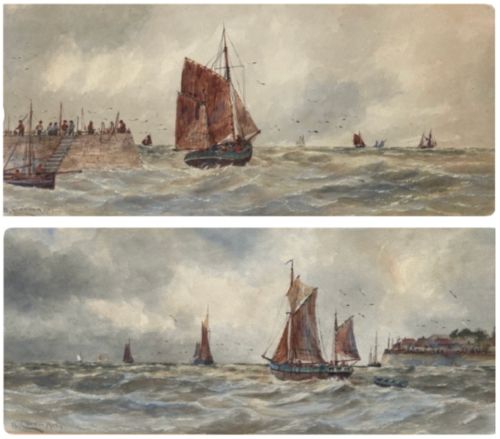
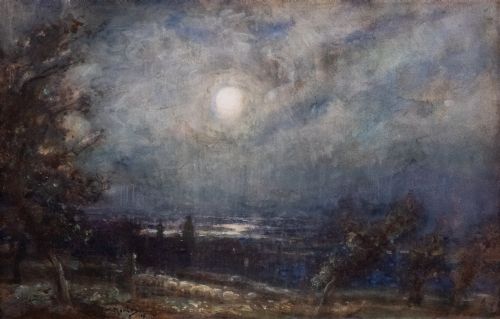
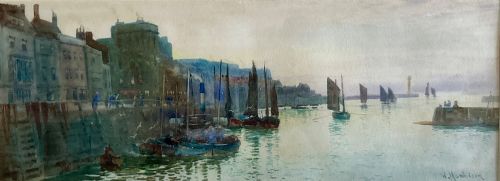
These works capture the shifting coastal light and moody tones that define a blue grey seascape watercolour.
Blue Grey Seascape Watercolour
A blue grey seascape watercolour depicts maritime subjects, coastal inlets, and open waters executed in water-based media on paper. Buyers seeking this phrase encounter framed artwork ranging from nineteenth-century Victorian marine realism to early twentieth-century British impressionism.
The dominant palette relies on muted washes of blue and grey to render overcast skies, choppy northern waters, and sheltered harbours. Fishing boats, steam vessels, and coastal lighthouses frequently anchor the composition.
Most examples originate from British and European hands working between the Victorian era and the mid-twentieth century. Whitby, Scarborough, and Cornish fishing ports appear repeatedly as specific regional settings.
How They Were Made
Artists applied watercolour pigment suspended in water onto heavy paper sheets, often utilising the white of the unpainted paper to capture glaring highlights on water and cloud breaks. Washes were layered from light tones to darker pigments to build atmospheric depth in stormy skies and rolling seas.
Finished sheets were secured behind glass within wooden frames to protect the delicate medium from moisture and fading. Many historical mountings include gilt or moulded wooden surrounds appropriate to the period of creation.
Blue Grey Seascape Watercolour Retail Price Guide 2026
Typical asking prices for blue grey seascape watercolour among the pieces listed under this phrase on Sellingantiques today, from the lower quarter to the upper quarter. They describe what is for sale here now, not the wider market.
Listings span periods from the mid-nineteenth century through the nineteen-fifties, utilising paper, watercolour pigment, wood, and glass.
What Varies in Quality
The strength of composition and the handling of atmospheric perspective separate accomplished works from routine topographical sketches. Superior watercolours demonstrate confident brushwork that conveys the movement of water and the weight of coastal weather without overworking the pigment.
Provenance and documentation also distinguish finer pieces, particularly when signed by established maritime painters associated with regional British art societies. The integration of paper and pigment stability over time reflects the initial grade of materials selected by the artist.
William Cannon·Thomas William Morley·William Matthison·Frank Kelsey·Charles William Adderton·Vincenzo D’Esposito·Ernest Dade·Robert Leslie Howey·Frank H. Mason·John Mitchell·Samuel Owen·Ernest F. Hill·Don Wilson·Frederick Stuart Richardson·Percy Brooke·William Kay Blacklock·Arthur Wilde Parsons·Frank Wasley·Fred Mayor·Joseph Newington Carter·Rowland Henry Hill·Frances E Nesbitt·Frederick William Booty·GM de L'Aubiniere·Thomas Bush Hardy
The Blue Grey Seascape Watercolour Glossary
- Watercolour
- A painting method in which the paints are made of pigments suspended in a water-based solution. The paper surface remains partially visible beneath translucent washes.
- Seascape
- A work of fine art that depicts the sea, coastal views, or marine shipping. These subjects gained immense popularity across the Victorian and Edwardian periods.
- Coble
- A traditional open fishing boat with a high bow and flat stern, commonly utilised along the northeast coast of England. Artists frequently recorded these vessels beached on Yorkshire shores.
- British Impressionism
- An artistic movement focusing on light, atmosphere, and loose brushwork adapted by British painters from French techniques. Works in this style prioritize mood over rigid topographical detail.
- Pigment
- The finely ground coloured powder that forms the base of the paint. In these works, pigments were mixed with water and gum arabic to adhere to paper.
Blue Grey Seascape Watercolour: Frequently Asked Questions
What subjects appear in these watercolours?
The compositions focus primarily on coastal towns, fishing fleets, lighthouses, and vessels navigating British and European waters. Scenes range from busy harbour entrances to quiet, moody sea views.
Specific locations include Yorkshire fishing villages, Cornish ports, and northern shipping lanes recorded in varying weather conditions.
How should I frame and hang them?
These works on paper require protection behind glass and acid-free mount boards to prevent environmental damage. Direct sunlight causes watercolour pigments to fade permanently over time.
Positioning them away from direct heat sources and bright windows preserves the delicate blue and grey tones.
How do I date an antique marine watercolour?
Dates are often established through artist signatures, exhibition labels on the reverse, and stylistic markers of the period. Costume, vessel types like steam drifters or sailing cobles, and framing materials offer further chronological clues.
Many pieces carry direct inscriptions or dates applied by the artist at the lower corners.
Are these works original paintings?
The listings consist entirely of original, hand-painted works executed directly on paper by individual artists rather than mechanical reproductions or prints. Each sheet bears unique brushstrokes and pigment mixing characteristic of hand creation.
Signatures, monograms, and artist inscriptions confirm individual authorship across the inventory.