




British Coastal Watercolour
British coastal watercolour paintings capture the maritime life, harbours and shores of the British Isles through 19th-century and 20th-century works.
British Coastal Watercolour
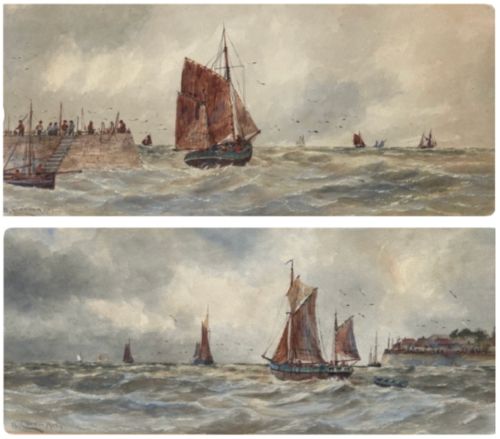
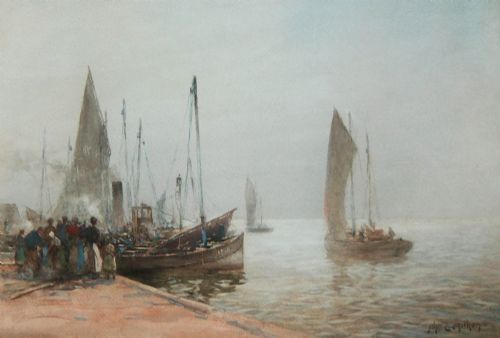
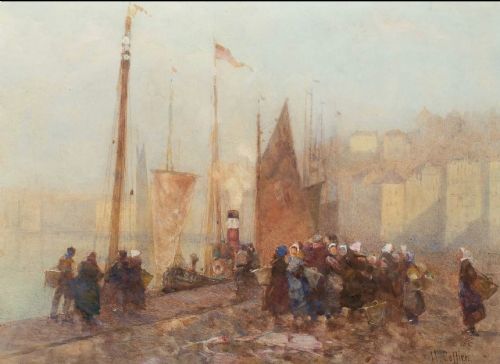
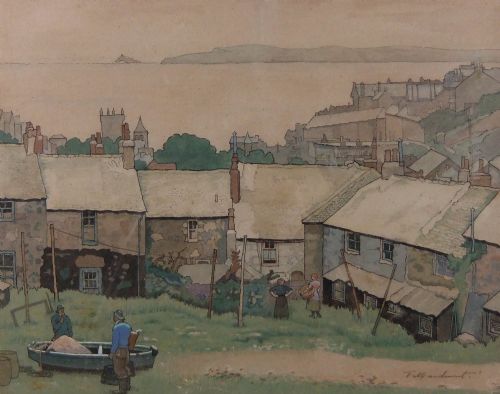
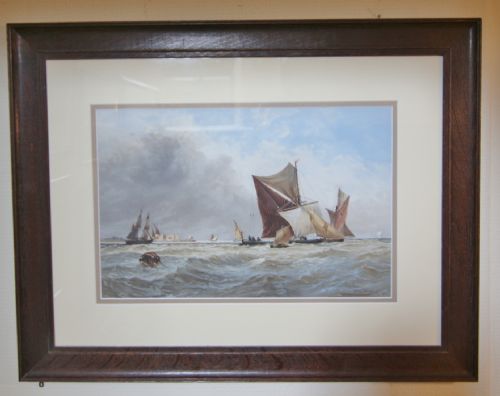
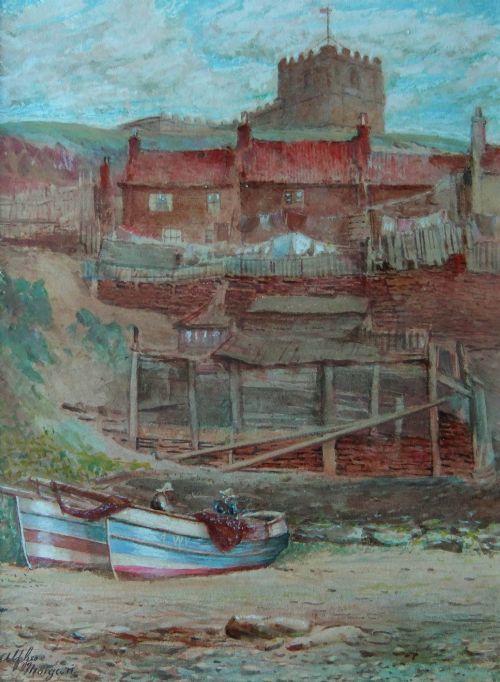
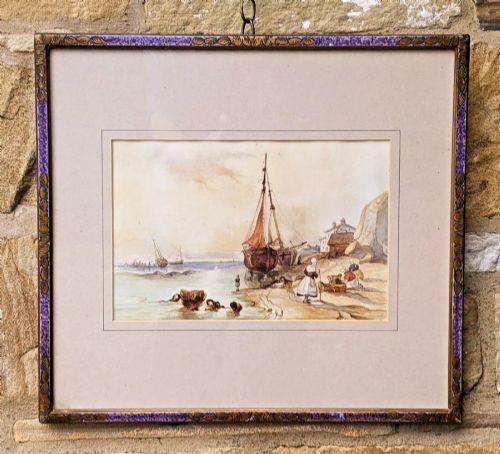
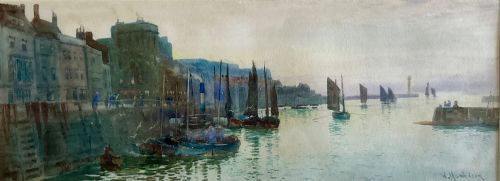
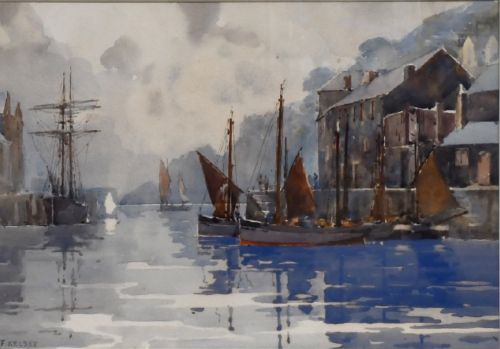
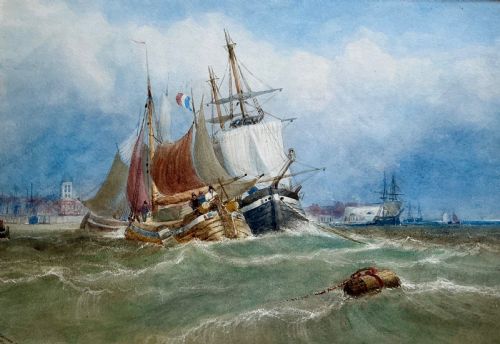
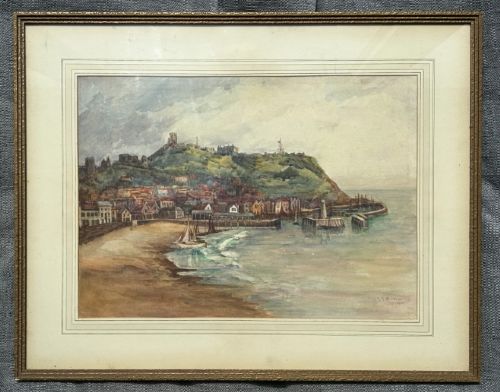
A British coastal watercolour depicts maritime scenes, fishing boats, and harbour views executed on paper support. These works originate from periods spanning the Victorian era through the mid-20th century.
Buyers encounter framed paintings featuring specific locations such as Whitby, St Ives, and Scarborough alongside broader maritime vistas. The subjects range from bustling fishing docks to tranquil river estuaries and open sea views.
The aesthetic bridges traditional topographical recording and expressive marine art, reflecting regional coastal traditions across England, Scotland, and Wales.
Materials and Technique
Artists applied watercolour paint and pigment onto paper, occasionally incorporating ink for fine linear detail. The translucent nature of the medium allowed light to reflect off the white paper ground.
Works were commonly mounted behind glass within wooden frames to protect the delicate paper surface from atmospheric moisture and handling.
Several artists clearly braved harsh North Sea gales to capture low tide at Heacham.
Evaluating Quality
Quality rests upon the artist's handling of light and atmosphere, particularly in capturing shifting coastal weather and water movement. A confident brushstroke and accurate perspective separate accomplished works from formulaic topographical sketches.
The preservation of the pigment against fading and the condition of the paper surface dictate the longevity and visual impact of the piece.
Thomas Bush Hardy·William Matthison·Hector Caffieri·James E. Aitken·Edward Seago·Sir William Russell Flint
The British Coastal Watercolour Glossary
- Watercolour
- A paint consisting of colour suspended in a water-soluble vehicle, applied to paper support. It relies on the white of the paper to create luminosity.
- Seascape
- A work of art depicting the sea, coastal views, shipping, or marine life. These compositions often feature harbours, cliffs, and fishing vessels.
- Topographical
- Representing specific real-world locations with a degree of accuracy rather than purely imaginative landscapes. Many Victorian works served this recording function.
- Monochrome
- Executed in a single colour or shades of a single colour, occasionally augmented with ink. This technique emphasises tone and shadow over chromatic variety.
- Provenance
- The chronology of the ownership of a work of art, establishing its history and authenticity. Documentation often helps attribute unsigned or monogrammed pieces.
British Coastal Watercolour: Frequently Asked Questions
How do I care for a watercolour?
Keep the painting away from direct sunlight to prevent the watercolour pigments from fading over time. Ensure it hangs in a stable environment away from excessive moisture and temperature fluctuations.
Check that the framing uses acid-free materials to protect the paper from chemical degradation. Professional conservation framing preserves the integrity of antique paper supports.
Are these works signed?
Many pieces feature the artist's signature, monogram, or date inscribed directly onto the paper surface. Signed works offer a clear attribution to specific painters active in British coastal art.
Unsigned works appear frequently and are often attributed through style, subject matter, or archival records. Exhibition labels on the reverse also provide clues to authorship.
What periods do these paintings span?
The selection includes works from the Victorian era and the late 19th century, extending through the Edwardian period into the mid-20th century. Each era brings distinct stylistic approaches to maritime painting.
Earlier works tend towards detailed topographical accuracy, whilst later 20th-century pieces incorporate broader impressionistic techniques. Dating relies on stylistic markers, signatures, and framing clues.
Where were these coastal scenes painted?
Artists painted at notable fishing ports and coastal towns across Britain, including Yorkshire, Cornwall, Norfolk, and Scottish harbours. Locations like Whitby and St Ives proved particularly popular amongst regional art colonies.
These working ports provided dynamic subject matter involving fishing boats, local craft, and maritime trade. The resulting images document the changing industrial and domestic life of the coast.