





Signed Ocean Painting
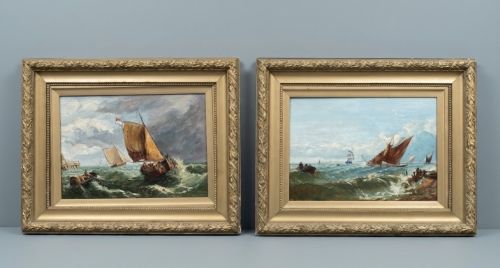
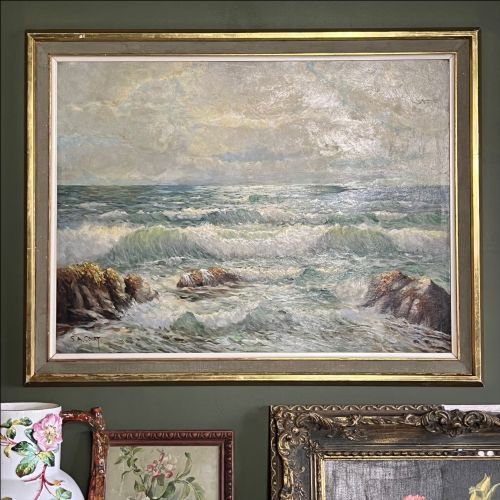
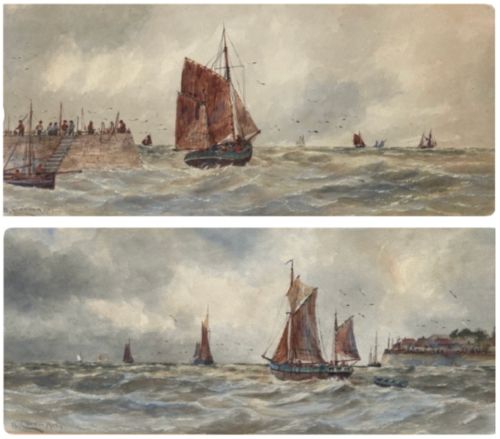
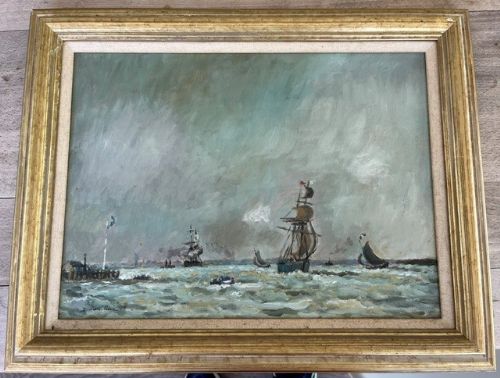
These signed ocean painting works capture marine views and coastal life, offering collectors authentic maritime heritage for the home.
Signed Ocean Painting
A signed ocean painting brings coastal atmospheres and maritime history directly into domestic spaces through original works on canvas, board, and paper. When searching for a signed ocean painting, buyers encounter pieces spanning the nineteenth century through the mid-twentieth century, capturing harbours, rough seas, and coastal cliffs.
The selections most frequently met on this page include framed watercolours and oil paintings from the Victorian and Edwardian eras, alongside mid-century interpretations. These range from detailed depictions of British fishing boats and merchant ships to impressionistic en plein air coastal scenes.
How they were made
Artists relied upon oil paint and watercolour as primary mediums, applying pigment to stretched canvas, wooden board, heavy paper, or card. Oil paint allowed for thick impasto textures suited to choppy seas, while watercolour offered fluidity for atmospheric coastal light.
Works frequently received protective framing under glass for works on paper, or ornate gilt surrounds for oil paintings on canvas and board.
Signed Ocean Painting Retail Price Guide 2026
Typical asking prices for signed ocean painting among the pieces listed under this phrase on Sellingantiques today, from the lower quarter to the upper quarter. They describe what is for sale here now, not the wider market.
Materials span paper, wood, watercolour, glass, gilt, oil paint, board, and canvas across Victorian, Edwardian, and mid-century periods.
What varies in quality
Quality rests upon the artist's command of light, movement, and maritime atmosphere, where confident brushwork distinguishes masterly depictions of rough water from stiff renderings. The clarity of the signature and the strength of the composition elevate individual pieces within their period.
Preservation of the original medium, whether watercolour pigment or oil paint on board, dictates the visual impact of the seascape.
William Cannon·Sidney A Court·William Banks Fortescue·John Rose Miles·F Corpuz·John Bell·Kate E Booth·Frank Wood·S J Lamorna Birch·J Wilson·Alastair Flatterly·Frank Holme
The Signed Ocean Painting Glossary
- Impasto
- Paint applied thickly to a canvas or board, creating a textured surface that stands proud of the support. This technique gives physical weight to crashing waves and turbulent skies in maritime scenes.
- En plein air
- Painting outdoors in direct observation of the landscape and weather. Coastal painters utilised this method to capture fleeting shifts in light upon the sea.
- Watercolour
- A paint consisting of pigment suspended in a water-based solution, traditionally applied to paper. It yields translucent washes well suited to coastal atmospheres.
- Gilt
- A thin layer of gold leaf or gold-coloured paint applied to wooden picture frames. It was widely used in Victorian and Edwardian framing to complement marine works.
Signed Ocean Painting: Frequently Asked Questions
How do I date a signed ocean painting?
Dating relies upon examining the artist's active period, the framing style, and the physical substrate such as canvas, board, or paper. Victorian and Edwardian works often feature specific signatures and traditional subject matter that anchor them in time.
Secondary clues include handwritten inscriptions on the reverse and period labels from framers. Comparing the technique to known dated works helps narrow the decade.
Where should I hang a coastal painting?
These works suit rooms with natural light, where the depiction of water and open air can complement domestic interiors. Avoid placing them in direct sunlight or damp spaces to protect the paper, canvas, or gilt frames.
Secure wall fixings are essential, particularly for heavier oil paintings on board or canvas in ornate wooden frames.
What is the difference between oil and watercolour marine art?
Oil paintings utilise pigment bound in oil on canvas or board, offering rich textures and deep tones suitable for stormy seas. Watercolours employ water-soluble pigments on paper, producing delicate effects of light and sea spray.
Watercolours require glass protection in their framing, whereas oil paintings on canvas remain open to the air.
How do I identify a genuine signature?
A genuine signature appears in wet medium applied contemporaneously with the creation of the painting, matching the pigment and ageing of the surrounding work. Indistinct signatures still provide clues through handwriting style and placement.
Signatures are frequently accompanied by dates or location names, such as Cornwall or St Ives, which assist in verification.