




Green Glass Ceiling Light
A green glass ceiling light brings rich colour and soft ambient illumination to a room, drawing on decades of period design.
Green Glass Ceiling Light
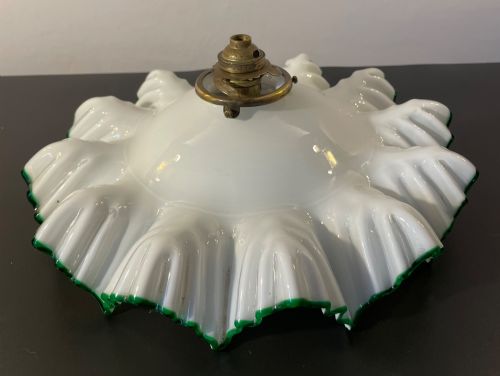
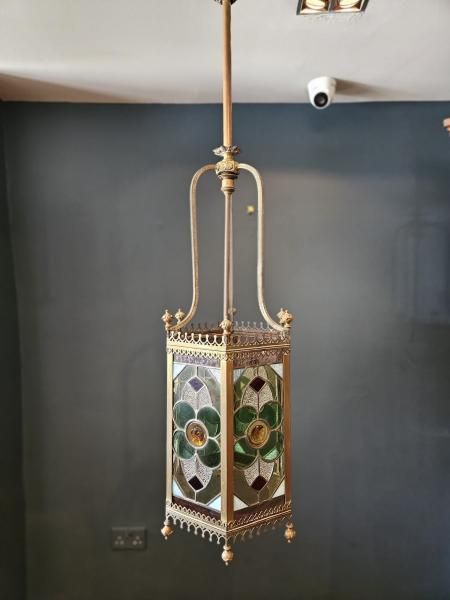
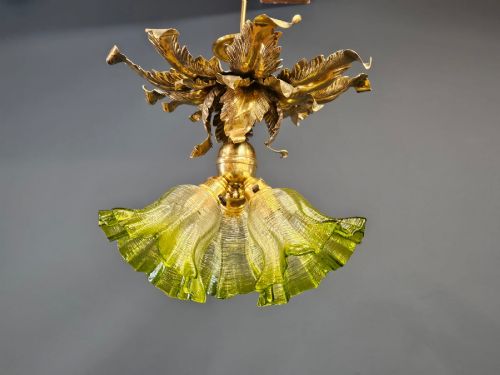
When you search for a green glass ceiling light, you encounter diverse forms ranging from early twentieth-century globes to leaded lanterns and Art Nouveau lamps. These fixtures illuminate spaces with distinct character, utilising vibrant hues that shift between deep forest tones and pale shades.
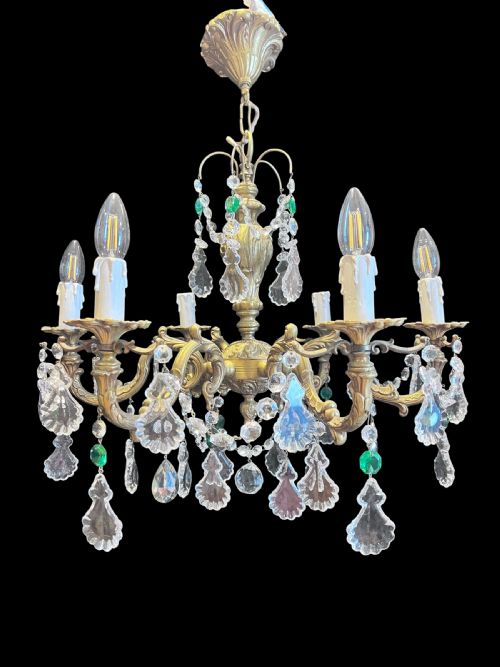
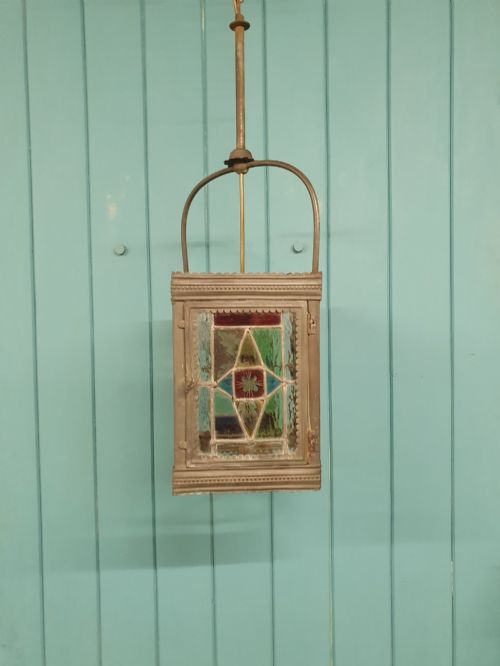
The versions most likely to be met on this page span the Victorian era, the Edwardian period, and the 1930s. They appear as pendant lights, chandeliers, hall lanterns, and individual lampshades shaped from pressed, blown, or leaded glass.
Materials and construction
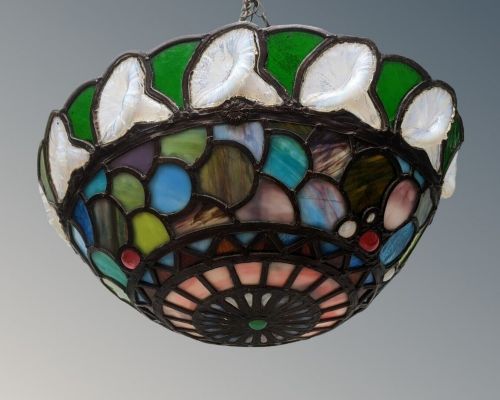
These fixtures combine coloured glass with structural metals such as brass, bronze, copper, chrome, and wrought iron. The glass components are formed as solid globes, delicate shades, or leaded panels joined in geometric and floral patterns.
Metalwork frames and suspension hardware are cast, spun, or forged to support the weight of the glass elements. Original fittings frequently incorporate brass chains, ceiling roses, and specialised mechanisms like rise and fall pulleys.
Listings feature pieces spanning the 19th century through to the 1930s, incorporating brass, bronze, crystal, and opaline glass.
Assessing quality and craftsmanship
Quality in these pieces is dictated by the depth and consistency of the glass colour, alongside the crispness of the surrounding metalwork. Finer examples display hand-formed details, substantial bronze or brass castings, and complex leaded construction rather than simple pressed moulds.
The integrity of the original components also determines distinction, with complete matching sets of shades and period-correct suspension hardware elevating a fixture. The integration of decorative elements, such as leaf motifs or structural brass framing, distinguishes standard production from superior craftsmanship.
The Green Glass Ceiling Light Glossary
- Pendant light
- A single light fixture suspended from the ceiling by a cord, chain, or metal rod. These direct illumination downwards into a specific area of a room.
- Art Nouveau
- A decorative style popular from the late nineteenth century into the early twentieth century, characterised by flowing, organic lines inspired by natural forms.
- Art Deco
- A design movement prominent in the 1920s and 1930s featuring streamlined geometric shapes, symmetry, and industrial materials.
- Leaded glass
- Small pieces of glass held together within a network of lead cames, forming decorative windows or shades.
- Rise and fall
- A mechanical pulley system allowing the hanging height of a ceiling light to be adjusted manually.
Green Glass Ceiling Light: Frequently Asked Questions
How do I clean a vintage glass shade?
Clean the glass gently using warm water and a mild soap, supporting any delicate sections with your hand. Avoid harsh abrasives that can scratch the surface or damage patinated metal fittings.
Dry the components thoroughly with a soft cloth before reassembly. Take care around older leaded joints and vintage wiring.
Can these antique lights be rewired for modern use?
Most period fixtures can be adapted to meet contemporary electrical standards by a qualified professional. Rewiring ensures safe operation while preserving the original metalwork and glass components.
Standard modern bulbs often fit historical sockets, though you should check dimensions and wattage limitations. Retaining original mounting brackets helps maintain proper installation.
What rooms suit a hanging lantern best?
Hall lanterns and pendant fixtures work well in entranceways, hallways, and stairwells where direct downward light is practical. Their decorative frames create an immediate visual focal point upon entering a space.
Lower-slung chandeliers and globes suit dining tables or living areas. Ensure you measure ceiling heights carefully before hanging larger fixtures.
How do I identify the period of a glass shade?
Dating relies on examining the manufacturing techniques, mounting hardware, and prevailing design styles. Victorian and Edwardian pieces often feature ornate brass framing and organic floral motifs.
Later 1930s examples lean towards geometric shapes, chrome elements, and smooth glass globes. Archival comparisons and construction methods provide further clues.