




Green Glass Pendant Lamp
A green glass pendant lamp brings rich colour and steady illumination to a room, drawing the eye upwards with its distinct period character.
Green Glass Pendant Lamp
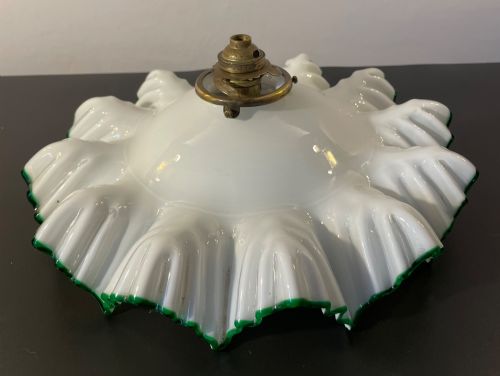
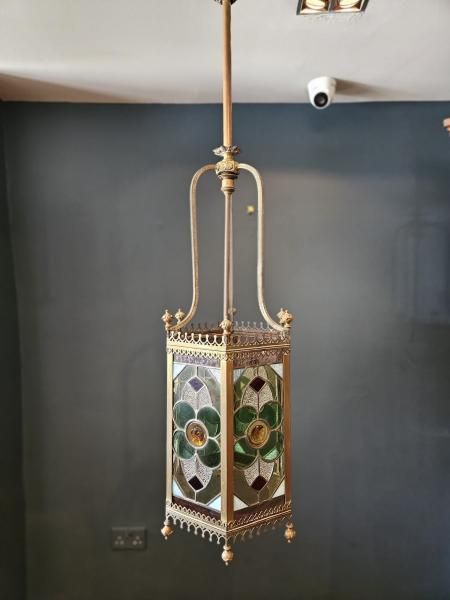
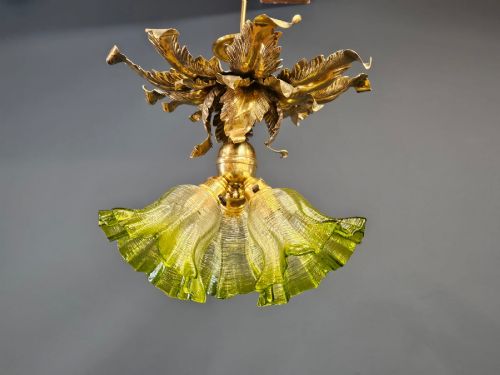
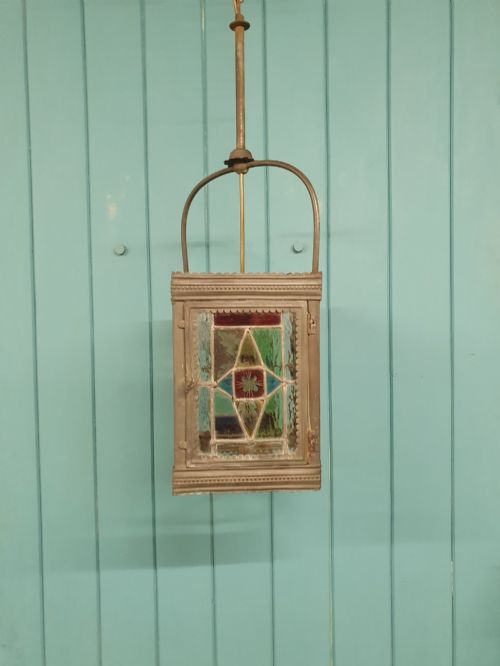
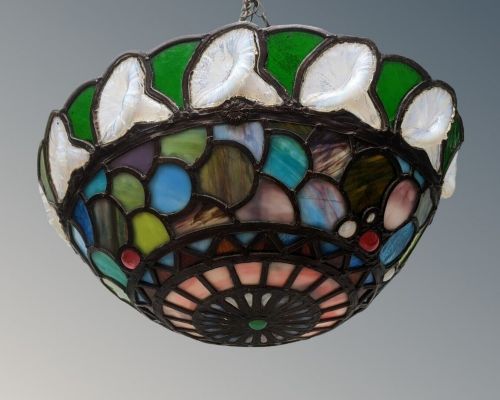
When you search for a green glass pendant lamp, you encounter ceiling fixtures and hanging lights spanning from the Victorian era through the 1930s. The selection ranges from early leaded glass lanterns and brass leaf design ceiling lights to Art Deco chrome and glass globes and French frill lampshades.
You are most likely to meet pieces defined by brass, bronze, or chrome mounts holding leaded, stained, opaline, or crystal glass elements. These hanging lights served as functional overhead illumination in hallways, parlours, and living spaces across various historical periods.
The styles present include Victorian Gothic, Art Nouveau, Art Deco, and French Chateau designs. Each object type, whether a hall lantern or a ceiling globe, reflects the aesthetic preferences of its decade of origin.
How they were made
Maker construction methods rely heavily on combining cast metals with specialised glass forms, utilising brass, bronze, and lead alongside blown or moulded glass. Leaded and stained glass panels required precise soldering within metal frameworks to secure the coloured panes.
Hanging mechanisms often involved adjustable brass rise and fall weight systems or structured chains supporting heavy glass shades. Metal components were frequently cast and finished by hand, yielding detailed leaf patterns and decorative mountings.
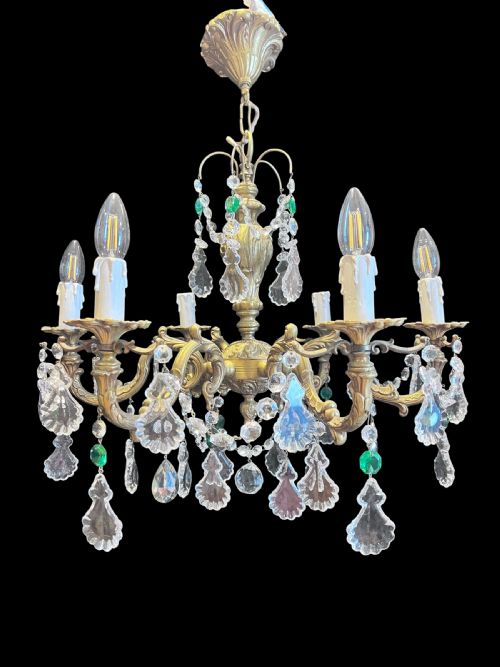
Some period fixtures include coloured crystals designed to scatter vibrant hues across the ceiling when illuminated.
What varies in quality
Quality rests upon the purity and depth of the glass, the weight of the metal framework, and the integrity of the original mounts. Heavier cast brass or bronze fittings and intricate leaded construction indicate superior craftsmanship compared to lighter commercial alternatives.
The presence of original shades, distinct colour saturation in the glass, and sophisticated mechanisms such as functional rise and fall counterweights elevate the standing of a piece. Finer examples maintain their original period wiring housing and authentic crystal drops.
The Green Glass Pendant Lamp Glossary
- Pendant lamp
- A light fixture suspended from the ceiling by a chain, cord, or metal rod. These fixtures project illumination downwards into a space.
- Opaline glass
- An opaque or translucent glass developed in pale colours or white. It diffuses light softly without harsh glares.
- Leaded glass
- Glass pieces joined together with lead cames to form a decorative window or shade. This technique provides structural support for complex geometric or floral patterns.
- Rise and fall
- A mechanical ceiling light fixture utilising pulleys and counterweights. It allows the user to adjust the height of the lamp manually.
- Chandelier
- A branched decorative ceiling light designed to hold multiple bulbs or candles. They typically incorporate crystals or glass drops to refract light.
Green Glass Pendant Lamp: Frequently Asked Questions
How do I hang a heavy antique pendant lamp safely?
Heavy fixtures require secure anchoring into ceiling joists using a rated mounting bracket rather than plaster alone. Professional installation ensures the electrical capacity matches the weight and wiring requirements of the period fixture.
Weight distribution matters greatly with cast bronze and leaded glass designs. Consulting a qualified electrician guarantees the ceiling box supports the sustained load without strain.
What rooms suit a green glass pendant lamp?
These hanging lights work well in hallways, dining spaces, and studies where downward illumination creates a focused atmosphere. The coloured glass casts a warm, atmospheric tone across the room.
Smaller globes fit compact vestibules or kitchens, while larger chandeliers or multi-light fixtures suit principal reception rooms. Matching the scale of the room to the drop length is essential.
How do I clean antique glass shades?
Cleaning requires warm water and mild soap applied gently with a soft cloth to protect fragile surfaces. Avoid harsh chemical cleaners that might strip historic finishes from the metal mounts.
Leaded glass panels need careful handling around the soft lead cames. Drying thoroughly prevents moisture retention in crevices and preserves the metal.
How can I tell a Victorian period light from an Art Deco one?
Victorian pieces frequently feature ornate brass leaf designs, heavy leaded glass, and gothic or classical motifs. They emphasise rich ornamentation and traditional craft techniques.
Art Deco lamps showcase streamlined chrome, geometric shapes, and smooth glass globes from the 1930s. The aesthetic shifts from ornate floral curves to clean, modern industrial lines.