




Art Deco Glass Lampshade
An art deco glass lampshade gives a room its geometric focus, catching the light in pressed satin or opalescent curves.
Art Deco Glass Lampshade
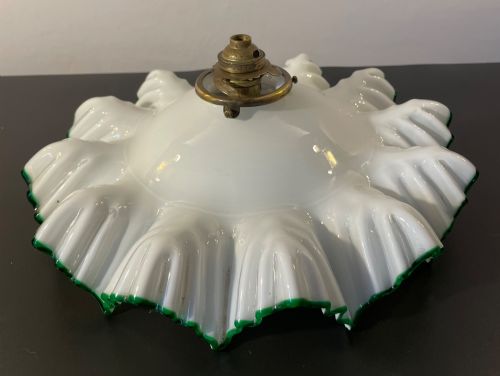
When you search for an art deco glass lampshade, you are looking at light fixtures and shades defined by the aesthetics of the 1920s and 1930s, alongside a few Edwardian and Victorian crossover pieces. The most common forms on this page are ceiling lights, pendant lights, and plafonniers designed to mount flush or hang directly from a fitting.
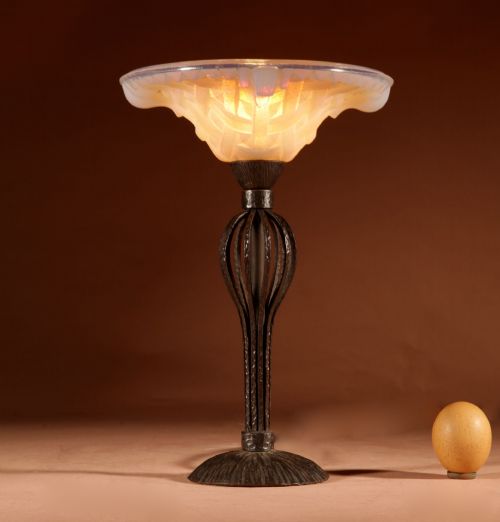
Materials span plain glass, frosted glass, opaline glass, opalescent glass, and pressed satin glass, often paired with metal, chrome, brass, or wrought iron mountings. You will also encounter table lamps and chandeliers that integrate these distinctive glass shades into complete lighting units.
Origins heavily favour French production from around 1930, capturing the characteristic geometric and moulded glassware of the period. While most items align with the Art Deco style, occasional French Country pieces appear among the selections.
How they were made
The manufacture of these shades relied heavily on pressing molten glass into moulds to achieve crisp geometric patterns and satin textures. This technique allowed makers to produce thick, durable opalescent or frosted glass components capable of diffusing harsh bulb glare.
Metalwork frames in chrome, brass, and wrought iron were engineered to support heavier glass bowls and globes securely. These structural mounts frequently utilised screw fittings or suspension chains integral to the pendant and ceiling light designs.
Art Deco Glass Lampshade Retail Price Guide 2026
Typical asking prices for art deco glass lampshade among the pieces listed under this phrase on Sellingantiques today, from the lower quarter to the upper quarter. They describe what is for sale here now, not the wider market.
Some shades double as miniature glowing planets when switched on at dusk.
What varies in quality
Quality in these pieces is dictated by the depth of moulding and the purity of the glass paste used to create opalescent or satin effects. Finer items exhibit sharp relief in their pressed patterns and a balanced weight that distributes light evenly without dark spots.
The accompanying hardware also marks the distinction between standard production and higher-end commissions. Heavy chrome, solid brass, and hand-forged wrought iron frames demonstrate superior craftsmanship compared to thin, stamped metal alternatives.
Lacroix·Lalique·Degué
The Art Deco Glass Lampshade Glossary
- Plafonnier
- A ceiling light designed to sit flush or very close to the ceiling surface. These fixtures typically feature a large glass bowl held by metal clips or a central screw.
- Opalescent glass
- Glass that displays a milky, iridescent quality, shifting in tone between blue and amber when lit. It was a favoured medium for diffusing light softly during the interwar period.
- Pressed satin glass
- Glass treated to have a smooth, matte finish resembling unpolished marble or satin fabric. This texture scatters light effectively to reduce glare.
- Opaline glass
- An opaque or semi-translucent white glass used extensively for light shades to create a uniform, glowing appearance. It provides high light transmission while concealing the bulb entirely.
- Wrought iron
- Iron beaten and shaped by hand to create structural frames and decorative mounts. In lighting fixtures, it provides a robust, dark contrast to pale glass shades.
Art Deco Glass Lampshade: Frequently Asked Questions
How do I hang a heavy glass ceiling shade?
Heavy glass shades require sturdy ceiling hooks anchored directly into ceiling joists rather than plaster alone. Ensure the chain and metal fitter are rated to support the weight of the glass.
Most vintage shades utilise three-point screw galleries or central threaded rods. Take care not to over-tighten the screws against the glass rim during installation.
What bulbs work best in vintage glass shades?
Low-heat modern LED bulbs in a warm white colour temperature replicate the soft glow of period lighting without risking heat damage to fragile vintage glass. Frosted bulbs also help eliminate harsh shadows inside patterned shades.
Check the maximum wattage recommendation of the original fitting before installing high-output bulbs. Older wiring and sockets often have strict thermal limits.
Can I use these shades on modern electrical fittings?
Many vintage shades fit standard modern pendant cord sets, provided the fitter aperture matches the gallery size. Standard fitter diameters of roughly two to four inches are common.
It is wise to have older metal lamp bases and wired fixtures inspected by a qualified electrician. Rewiring ensures the piece meets current safety standards before daily use.
How do I clean opalescent and frosted glass?
Wash the glass gently in lukewarm water using mild dish soap and a soft microfibre cloth. Avoid abrasive scouring pads that can scratch satin or frosted finishes.
Dry the shade thoroughly before reattaching it to metal mounts to prevent water spots. Take extra care around painted or signed details.