



Art Deco Pendant Shade
An art deco pendant shade brings sharp geometry and diffused light to a ceiling, offering period character that centres a room.
Art Deco Pendant Shade
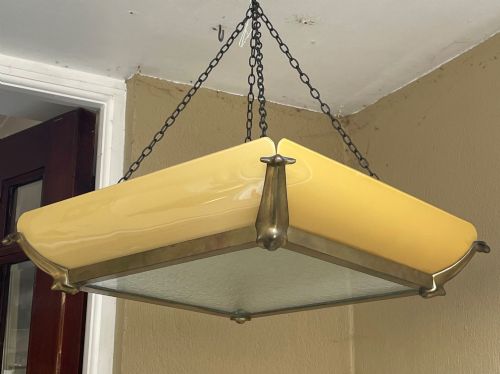
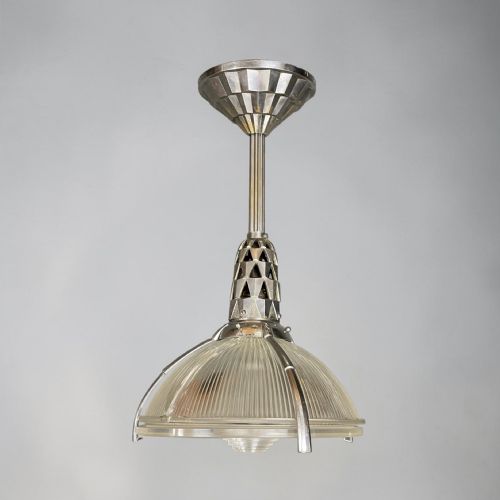
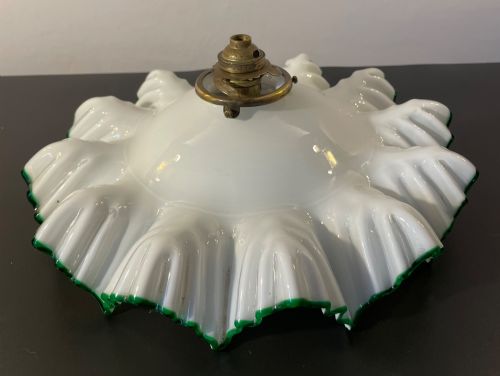
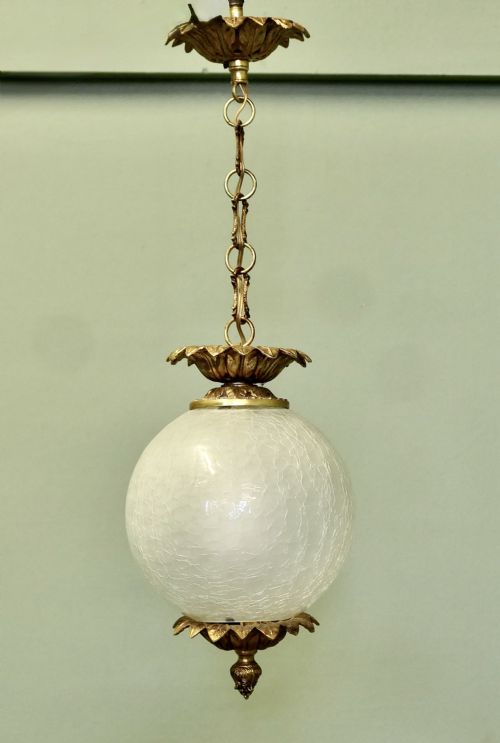
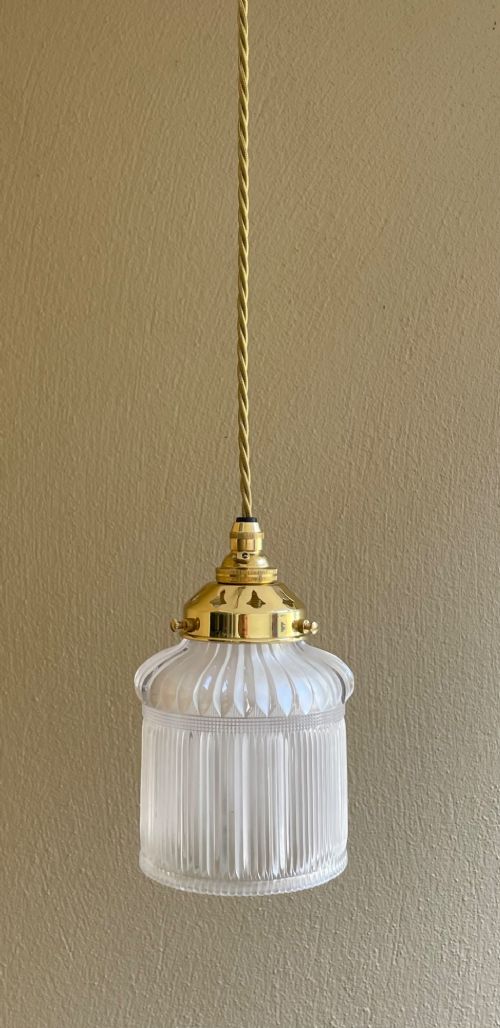
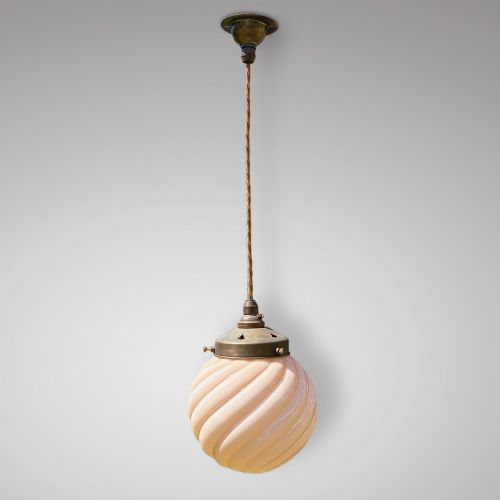
An art deco pendant shade is a suspended light fitting designed to cast downwards or ambient illumination, drawing heavily from the 1920s and 1930s aesthetics. You will most frequently encounter moulded, frosted or opaline glass bowls, globes and slip shades held by metal galleries.
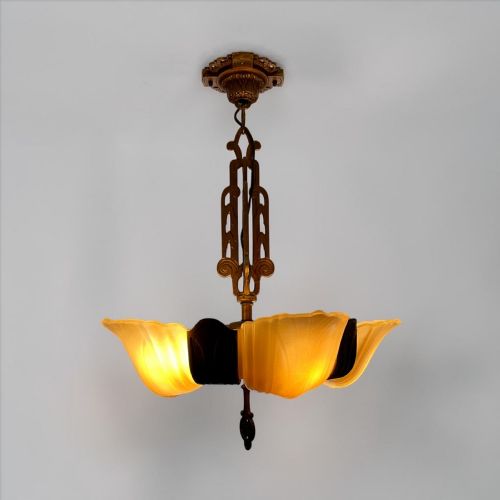
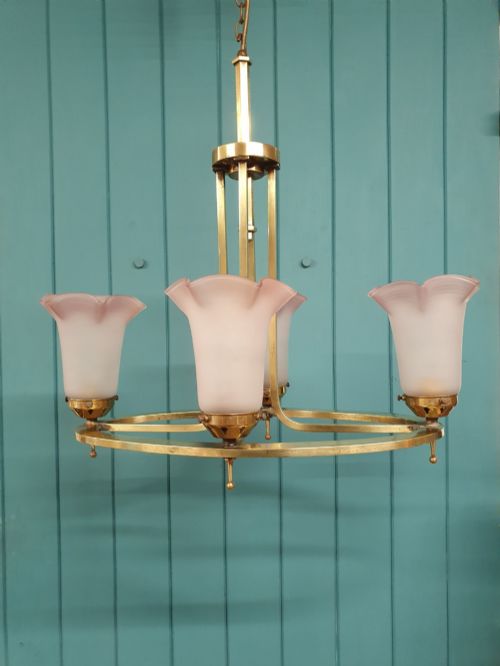
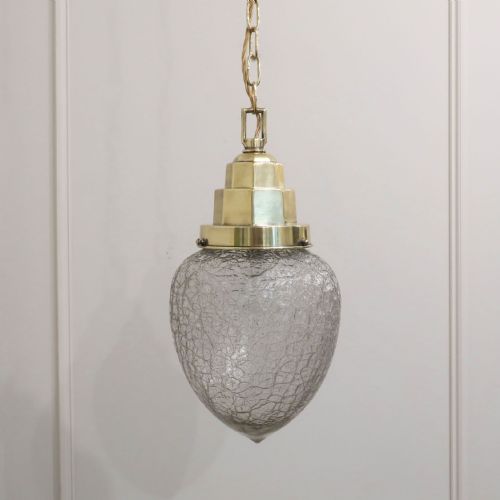
The form spans simple single-bulb drops to elaborate multi-light chandeliers and plafonniers designed to sit flush or close to the ceiling. Pieces often integrate geometric moulding, stepped tiers or stylised floral motifs characteristic of the interwar period.
While the vast majority belong to the 1920 and 1930 decades, the selection also dips into Edwardian precursors and industrial variants. The primary objective when choosing an art deco pendant shade is balancing the proportion of the glass diffuser with the height and scale of the space.
How they were made
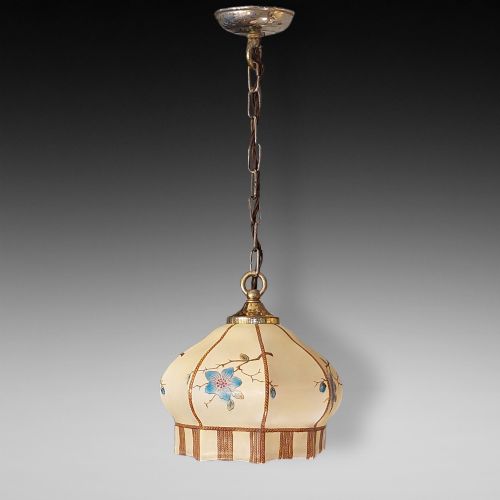
Makers shaped the glass through pressing, moulding, or blowing, frequently utilising opaline, frosted, crackle or pink and amber coloured glass to soften harsh bulb glare. Acid etching and hand painting added surface texture and colour gradients to the shades.
Metal components such as galleries, chains and ceiling roses typically relied on brass, copper, chrome or patinated iron. These structural mounts were cast, spun or stamped to secure the heavy glass diffusers safely from above.
Listings feature glass, brass, copper, and chrome materials applied across 1920 and 1930 periods.
What varies in quality
Quality rests in the weight and clarity of the glass, where heavier, crisper press-moulding with deep relief work outshines thin, generic pressing. The intricacy of the glass treatment - such as layered opalescence or precise hand finishing - separates standard utility lighting from showroom pieces.
The secondary metalwork dictates the overall integrity, with solid cast brass or copper galleries holding firm structural advantage over lighter, stamped alternatives. Matching an original gallery or ceiling rose to its specific shade elevates the authenticity and balance of the pendant.
Émile-Jacques Ruhlmann·Muller Freres·Jean Gauthier
The Art Deco Pendant Shade Glossary
- Slip Shade
- A moulded pane of glass that slides into a metal frame or basket to form a complete bowl or shade. These pieces are characteristic of American and European lighting from the interwar period.
- Gallery
- The metal ring or collar at the top of a pendant shade that grips the glass and connects to the suspension rod or chain. Galleries are often cast in brass or chrome.
- Opaline Glass
- A milky, semi-translucent glass that diffuses light evenly without harsh glares. It appears frequently in white, pink and pastel shades across mid-century and earlier lighting.
- Opalescent Glass
- Glass that displays milky, iridescent or pearl-like colour effects when lit from within. It shifts appearance depending on the viewing angle and light source.
Art Deco Pendant Shade: Frequently Asked Questions
How do I hang a heavy shade?
Suspension requires a sturdy ceiling joist and a metal hook capable of taking the combined weight of the glass bowl and metal gallery. Professional wiring ensures the chain or brass rod bears the load safely rather than the electrical flex.
Adjusting the hanging height depends on ceiling clearance and table placement beneath. Hall lanterns and flush plafonniers need enough headroom, while dining table pendants sit lower to concentrate light downwards.
How do I clean vintage glass safely?
Cleaning requires removing the shade from its metal gallery to wash the glass in warm, soapy water. Avoid harsh abrasives or scouring pads that can damage acid-etched surfaces or hand-painted details.
Metal galleries benefit from gentle dusting with a dry cloth rather than aggressive chemical polishing, which can strip away historic patina. Ensure all parts are completely dry before reassembling and rehanging the fixture.
Are these lights rewired for modern use?
Many vintage ceiling lights arrive freshly rewired with modern flex to meet current electrical standards. Rewiring preserves the historic brass or copper hardware while replacing degraded internal wiring.
If a piece retains its original wiring, a qualified electrician should inspect and update the internal components prior to installation. This guarantees safety without altering the exterior character of the pendant.