



Geometric Glass Pendant Light
These geometric glass pendant light fixtures bring sharp twentieth-century lines and diffused illumination into a room, offering genuine period character.
Geometric Glass Pendant Light
A geometric glass pendant light is a hanging ceiling fitting that uses angles and planes of glass within a metal framework, primarily seen here from the nineteen-twenties and nineteen-thirties.
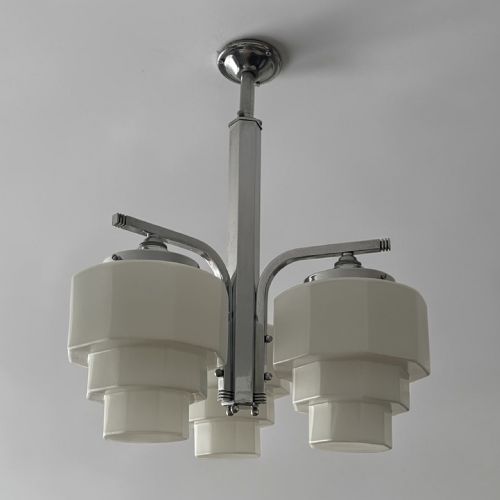
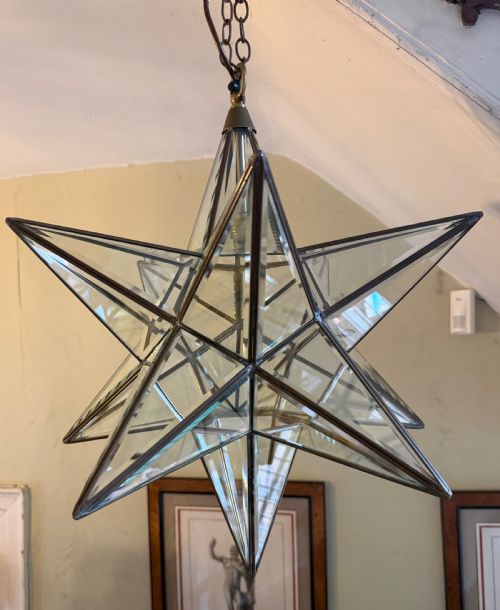
The selections on this page draw heavily from Art Deco design, appearing as star lanterns, ceiling lamps, and hall lanterns rather than simple globes.
Forms range from multi-pointed hanging lanterns to moulded plafonniers and opaque suspended shades, usually designed to hang centrally in halls or principal rooms.
How they were made
Maker construction combines structured metal frames in brass, chrome, copper, nickel plated metal, bronze, or wrought iron with distinct panels of glass.
Glass treatments rely on frosted, bevelled, or moulded finishes to soften the internal light source while maintaining the crisp exterior geometry of the frame.
Geometric Glass Pendant Light Retail Price Guide 2026
Typical asking prices for geometric glass pendant light among the pieces listed under this phrase on Sellingantiques today, from the lower quarter to the upper quarter. They describe what is for sale here now, not the wider market.
Metalwork choices across the available pieces include brass, chrome, copper, bronze, wrought iron, and nickel plated metal.
What varies in quality
Quality rests in the precision of the metal framing, whether cast, soldered, or beaten, and the weight and clarity of the glass panels secured within.
Subtlety of surface finish on the brass, chrome, or wrought iron separates standard production pieces from finer examples that retain their original patination and balanced proportions.
Émile-Jacques Ruhlmann
The Geometric Glass Pendant Light Glossary
- Pendant light
- A hanging light fixture suspended from the ceiling by a chain, cord, or metal rod. These pieces focus illumination directly downwards or diffuse it evenly across a space.
- Plafonnier
- A shallow ceiling light fixture mounted flush or very close to the ceiling surface. This French term describes bowls or geometric glass shades held tightly against the overhead structure.
- Frosted glass
- Glass treated by acid-etching or sandblasting to create a textured, opaque surface. It softens bulb glare and diffuses light uniformly.
- Bevelled glass
- Glass panes possessing ground and polished angled edges. This technique catches and refracts light across the facets.
- Art Deco
- A design style spanning the nineteen-twenties and nineteen-thirties characterised by geometric shapes, streamlined forms, and modern industrial materials.
Geometric Glass Pendant Light: Frequently Asked Questions
How high should I hang a pendant light?
Suspension height depends entirely on the room and whether the light hangs over a pathway or furniture. In open circulation spaces, ensure adequate clearance underneath for movement.
Over specific surfaces like a hallway table or a seating group, the fitting can sit lower to create an intimate pool of illumination without obstructing sightlines.
Can these vintage lights take modern bulbs?
Most period fixtures accommodate contemporary screw or bayonet bulbs, provided the wattage matches the historical wiring capacity. It is sensible to consult an electrician before installation to verify safety.
LED alternatives work well because they generate less heat, protecting fragile vintage glass and original metal components from thermal stress over extended use.
How do I clean frosted and bevelled glass?
Maintenance requires gentle cleaning with a mild soapy solution and a soft cloth to protect both the glass surface and the surrounding metal framework. Avoid harsh chemical cleaners that might strip original plating or patination.
Carefully dry each panel immediately afterwards to prevent water spots from settling on frosted or bevelled surfaces.
How do I identify nineteen-thirties lighting?
Nineteen-thirties pieces often showcase streamlined geometric silhouettes, utilising chrome, frosted glass, and moulded forms that reflect the later phase of the Art Deco movement. Look for clean architectural lines rather than elaborate ornamentation.
Earlier examples from the nineteen-twenties tend to employ heavier brass frameworks and more intricate multi-point constructions such as star lanterns.