

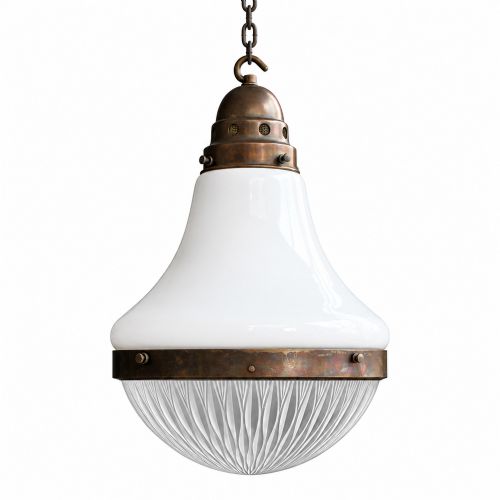

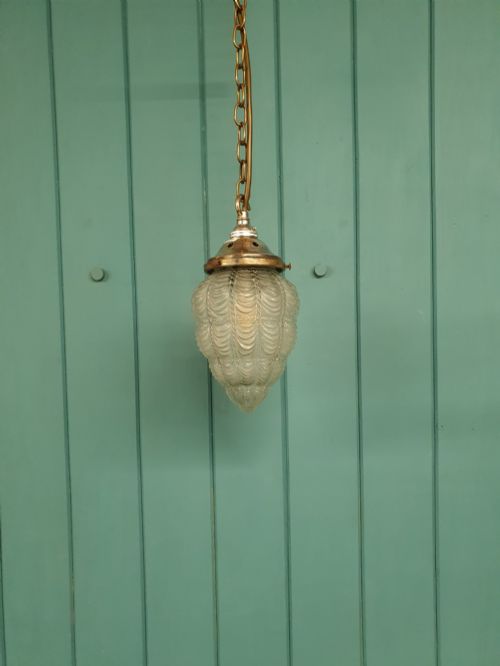


Moulded Glass Pendant Shade
These moulded glass pendant shade options bring period character to a room, offering functional ceiling lighting with distinct stylistic detail.
Moulded Glass Pendant Shade
A moulded glass pendant shade serves as a central ceiling light fitting, combining metal mounts with glass bowls or shades. When searching for a moulded glass pendant shade, buyers encounter items ranging from compact fixtures to larger multi-light chandeliers.
The selections span early twentieth century decades, featuring Edwardian, French Neoclassical, and Art Deco designs. Common forms include clam shell shades, slip shade arrangements, fish scale opaline patterns, and lantern styles.
Origin details in the evidence highlight French workshops alongside British Edwardian pieces. These ceiling lights utilise brass, chrome, copper, bronze, and gilt metal alongside the characteristic glass elements.
Materials and Construction
Makers shaped the glass elements using pressing and moulding techniques, often applying frosted, opaline, or enamelled finishes to diffuse light. Metal components such as brass, chrome, and copper provide the structural framework for these pendant lights and lanterns.
Art Deco and French Chateau designs incorporate specialised metal casting and glass forming methods. Gilt metal and bronze mountings secure the moulded shades, creating durable ceiling fixtures designed for interior illumination.
Moulded Glass Pendant Shade Retail Price Guide 2026
Typical asking prices for moulded glass pendant shade among the pieces listed under this phrase on Sellingantiques today, from the lower quarter to the upper quarter. They describe what is for sale here now, not the wider market.
Listings feature items from the 1910s, 1920s, and 1930s, constructed from brass, chrome, glass, opaline glass, and metal in Art Deco and Edwardian styles.
Assessing Quality and Execution
Distinction in quality arises from the refinement of the metalwork and the clarity or texture of the moulded glass. Pieces attributed to specific French makers display greater intricacy in metal mounting and glass relief work compared to standard commercial light fittings.
The sophistication of the period style, such as an articulated Art Deco slip shade or detailed French brass lantern framing, separates standard fixtures from finer examples. Heavier gauge metals and complex glass mouldings indicate superior workmanship.
Jean Gauthier
The Moulded Glass Pendant Shade Glossary
- Moulded Glass
- Glass formed by pressing molten material into a metal or wooden mould to create raised patterns or three-dimensional shapes. This technique allows for repeatable decorative motifs on pendant shades.
- Opaline Glass
- A semi-translucent milky glass that diffuses light evenly across its surface. It appears frequently in fish scale and pendant light designs from the early twentieth century.
- Slip Shade
- A type of glass shade designed to slide into a metal frame or basket. These elements form the core of many Art Deco ceiling light configurations.
- Frosted Glass
- Glass treated to impart a matte, non-reflective surface that softens direct bulb illumination. It is a defining characteristic of Art Deco lighting fixtures.
Moulded Glass Pendant Shade: Frequently Asked Questions
What periods do these pendant lights cover?
The available lighting spans the early twentieth century, specifically covering pieces from the 1910s, 1920s, and 1930s. These decades encompass Edwardian tastes and the rise of Art Deco design.
Buyers will find that stylistic attributes shift from Edwardian enamelled lamps toward geometric Art Deco slip shades and French brass lanterns as the decades progress.
How do I identify Art Deco ceiling lights?
Art Deco ceiling lights typically feature geometric motifs, stepped forms, and stylized patterns executed in frosted or moulded glass. Common identifiers include Odeon style frames and slip shade configurations.
These fixtures often pair the glass elements with bronze, copper, or chrome hardware to achieve a sleek, modern aesthetic characteristic of the 1920s and 1930s.
Where were these glass shades made?
The evidence points to British and French origins for these lighting fixtures. French pieces often include specific regional styles such as French Neoclassical and French Chateau lanterns.
Workshops in France produced notable glass and metal chandeliers, while Edwardian examples represent domestic British production from the earlier part of the century.
What metals support the glass shades?
The listings incorporate a variety of metals including brass, chrome, copper, bronze, and gilt metal. These materials form the structural frames, hanging chains, and decorative mounts for the glass.
Metal choice often aligns with the period style, with brass and bronze appearing in earlier lanterns and chrome or copper accompanying Art Deco pieces.