


Vintage Milk Glass Shade
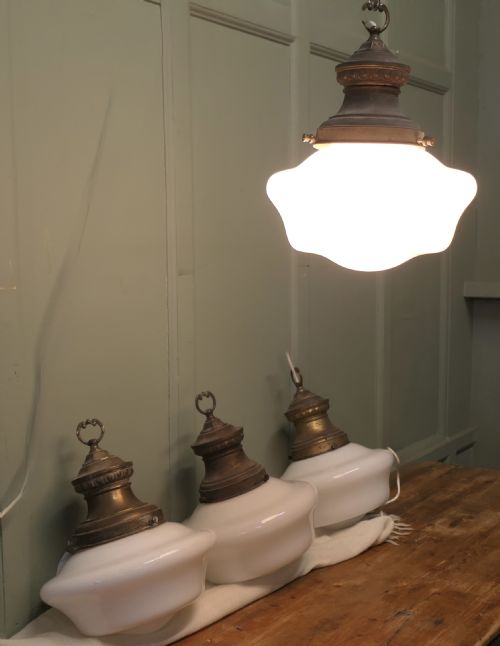
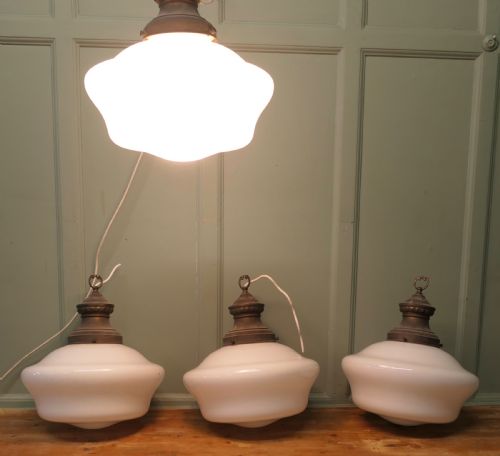
These vintage milk glass shade examples offer diffuse illumination, appearing most often here as pear shaped, conical or reeded pendants and oil lamp globes from the Victorian, Edwardian, and Art Deco eras.
Vintage Milk Glass Shade
When you search for a vintage milk glass shade, you encounter functional lighting components spanning the late nineteenth century through to the nineteen-thirties. The selection on this page centres primarily on pendant lights, ceiling fixtures, and oil lamps outfitted with opaque or translucent glass globes.
Most items you meet here originate from the Victorian and Edwardian periods, alongside industrial nineteen-thirties designs and Art Deco hallway pendants. Forms range from diminutive shades and reeded designs to large chapel lights and pharmacy pendants.
How they were made
The pieces combine pressed or blown glass with metal mounts in brass or iron. Makers utilised opaque materials such as opaline glass, moonstone glass, and milk glass to soften harsh illumination.
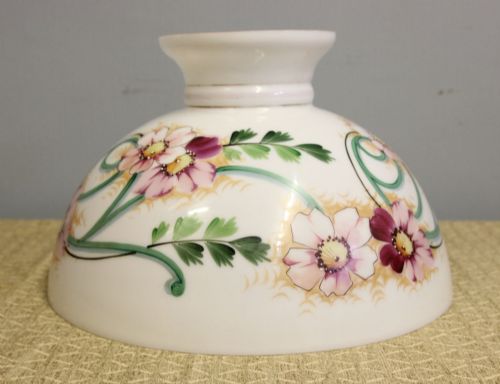
Surface decoration on these items involves hand painting or enamelling directly onto the glass body. Fittings frequently incorporate brass rings, ceramic bases, or metal galleries to secure the shade to the lamp or ceiling drop.
Historic French workshops occasionally finished these shades with frilly edges, giving industrial glass a surprisingly delicate silhouette.
What varies in quality
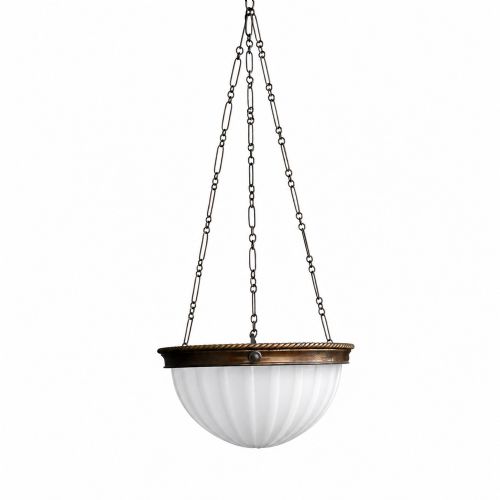
The distinction between standard utility items and finer examples lies in the weight of the glass and the sophistication of the moulding. Thicker, heavier opaline or moonstone glass yields a deeper, more even diffusion of light.
Execution of decorative elements also separates grades, with hand-painted enamel work and reeded surface patterns requiring greater skill than plain utilitarian shades. The integration of original brass hardware and ceramic components elevates the overall character of the piece.
The Vintage Milk Glass Shade Glossary
- Opaline glass
- A pale, translucent glass type developed to mimic porcelain while diffusing light softly. It appears widely across Victorian and twentieth-century pendant lights.
- Moonstone glass
- An atmospheric glass variety with a mottled, cloudy appearance resembling the gemstone. It is found on early twentieth-century pharmacy and chapel pendants.
- Reeded
- A surface ornamentation consisting of parallel, rounded ridges running along the body of the shade. This technique adds texture and structural rigidity to pendant forms.
- Oil lamp shade
- A globe or chimney designed originally to enclose the flame of a paraffin or oil burner. Many survive adapted for electric ceiling or table lamp use.
Vintage Milk Glass Shade: Frequently Asked Questions
What is a vintage milk glass shade?
A vintage milk glass shade is an opaque white glass cover designed to soften and diffuse light on oil lamps, pendant fixtures, and ceiling lights. These pieces date from the Victorian era up to the nineteen-thirties.
They appear in various forms, including conical shapes, pear profiles, and reeded designs intended for domestic and industrial interiors.
How do I hang a vintage milk glass shade?
Hanging these shades typically requires a compatible brass or metal fitter, gallery, or pendant cord that grips the top rim securely. Many fixtures integrate directly with ceiling drops or period brass hardware.
Care must be taken to match the fitter size of the shade with the appropriate gallery diameter to ensure stable suspension.
How do I clean a vintage milk glass shade?
Cleaning involves washing the glass gently in warm, soapy water using a soft cloth to protect the surface and any hand-painted enamel details. Harsh abrasives must be avoided.
Metal components such as brass rings and ceramic bases should be wiped down separately to preserve their original finish without damaging the glass.
How can I tell the period of a milk glass shade?
Dating relies on observing stylistic markers, manufacturing techniques, and associated hardware like brass galleries or ceramic oil lamp bases. Victorian and Edwardian examples often feature hand-painted floral motifs or frilled edges.
Later nineteen-thirties items frequently display cleaner industrial silhouettes, such as conical or fish scale pendant profiles characteristic of Art Deco and early modern interiors.