
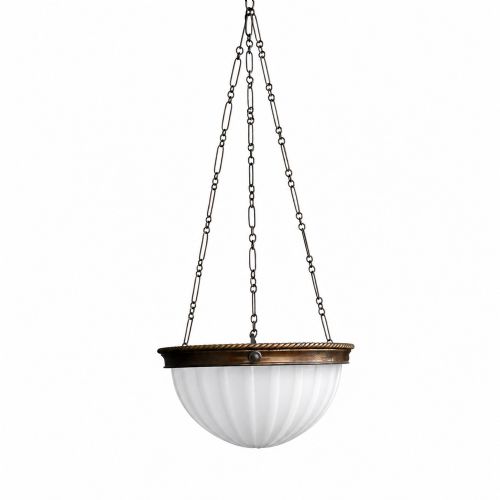
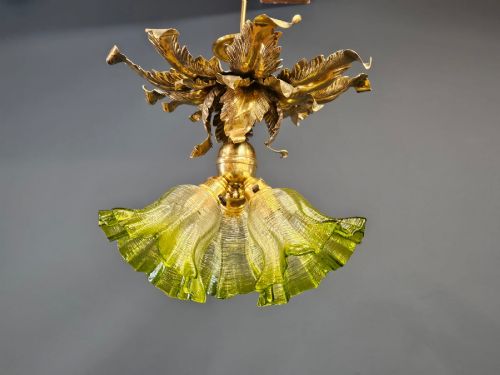
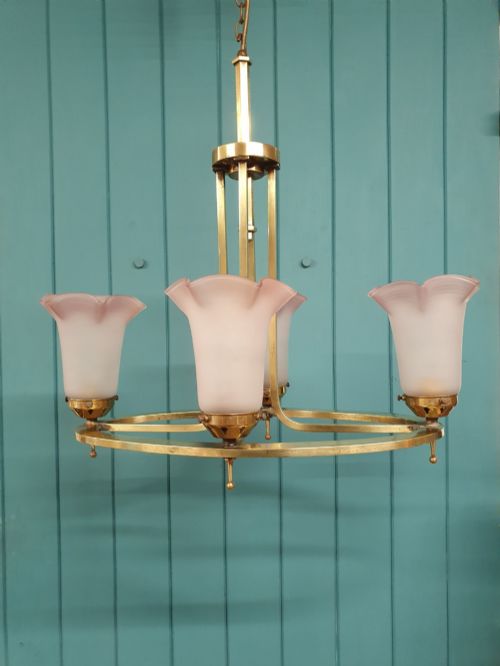


Fluted Glass Pendant Light
These fluted glass pendant light fixtures bring period character and clear illumination to a room, offering genuine architectural heritage for a modern interior.
Identifying your fluted glass pendant light
A fluted glass pendant light encompasses hanging lighting fixtures defined by vertical grooves or ridges moulded into the glass shade. When searching for a fluted glass pendant light, you encounter diverse forms ranging from single ceiling drops to multi-armed chandeliers spanning several decades of design.
The selections available on this page span the Edwardian period, the 1920s, and 1930s Art Deco styles. These pieces originate from English and French traditions, often incorporating brass or silver-plated metalwork alongside the glass elements.
Most pieces function as central ceiling illumination, utilising opal glass, frosted glass, cut glass, or moonstone glass. Forms include substantial pharmacy shades, frilly decorative bowls, and four-light chandeliers.
Materials and construction
Production relies on glass-moulding techniques to create the characteristic fluted ridges and decorative frilled borders. Manufacturers paired these glass shades with structural mounts cast in brass or finished in silver plate to support the weight safely.
Different glass treatments dictate how light diffuses through the room, with opal and frosted varieties softening the output. Clear cut glass versions create sharper refraction, while specialist moonstone glass provides a distinct opaque glow.
Retail Price Guide 2026
Typical UK retail prices for fluted glass pendant light, calculated from the Sellingantiques database of over a million retail prices indexed since 2003. This retail price guide relies exclusively on Sellingantiques data; no external sources or auction records are used, so the figures do not describe the wider market.
Some French shades feature frilly borders that give industrial glasswork an unexpected touch of seaside whimsy.
Judging the range
Quality separates standard utilitarian fixtures from finer decorative examples through the crispness of the glass moulding and the weight of the metal components. Heavier brass frameworks and deeply cut glass details distinguish the higher end of the surviving range.
The integrity of the shade material and the fineness of the silver plating or brass patination indicate superior original manufacture. French and English pieces demonstrate varying design ambitions, from simple pharmacy shades to elaborate multi-light chandeliers.
The Fluted Glass Pendant Light Glossary
- Fluted glass
- Glass featuring parallel vertical grooves or channels pressed or cut into the surface. This technique strengthens the shade while diffusing light attractively.
- Opal glass
- A translucent, milky-white glass that softens bulb glare and spreads an even luminescence. It appears frequently in vintage lighting.
- Moonstone glass
- A semi-opaque, iridescent glass variety prized for its soft, ethereal glow when illuminated. It creates a distinctive ambient effect.
- Silver plate
- A thin layer of silver applied over a base metal foundation, such as brass or copper. It provides a bright metallic finish for decorative mounts.
Frequently Asked Questions
How do I date my pendant light?
Dating relies on stylistic markers, such as the geometric lines of Art Deco pieces from the 1930s or the softer decorative forms of Edwardian designs.
Examining the metal components, screw threads, and wiring methods also helps establish the era of manufacture.
Can these lights be rewired safely?
Most vintage pendant lights require rewiring to meet modern electrical safety standards before installation in a contemporary home. A qualified electrician can easily adapt the internal fitting while preserving the original shade and frame.
What is the difference between opal and frosted glass?
Opal glass is a solid milky-white material that obscures the bulb entirely and casts an even, soft glow. Frosted glass has an etched or acid-treated surface that diffuses light while remaining partially translucent.
How do I clean vintage glass shades?
Cleaning requires removing the glass shade from the metal mount and washing it gently in warm, soapy water. Avoid harsh abrasives that could damage delicate frilled edges or cut glass patterns.