




Hanging Glass Bowl Light
These hanging glass bowl light examples offer functional illumination suspended from ceilings, bringing period character and diffuse brightness into interior spaces.
Hanging Glass Bowl Light
A hanging glass bowl light is a ceiling-mounted fixture designed to diffuse light downwards and outwards into a room. The selection here spans periods from the late nineteenth century through to the nineteen thirties, encompassing Edwardian, Victorian, Art Deco, and Arts and Crafts styles.
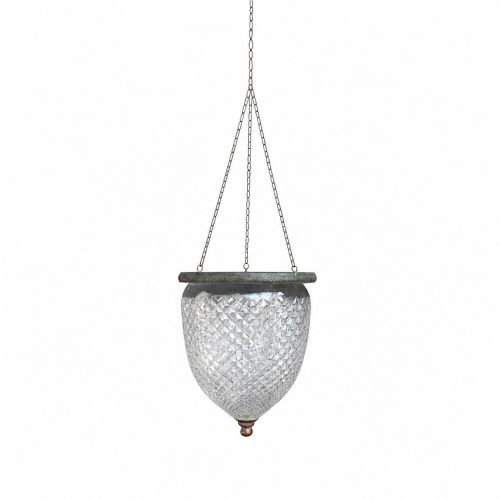
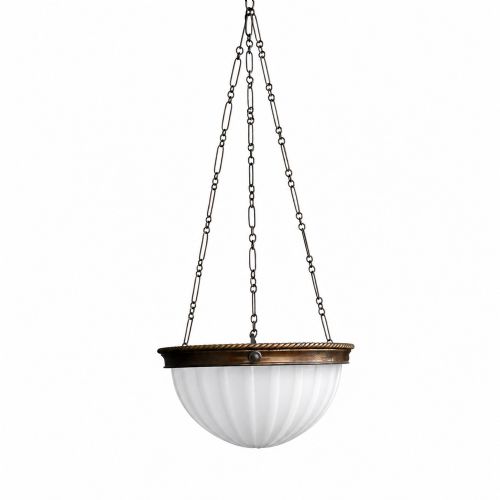
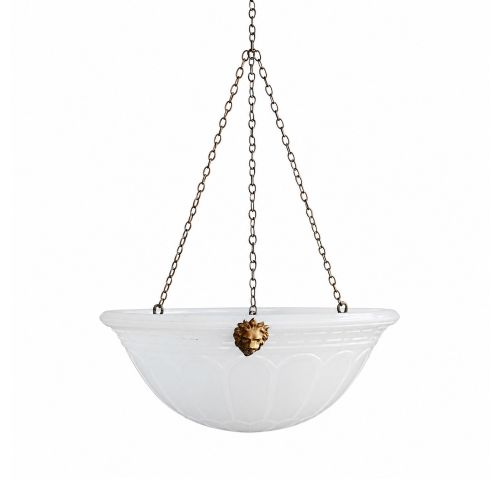
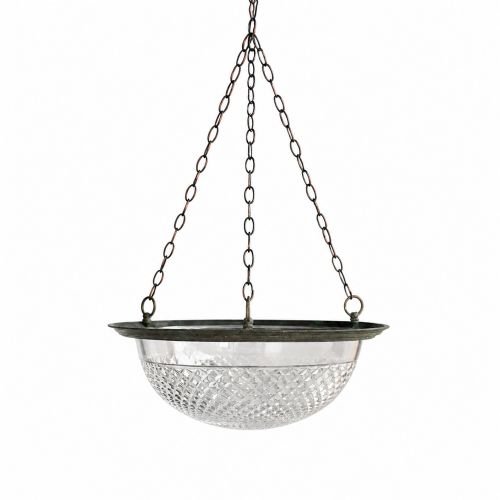
Most examples take the form of plafonniers, dish lights, or bowl pendants suspended by chains or rods. You encounter variations in glass types including cut glass, moonstone, opalescent, frosted, and mirrored surfaces.
Origins represented in the current stock lean toward English manufacture alongside nineteenth-century French pieces. Forms range from simple bowl shades to elaborate multi-component bowl chandeliers.
How they were made
The construction relies heavily on the combination of moulded or blown glass bowls with metal suspension hardware. Brass, bronze, silver-plated metal, and patinated brass form the frames, galleries, and chains that support the glass elements.
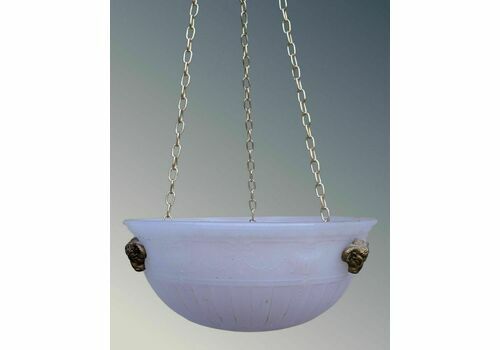
Glass techniques visible across the pieces include wheel-cutting, enamelling, and frosting to manipulate light transmission. Metalwork incorporates cast decorative motifs such as rams heads alongside structural bands and suspension chains.
The listings show pieces spanning from the late nineteenth century through to nineteen thirty, utilising brass, bronze, crystal, and moonstone glass across Edwardian, Art Deco, and Arts and Crafts styles.
What varies in quality
Quality in these lights is found in the depth and clarity of the glasswork, whether through crisp hand-cut facets or smooth opalescent and moonstone finishes. Heavier metal mounts in bronze, brass, or silver plate indicate superior construction compared to lighter base metals.
The sophistication of the design, from restrained Edwardian cut glass dishes to sculptural Art Deco and Neoclassical frames, dictates the refinement of the piece. Intricate detailing on the metal suspension hardware and integrated galleries elevates the overall execution.
The Hanging Glass Bowl Light Glossary
- Plafonnier
- A ceiling-mounted bowl light fixture that sits relatively close to the ceiling surface. This French term typically describes shallow glass bowl shades used for central illumination.
- Moonstone glass
- A type of semi-translucent glass with a milky, iridescent quality resembling the stone it is named after. It softens light output effectively in Edwardian and early twentieth-century fixtures.
- Opalescent glass
- Glass containing ingredients that create a milky, multi-coloured appearance with pearlescent effects. It scatters light to reduce glare while producing warm ambient tones.
- Cut glass
- Glass decorated by grinding and polishing facets into the surface to refract light. This technique is prominent in Victorian and Edwardian crystal bowl lights.
- Ceiling suspension
- The hardware assembly comprising chains, rods, and canopies used to hang a light fixture from the ceiling. These metal components often match the decorative style of the glass bowl.
Hanging Glass Bowl Light: Frequently Asked Questions
How do I hang a bowl light?
Suspension typically involves attaching the central metal chains or rods to a sturdy ceiling hook connected to an electrical junction box. The weight of the glass bowl must be supported directly by the metal frame rather than the electrical wiring.
Professional installation is recommended to ensure the ceiling fixings safely bear the combined weight of the glass and metal components.
What rooms suit these lights?
These fixtures function well in hallways, dining rooms, bedrooms, and reception spaces where ambient overhead lighting is required. Their drop from the ceiling makes them suitable for rooms with standard or high ceiling heights.
Smaller plafonnier versions fit spaces with lower clearances, while larger bowl pendants suit rooms with more vertical space.
How do I clean the glass bowls?
Dismantle the glass bowl from its metal frame carefully, supporting the weight of the shade with both hands. Wash the glass gently in warm soapy water using a soft cloth to avoid scratching decorative surfaces.
Ensure the glass is completely dry before reassembling it into the brass or bronze mountings.
How are different periods identified?
Stylistic indicators such as geometric Art Deco lines, heavy Victorian bronze work, or delicate Edwardian cut crystal help assign pieces to specific decades. The materials and manufacturing techniques used in the metal mounts and glass shades align with the design movements of their respective eras.
Comparing the suspension hardware and glass treatment against documented examples from the late nineteenth and early twentieth centuries clarifies the period.