


Edwardian Glass Ceiling Light
An edwardian glass ceiling light brings period proportion and honest illumination to a hall or stairwell.
Edwardian Glass Ceiling Light
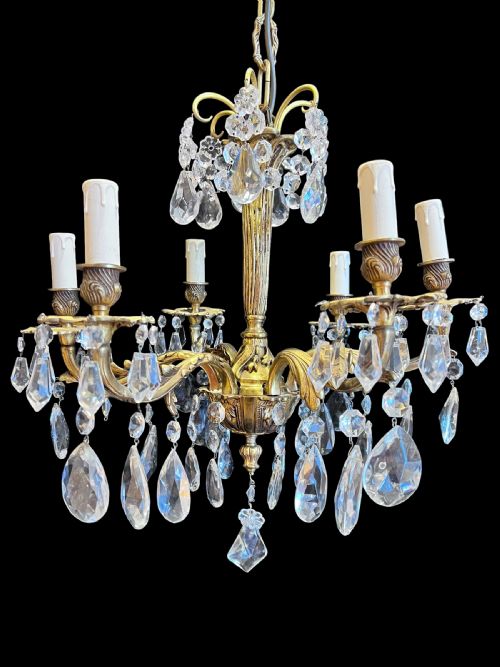
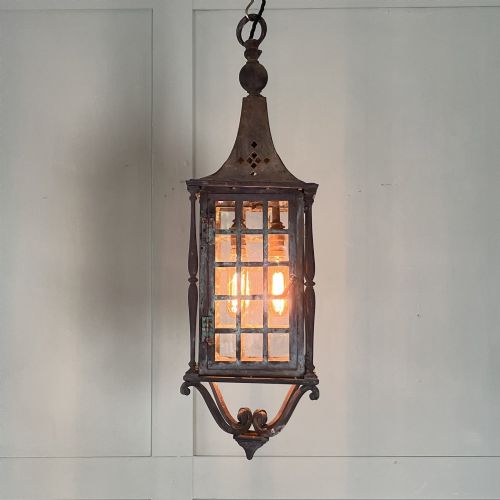
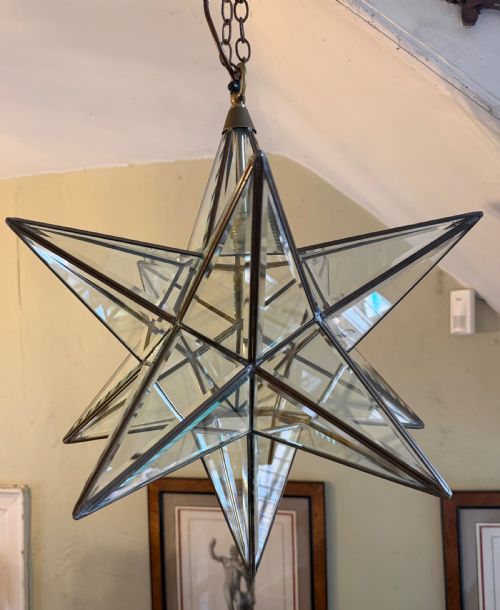
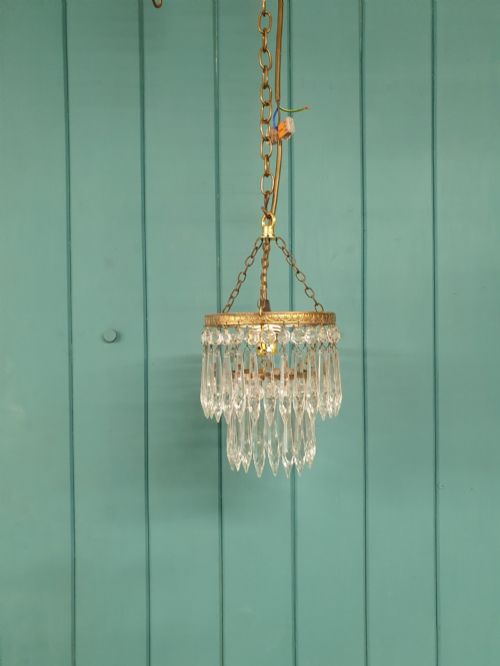
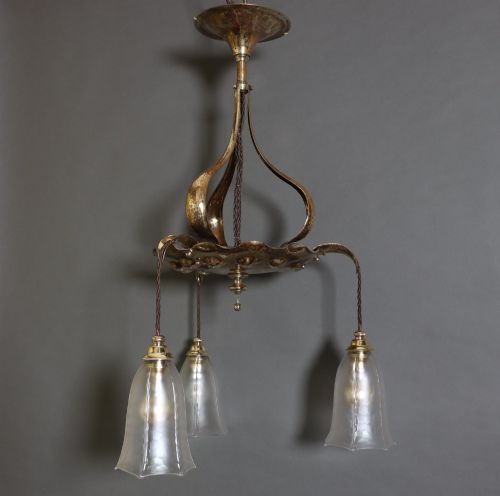
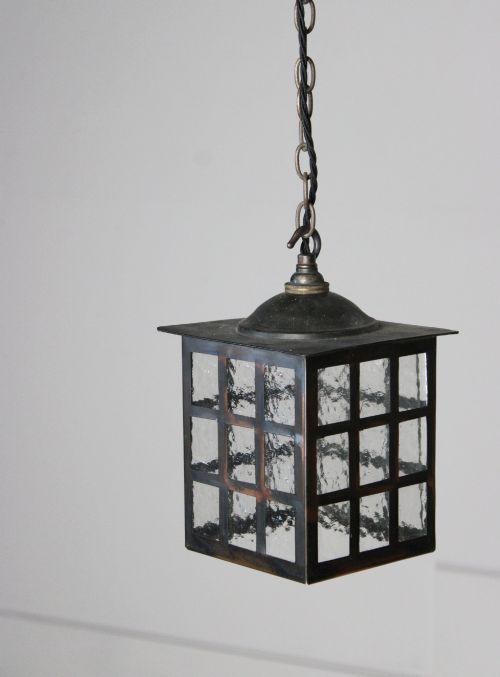
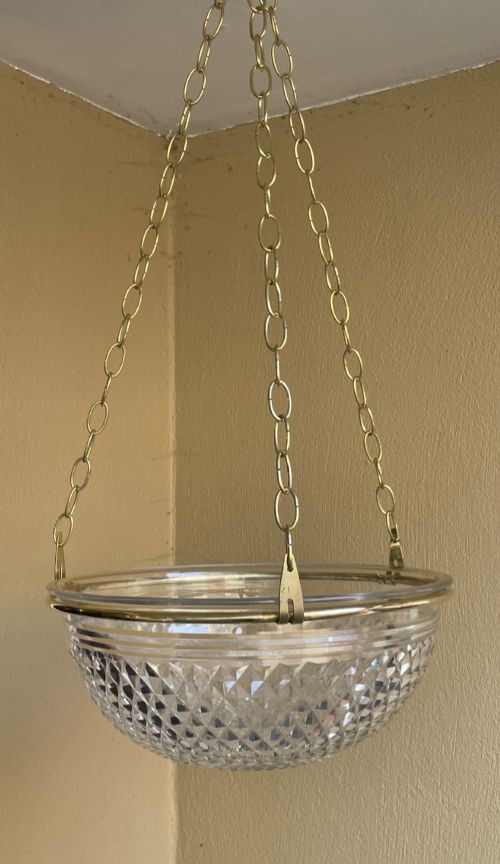
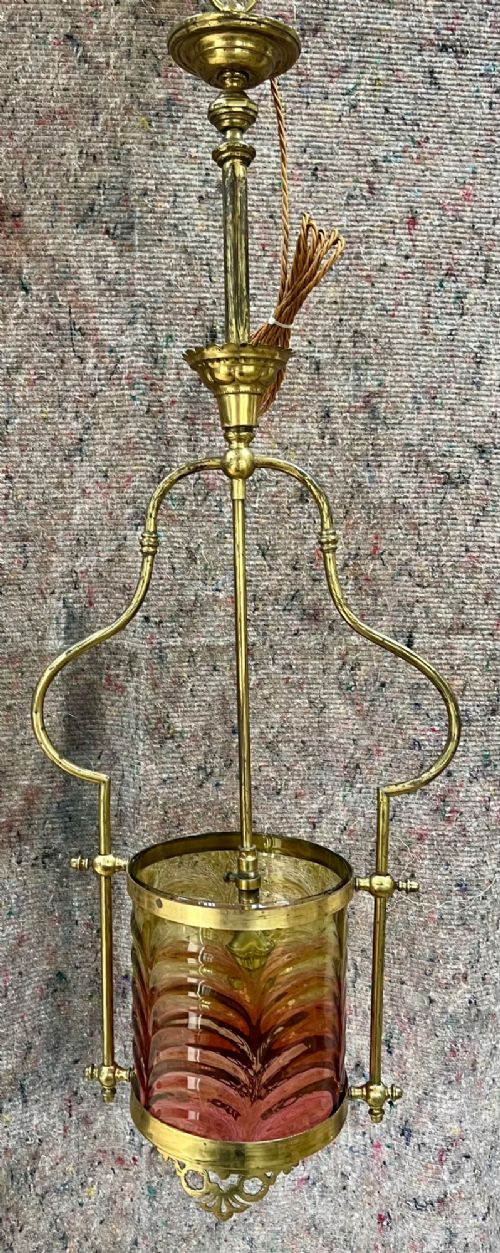
The edwardian glass ceiling light encompasses lantern pendants, domed plafonniers, and faceted crystal chandeliers originating from the early twentieth century. Pieces from this era often display the influence of Arts and Crafts design alongside transitional Victorian survivals.
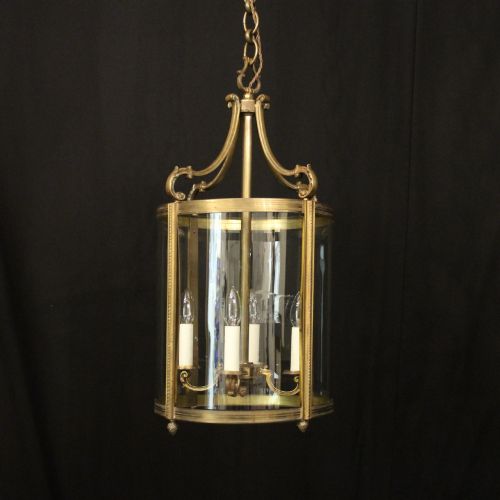
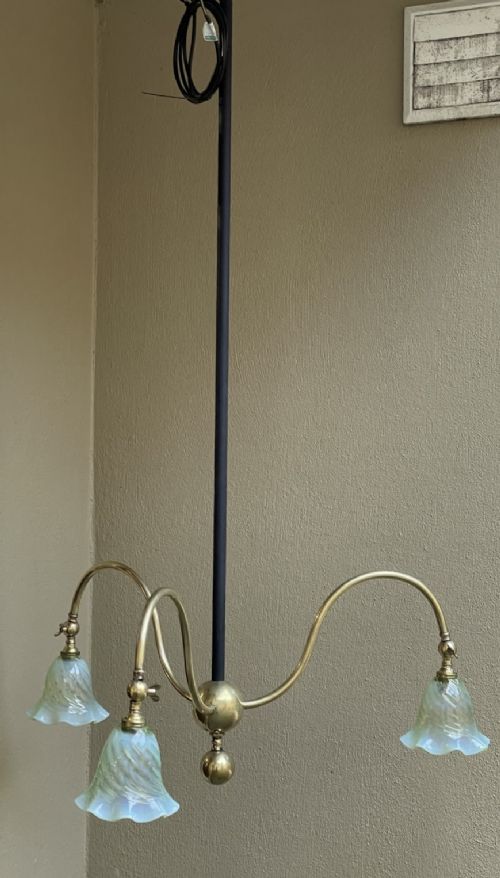
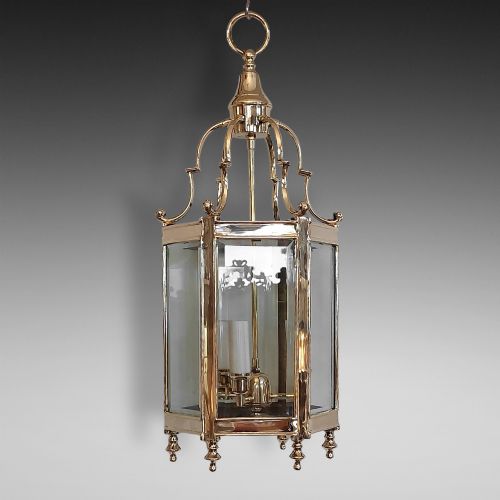
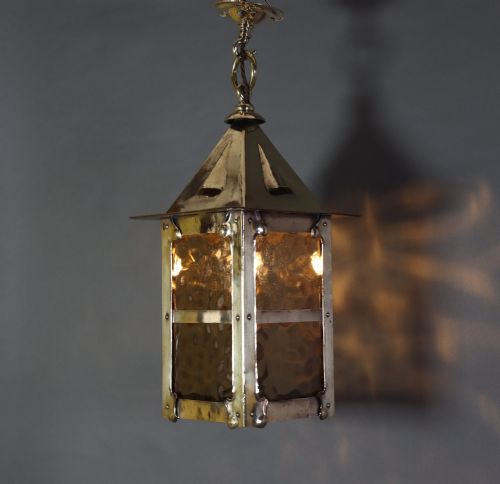
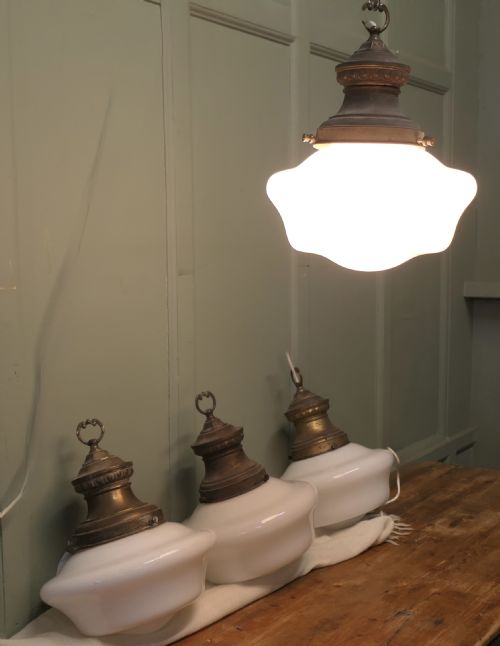
Hexagonal brass lanterns and simple moonstone or frosted glass shades dominate the domestic examples found on this page. These fixtures were designed to hang close to the ceiling or drop on short chains in period hallways and porches.
Makers and designers of the period also produced robust industrial styles and delicate cut glass fixtures alongside utilitarian hall lights. The selection ranges from straightforward brass-framed shades to elaborate multi-armed crystal arrangements.
Materials and Construction
Frames are cast or spun in brass, bronze, copper, and occasionally silver-plated metal to house the glass components securely. These metal mounts frequently feature galleries that grip the shade with screws or retainers.
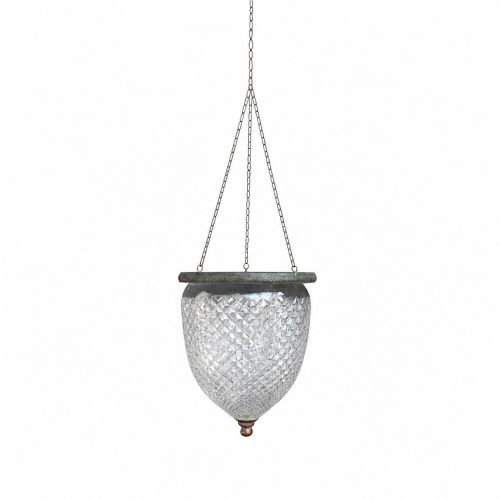
Glass elements are cast, blown, cut, or moulded into distinct shapes such as acorns, pineapples, domes, and flat-bottomed plafonniers. Clear crystal, opaline, moonstone, and frosted surfaces diffuse the light while heavy bevelling adds linear refraction.
Early twentieth-century households relied on heavy glass pineapples to brighten gloomy hallways with welcoming hospitality.
Standards of Execution
Quality rests in the weight of the metal framework and the crispness of the glass cutting or moulding. Superior examples retain original matching components such as cast galleries and detailed brass chains.
Subtle details like lion masks on brass mounts, heavy bevelled glass plates, and deep hand-cut facets separate standard utilitarian fixtures from finer decorative pieces made for grander public and private spaces.
Osler
The Edwardian Glass Ceiling Light Glossary
- Plafonnier
- A bowl-shaped glass ceiling light that mounts directly or hangs close to the ceiling surface. This form provides diffused downward illumination without a lengthy drop.
- Electrolier
- A multi-armed ceiling light fixture designed specifically for electric lighting rather than gas. These fixtures emerged as electricity became common in domestic interiors.
- Holophane
- A brand of scientific prismatic glass engineered to direct and diffuse light efficiently. These ribbed shades appear frequently in utilitarian and domestic settings from the early twentieth century.
- Moonstone glass
- A semi-translucent milky glass that produces a soft, even glow when illuminated from within. It was widely used for Edwardian shades and globes.
- Gallery
- The metal ring or collar that holds a glass shade in place with thumb screws. Original galleries often carry registration numbers or maker marks.
Edwardian Glass Ceiling Light: Frequently Asked Questions
How do I hang a heavy ceiling light safely?
Suspension requires a secure fixing directly into the ceiling joist or a heavy-duty ceiling rose capable of supporting the combined weight of metal and glass. Heavier chandeliers and lanterns need appropriate ceiling hooks rather than standard plaster fixings.
Professional installation ensures the internal wiring matches modern safety standards while maintaining the structural integrity of the original metal frame.
Are these lights suitable for low ceilings?
Plafonniers and close-hanging brass lanterns sit high against the ceiling and suit rooms with restricted vertical clearance. Dome-shaped shades project downward only slightly while providing an adequate spread of light.
Avoid multi-armed chandeliers with long drop rods in rooms with low clearance, as these require sufficient headroom to walk beneath safely.
Can I use modern LED bulbs in these fixtures?
Modern LED golf ball or candle bulbs fit most standard lamp holders found in period fixtures while producing minimal heat. Choosing a warm white colour temperature preserves the soft amber glow typical of early twentieth-century lighting.
Care should be taken with enclosed glass shades to select bulbs that do not exceed the original spatial and thermal tolerances.
How do I distinguish Edwardian from Victorian lighting?
Edwardian fixtures generally exhibit lighter brasswork, simpler geometric lines, and less ornamentation than their ornate Victorian predecessors. The transition brought forth cleaner Arts and Crafts influences and softer moonstone glass.
Victorian pieces often rely on heavier cast brass, rich surface patination, and more complex floral or architectural motifs in the metal frames and glass shades.