


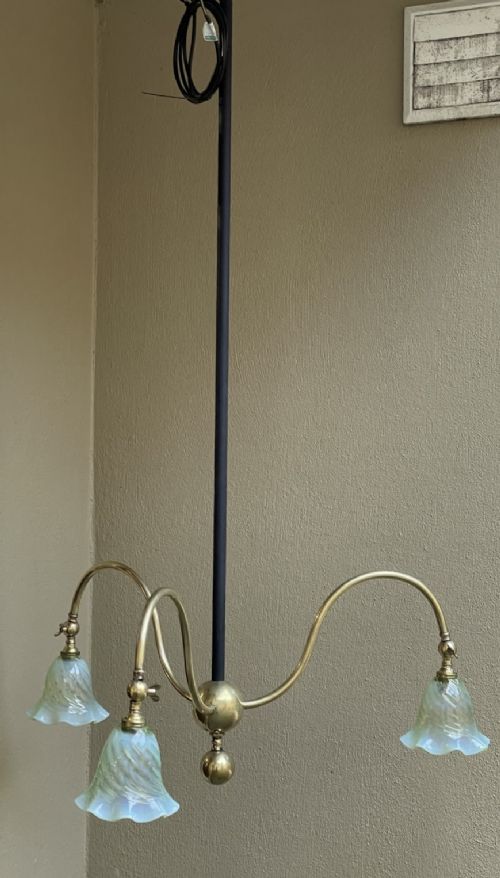
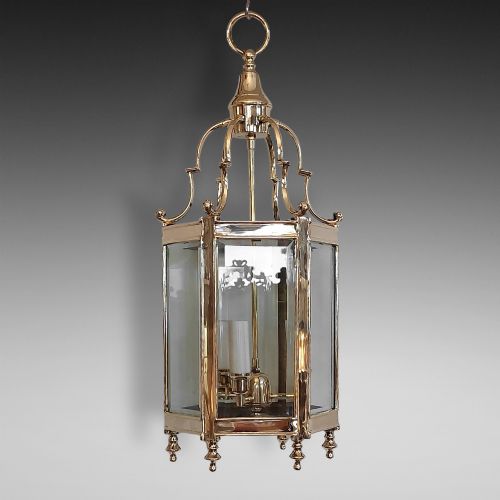
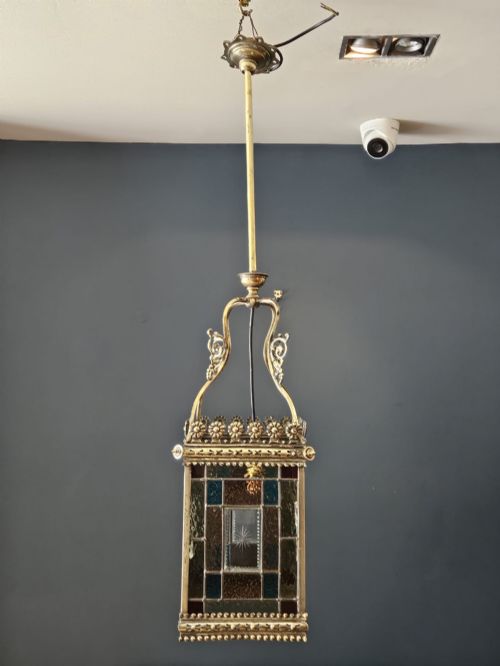
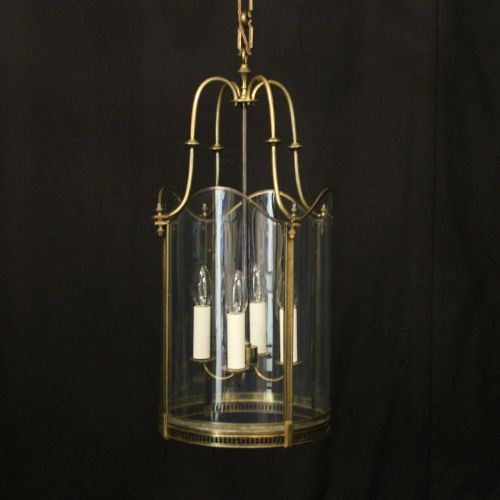
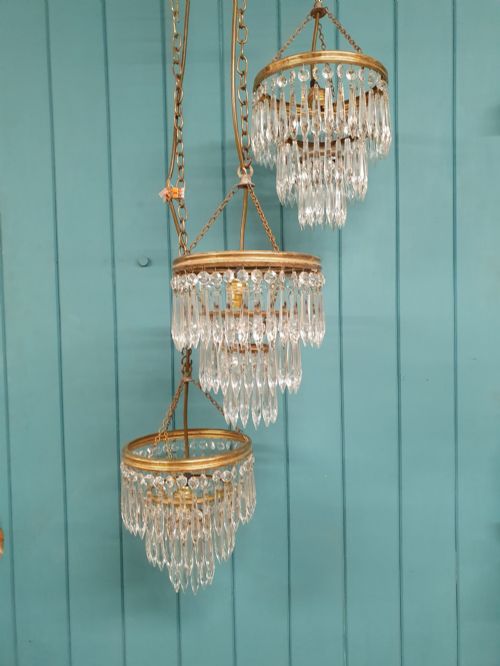
Antique Brass Ceiling Pendant
These antique brass ceiling pendants bring together heavy cast brass and cut glass to light a room with genuine period character.
Identifying an antique brass ceiling pendant
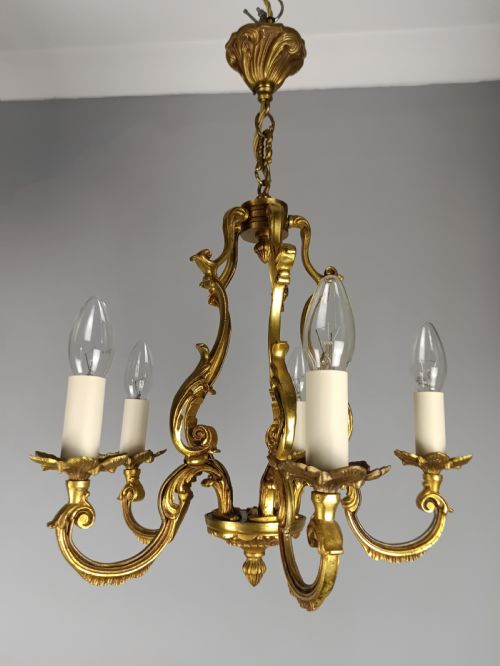
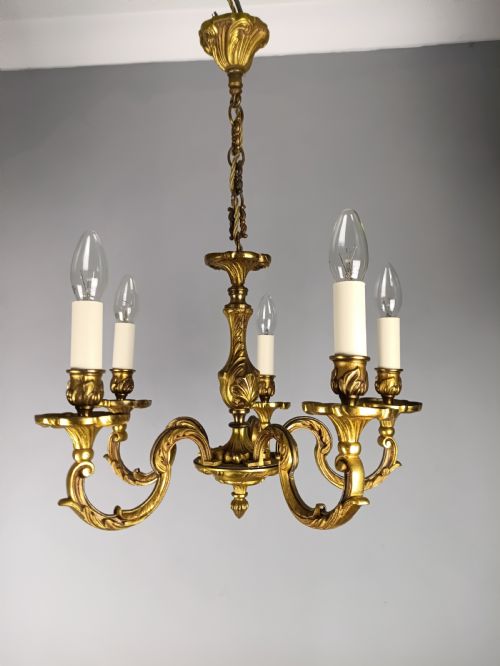
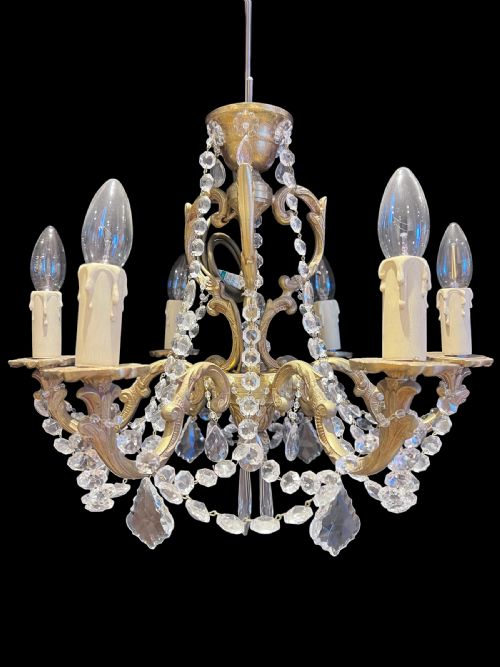
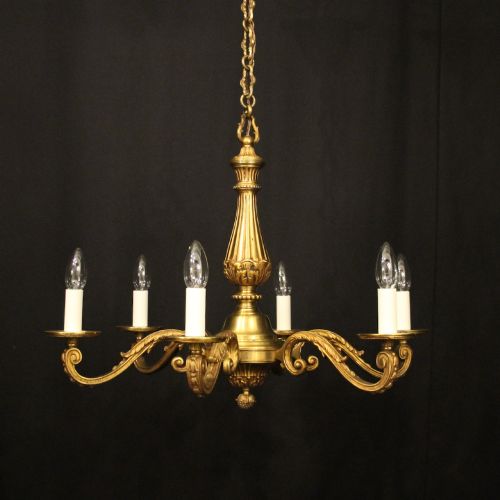
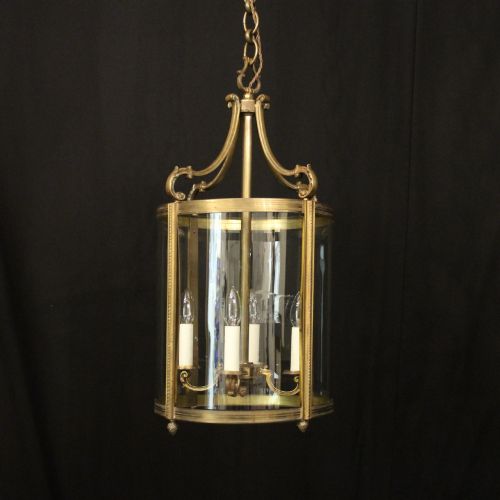
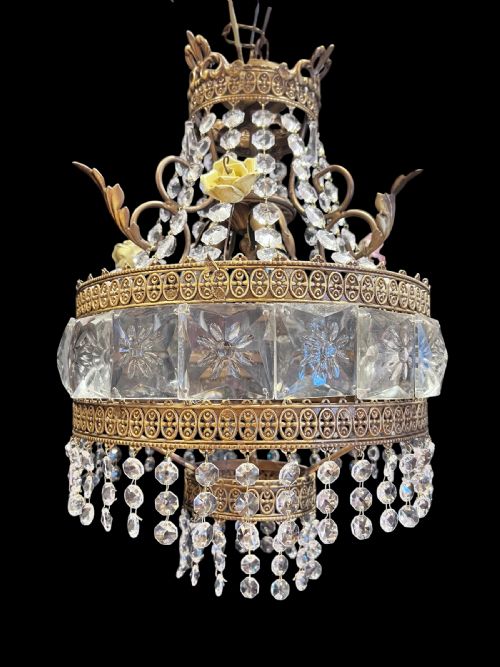
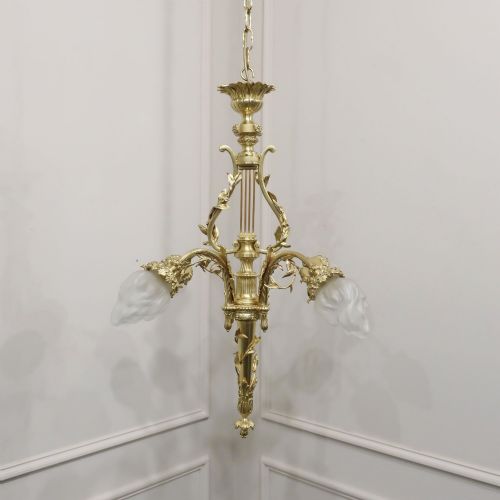
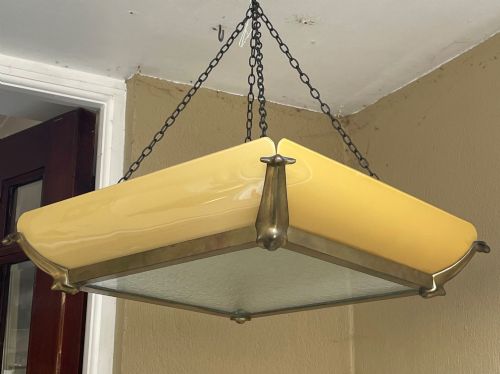
When you search for an antique brass ceiling pendant, you are looking at overhead lighting fixtures that combine metalwork with glass shades or crystal drops. The examples gathered here span from the nineteenth century through the Edwardian era up to the nineteen-thirties.
You will most frequently meet pieces from the Edwardian period and nineteen-thirties, alongside earlier nineteenth-century designs. Forms range from simple glass and brass ceiling pendants to elaborate multi-armed chandeliers and plafonnier ceiling lights.
The styles represented include French Rococo Revival and industrial influences, often featuring decorative cast elements such as cherub arms. These fixtures were designed to serve as the primary light source in principal rooms.
Materials and construction
The framework of these ceiling fittings relies heavily on brass and gilt metal, sometimes complemented by bronze components. These metals were cast and chased to create the structural arms and decorative mounts.
Glass elements form a major component of the construction, utilising cut glass, crystal, and frosted glass. Shades and drops were individually blown, moulded, or cut to diffuse the light effectively.
Retail Price Guide 2026
Typical UK retail prices for brass ceiling pendant, calculated from the Sellingantiques database of over a million retail prices indexed since 2003. This retail price guide relies exclusively on Sellingantiques data; no external sources or auction records are used, so the figures do not describe the wider market.
Current listings span four distinct periods: nineteenth century, nineteen-hundred, Edwardian, and nineteen-thirty.
Judging quality in brass and glass lighting
Quality reveals itself in the crispness of the metal casting and the depth of hand-cut detail in the glass. Heavier gauge brass and finely detailed figural work, such as cherub arms, separate finer production from simpler utilitarian pieces.
The integration between metal frames and glass components indicates the level of care taken by the maker. Superior pieces maintain secure, well-fitted mounts that support heavy crystal or cut glass without strain.
The Antique Brass Ceiling Pendant Glossary
- Plafonnier
- A ceiling-mounted bowl light or flush fixture that sits close to the ceiling surface. These often feature heavy cut glass bowls held in brass mounts.
- Chandelier
- A branched decorative ceiling pendant designed to hold multiple light sources. They frequently incorporate crystal drops and elaborate metal arms.
- Gilt metal
- Base metal treated with a gold-coloured surface finish to imitate solid gold or ormolu. It provides a bright decorative sheen on period frames.
- Frosted glass
- Glass treated to have a scatter-patterned, opaque surface that softens direct lightbulbs. This technique reduces glare while maintaining a warm glow.
Frequently Asked Questions
What rooms suit an antique glass pendant light?
Pendant lights and smaller plafonniers work well in hallways, entrance vestibules, and bedrooms where ceiling height requires a compact fixture. Larger multi-armed chandeliers find their natural home in reception rooms and dining spaces.
Consider the drop length carefully so the lower edge clears head height in everyday traffic areas.
How do I clean antique cut glass shades?
Remove glass shades and drops from the brass frame whenever possible to wash them gently in warm soapy water. Avoid harsh chemical cleaners that can damage vintage glass surfaces or strip gilt finishes from the metal.
Dry each piece thoroughly with a lint-free cloth before reattaching it to the brass armature.
How can I tell an Edwardian pendant from a nineteenth-century one?
Edwardian lighting often exhibits lighter proportions and simpler geometric or neo-classical revival details compared to earlier Victorian work. Nineteenth-century pieces frequently display heavier casting and more ornate revival styles such as French Rococo.
Examining the construction methods of the brass mounts and the style of the cut glass helps clarify the period of manufacture.