


Tent and Waterfall Chandelier
A tent and waterfall chandelier brings dramatic light and gathered crystal to a high ceiling through layered garlands and falling drops.
Tent and Waterfall Chandelier
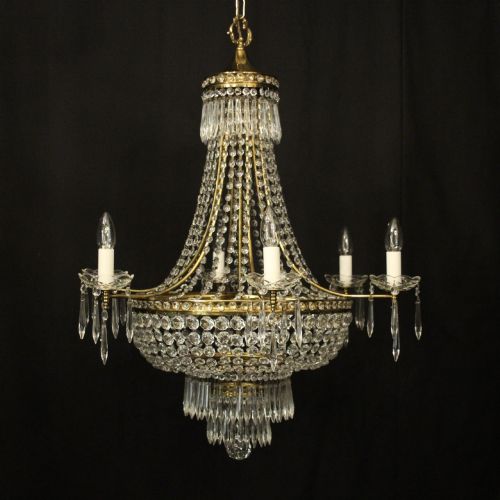
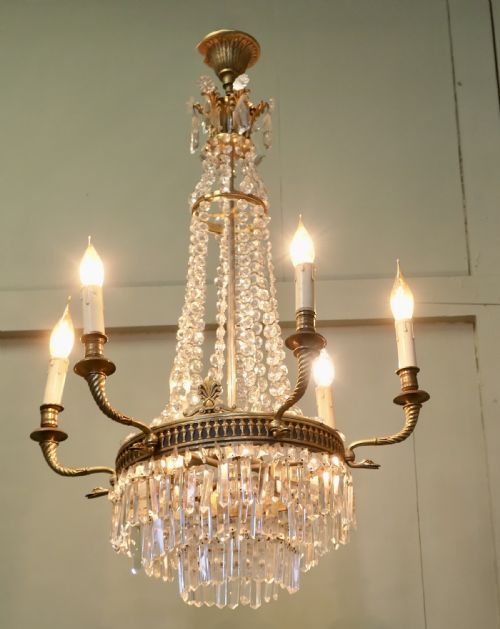
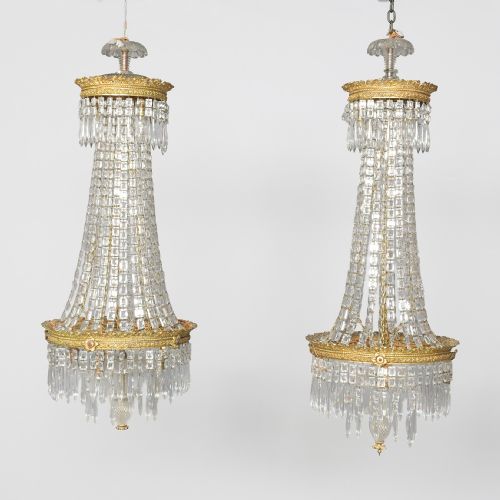
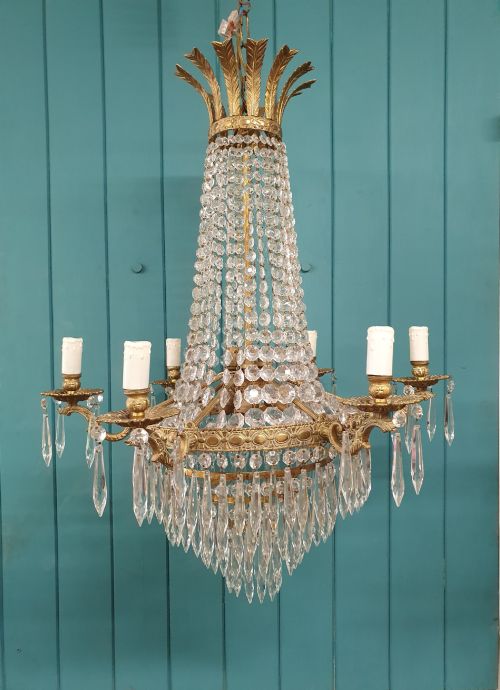
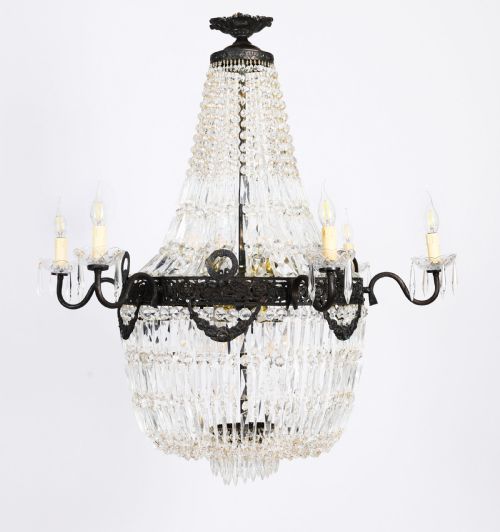
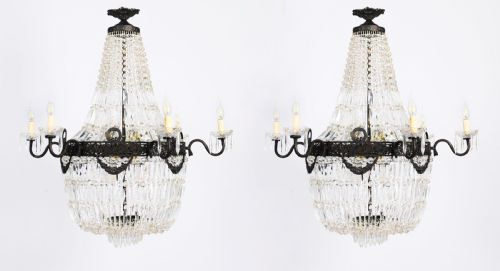
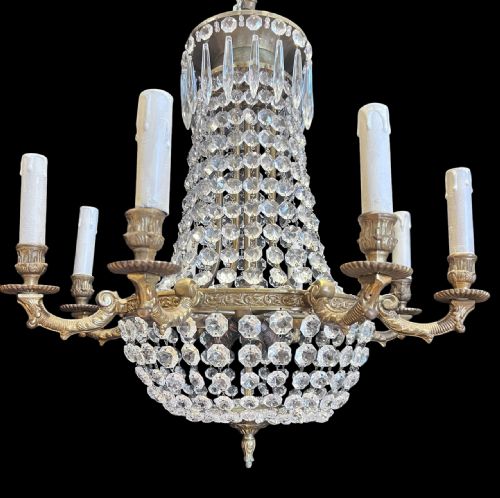
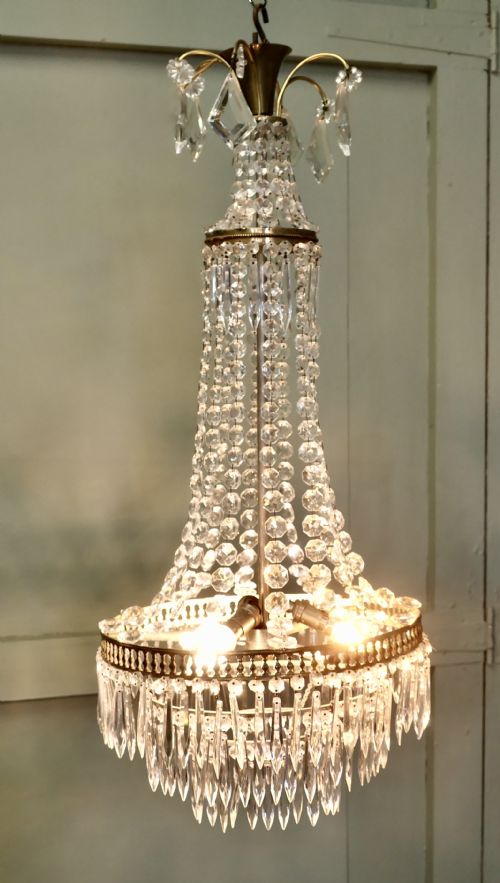
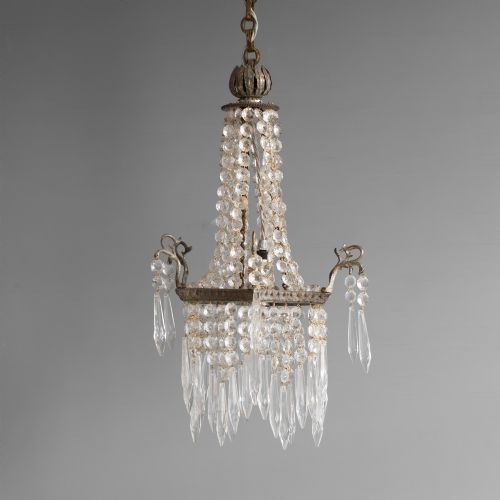
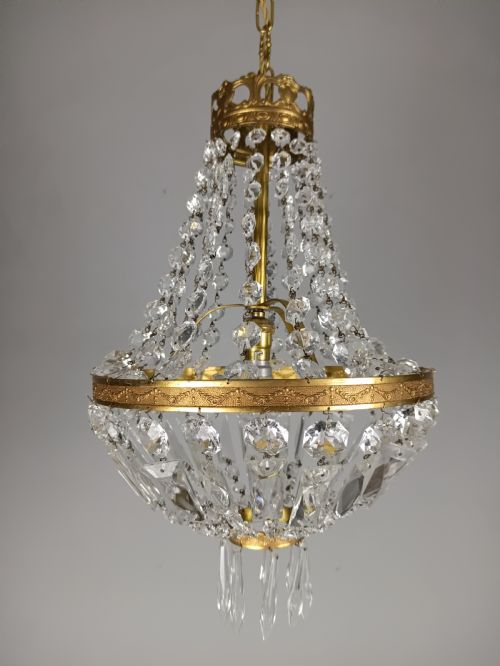
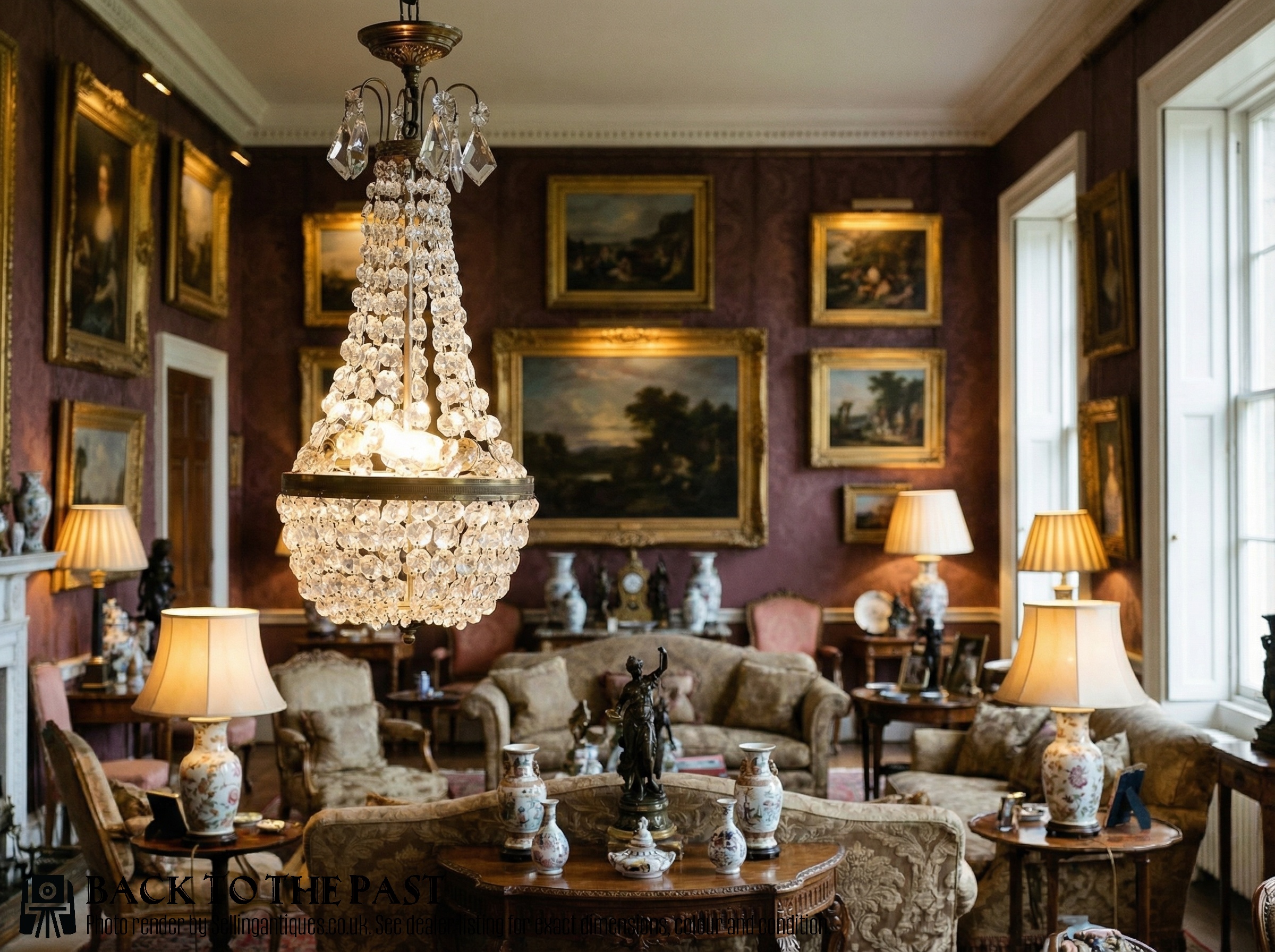
When you search for a tent and waterfall chandelier, you encounter ornate hanging light fixtures defined by an upper conical crown of glass drops and a lower cascading effect. These lighting forms span from the eighteenth century through the Edwardian era and into the 1930s, drawing heavily on French Empire, Regency, and Louis Revival design idioms. The most common versions met on this page are French examples featuring multiple candle arms, gilt bronze or brass mounts, and extensive crystal swags.
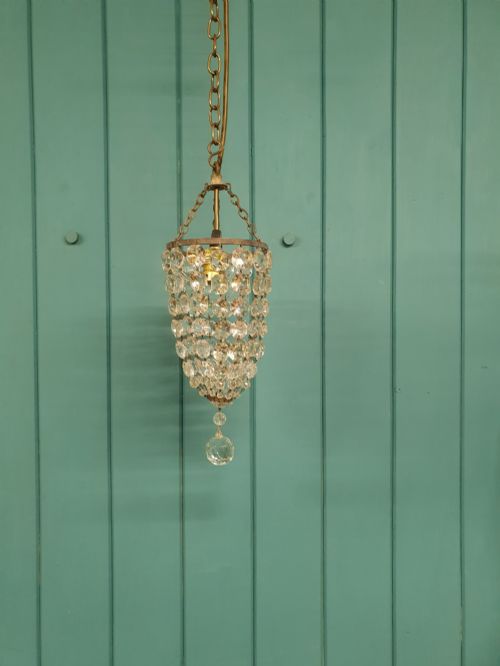
The architectural layout typically combines an upper canopy or ring connected by strands of crystal beads to a central band, forming the characteristic tent shape. Below this middle section, further strings or cascading drops create the waterfall effect, often terminating in a lower bag or pendant cluster. Surviving pieces range from small single-light chambers to large ballroom installations with sixteen lights or more.
How they were made
The foundational structure relies on metal casting and framing, predominantly utilising brass, bronze, and gilt metal to support the heavy glass components. Skilled metalworkers constructed rigid frames with arms designed to hold candles initially, later adapted for electricity while retaining their decorative symmetry. Mounts and decorative elements frequently received gilded finishes to catch and reflect candlelight.
Glass and crystal components were individually cut, moulded, and drilled before being wired onto the metal frames by hand. Jewellers and glassmakers produced precise prismatic drops, spear-shaped spikes, and octagonal beads linked by small brass pins. This meticulous assembly allowed the cascading tiers to move gently and refract illumination across a room.
Tent and Waterfall Chandelier Retail Price Guide 2026
Typical asking prices for tent and waterfall chandelier among the pieces listed under this phrase on Sellingantiques today, from the lower quarter to the upper quarter. They describe what is for sale here now, not the wider market.
Several early twentieth-century pieces incorporate unexpected brass cherubs peeking out from the glass swags.
What varies in quality
The distinction between standard examples and the finest pieces rests upon the clarity and cutting of the crystal drops. Superior chandeliers employ high-lead crystal with sharp, hand-cut facets that disperse light cleanly, whereas lesser examples use simpler moulded glass with softer edges. The weight and thickness of the cast bronze or brass framework further separate mass-produced output from master workshops.
Design coherence and structural integrity also dictate the calibre of a fixture. Top-tier pieces maintain balanced proportions across complex multi-tiered frames, integrating finely chased leaf decoration, cherubs, or intricate brass mounts without crowding the glass swags. The uniformity of the pin-work linking the crystal beads indicates the level of care applied during original construction and subsequent restoration.
Wedgwood
The Tent and Waterfall Chandelier Glossary
- Tent
- The upper triangular section of a chandelier formed by rows of crystal beads draped from a top ring down to a wider central band. This canopy creates the distinctive silhouette characteristic of Empire lighting.
- Waterfall
- The lower cascading tier of glass drops and beads that flows outward and downward from the central band. It mimics moving water by multiplying the reflections of the light sources within.
- Bag chandelier
- A variant lighting form featuring a flattened or rounded lower basket packed tightly with cut glass drops. These often accompany tent sections in Edwardian and early twentieth-century designs.
- Prisms
- Cut glass pendants or spear-shaped spikes hung from the arms and perimeter of the frame. Their geometric facets disperse ambient light into spectral colours.
- Ormolu
- Gilded bronze mounts and decorative trimmings applied to the metal frame. This technique provides a durable, warm metallic lustre popular in French revival pieces.
Tent and Waterfall Chandelier: Frequently Asked Questions
How do I clean a tent and waterfall chandelier?
Cleaning requires removing dust with a soft brush and wiping individual glass drops with a mild solution of warm water and isopropyl alcohol. Leaving the crystals attached while cleaning prevents damage to the delicate brass pin-work connecting the swags.
Working from the top tier down ensures that debris from upper sections does not soil cleaned areas below. Ensuring the fixture is fully disconnected from the mains electricity supply before starting is essential.
Were these chandeliers originally wired for electricity?
These lighting fixtures were originally designed for wax candles rather than electric bulbs. The metal arms and central nozzles held candles that cast flickering light through the surrounding glass prisms.
Most surviving examples have undergone conversion to electricity at various points in their history to suit modern domestic requirements. Rewiring is typically concealed within the central hollow stem and branching arms to preserve the visual integrity of the metalwork.
How do I date an antique chandelier?
Dating relies on examining the mounting techniques, the style of the metal casting, and the cut of the glass drops. Eighteenth and nineteenth-century pieces often display hand-cut crystal with irregular drill holes and heavy bronze frames, whereas twentieth-century examples show more uniform machine cutting.
Stylistic markers such as French Empire motifs, Edwardian bag forms, or Louis Revival proportions offer further chronological clues. Comparing the construction methods of the internal frame against documented period examples helps confirm the era of manufacture.
Can these heavy chandeliers hang from standard ceilings?
These fixtures carry substantial weight due to the combination of cast bronze, brass frames, and dense crystal glass. Hanging them safely requires securing the support hook directly into a ceiling joist or structural beam rather than relying on plasterboard.
Professional installation is recommended to ensure the ceiling rose and internal wiring can bear the load securely. Weight varies significantly depending on the number of lights and the density of the crystal cascades.