


Brass and Glass Chandelier
When you search for a brass and glass chandelier, you are looking for a statement ceiling light that combines metallic frames with transparent pendants.
Brass and Glass Chandelier
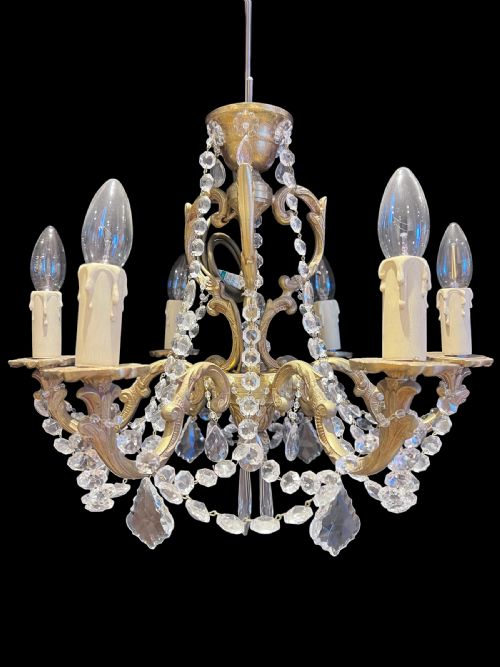
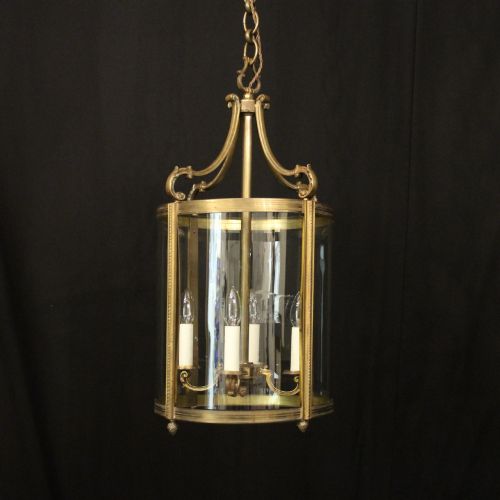
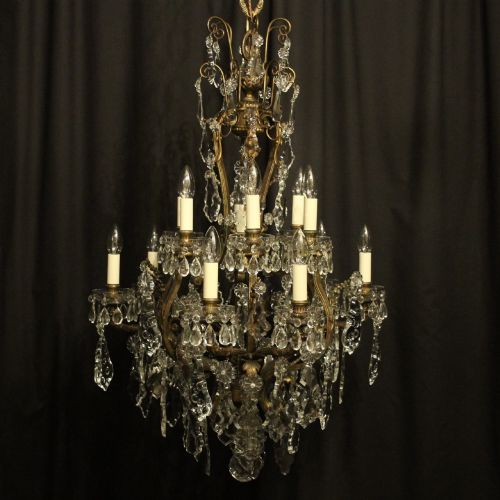
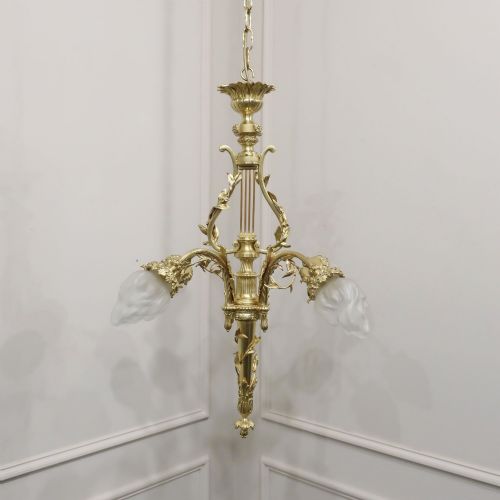
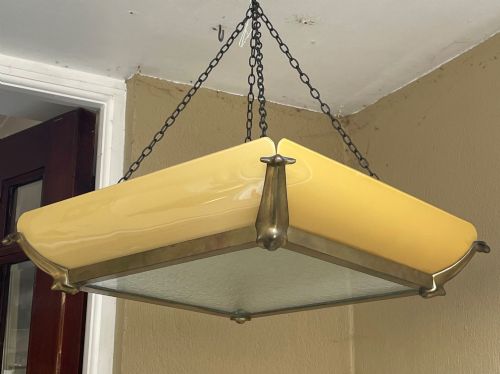
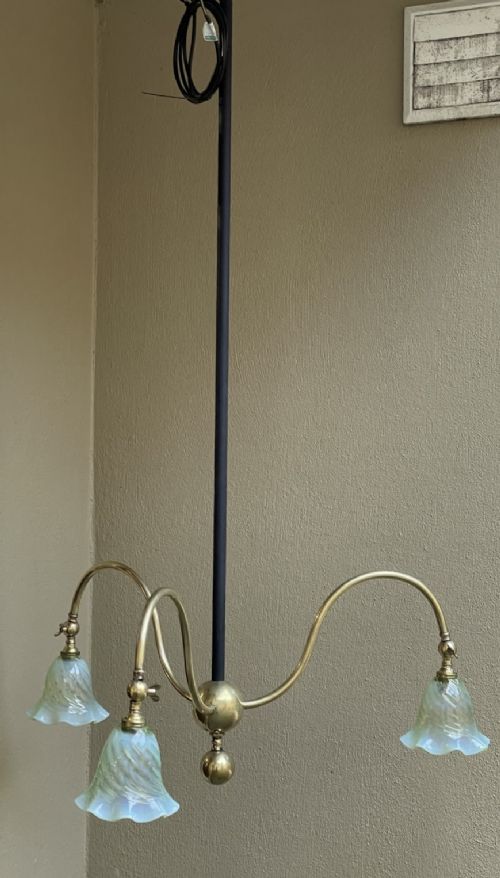
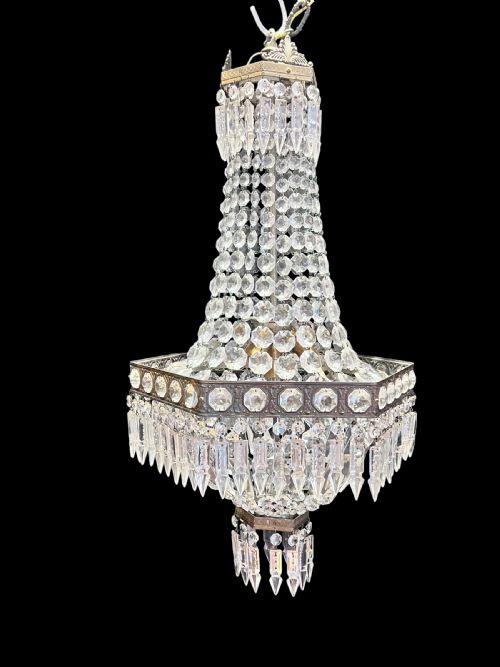
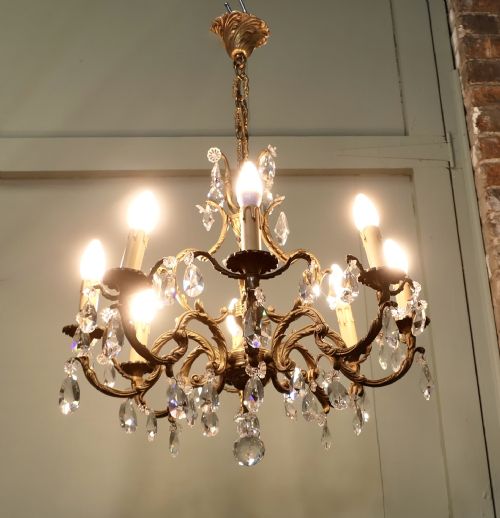
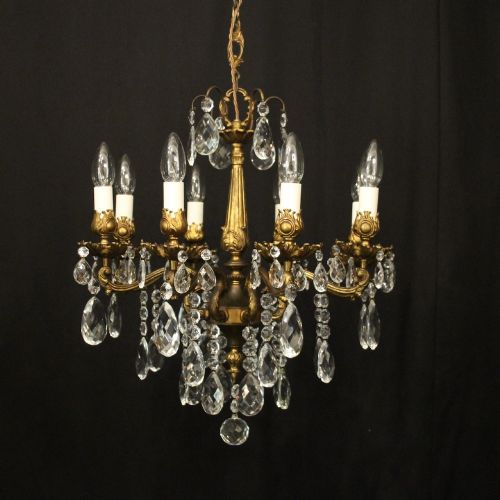
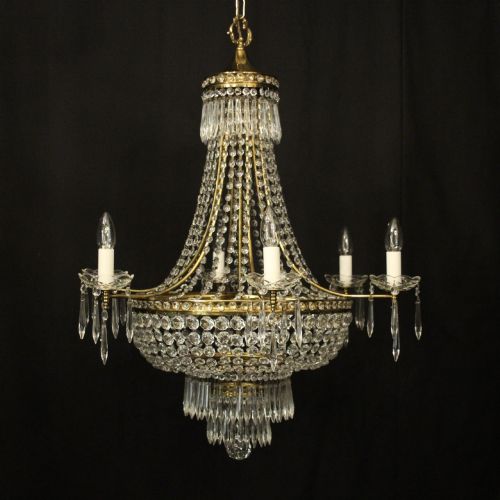
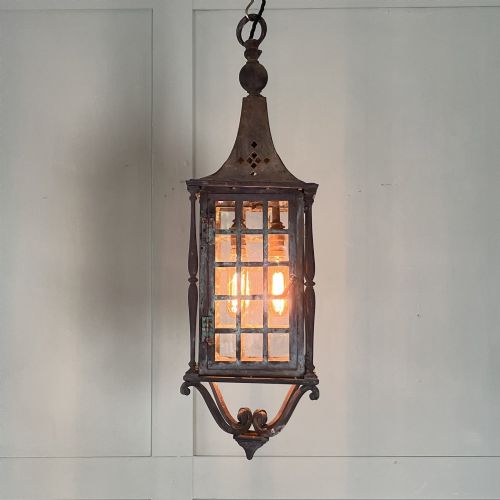
A brass and glass chandelier unites a metallic frame with transparent or translucent glass elements, creating an overhead fixture designed to refract and scatter light across a room. These pieces appear in numerous forms, from multi-armed hanging clusters to enclosed hall lanterns and basket designs.
The selections available derive largely from the nineteenth and early twentieth centuries, spanning Edwardian, Victorian, and art deco periods. French chateau and empire styles feature prominently alongside arts and crafts and neoclassical designs, reflecting varied European and domestic production.
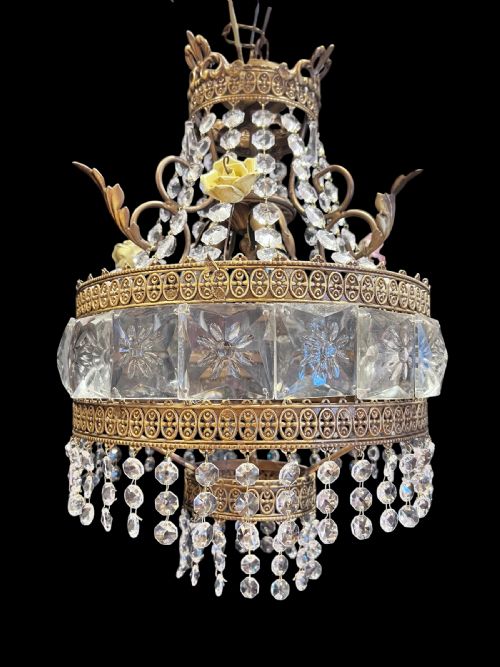
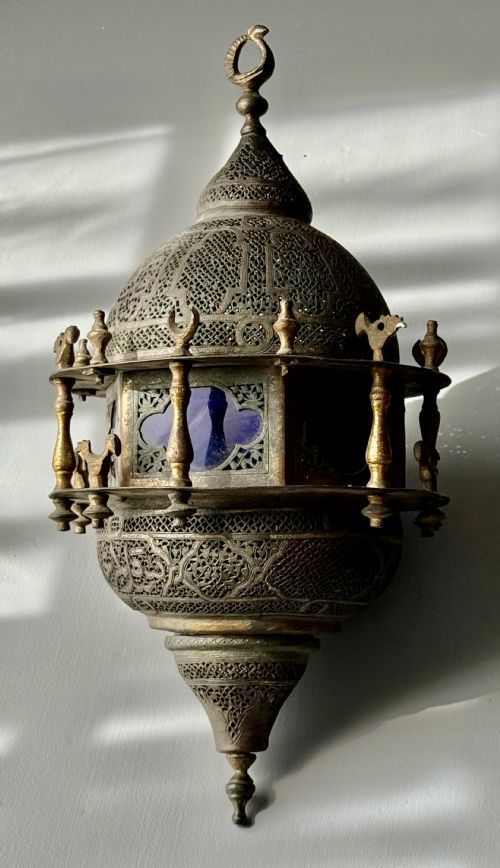
Buyers will encounter many variations in scale, ranging from compact single-light pendants to grand multi-tiered fixtures with numerous branches. Architectural pieces such as Moravian stars and pierced hanging lanterns also represent common iterations within this category.
How they were made
Frames are cast, pierced, or spun from brass, often receiving a layer of gilding or bronze finishing to enhance the metallic surface. This structural metalwork supports the weight of glass shades, drops, and crystals suspended from the arms.
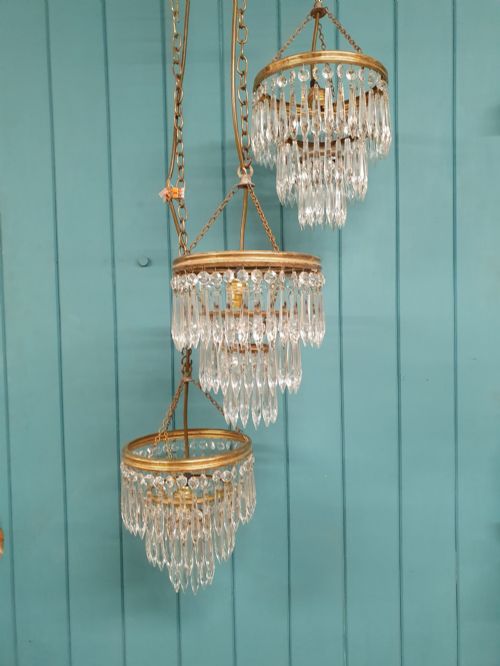
Glass components take several forms, including hand-cut crystal prisms, moulded slip shades, etched globes, and delicate frosted or opalescent shades. These elements are wired or pinned directly to the brass armature using traditional metal fixings and wire loops.
Several lanterns carry unusual provenances, hailing directly from town halls, municipal buildings, and historic town churches.
What varies in quality
The intricacy of the metal casting and the depth of the chased or pierced detailing set finer frames apart from simpler commercial production. Heavier gauges of brass and substantial cast bronze provide greater structural integrity to the fixture.
The clarity and cutting of the glass components heavily influence the overall standard of the piece, with sharp, hand-cut crystal drops producing superior light refraction compared to plain pressed glass. Original matching shades and complete sets of matching lustres indicate a higher degree of preservation.
The Brass and Glass Chandelier Glossary
- Lustre
- A cut glass pendant or drop hung from the arms or rim of a lighting fixture to catch and reflect illumination. These are frequently faceted and attached with small wire loops.
- Plafonnier
- A ceiling-mounted lighting fixture designed to sit flush or very close to the ceiling surface rather than suspended on a long chain. These often feature a glass bowl held within a brass rim.
- Tent and waterfall
- A chandelier style featuring strings of small glass beads gathered in a tent formation at the top, cascading down into a wider waterfall of drops around the lower arms.
- Gasolier
- An antique lighting fixture originally designed to burn gas rather than electricity, often converted later for modern electrical wiring. These frequently incorporate heavy brass tubing and coloured glass shades.
- Bag chandelier
- A compact lighting form where the lower portion of the fixture takes the shape of a rounded bag composed of dense glass beads or drops.
Brass and Glass Chandelier: Frequently Asked Questions
How do I clean a brass and glass chandelier?
Cleaning requires removing dust with a soft brush and wiping glass elements gently with a mild glass cleaner. Metal frames should be dusted carefully without harsh chemical polishes that might strip the original surface finish.
For thorough cleaning, delicate crystal drops can be unhooked and washed individually in lukewarm soapy water before being dried and reattached to the brass armature.
Can these antique chandeliers be rewired for modern wiring?
Most period hanging lights are suitable for modern electrical standards when assessed and fitted by a qualified professional. Rewiring ensures the internal components comply with current safety regulations while preserving the external antique appearance.
Existing candle tubes, lamp holders, and ceiling roses can often be adapted or replaced internally to accept standard modern bulbs safely.
How do I determine the correct size for my room?
Selecting the right proportion involves measuring the dimensions of the space and considering the height of the ceiling. Larger multi-branched fixtures require substantial clearance and room volume to look balanced, whereas compact lanterns suit modest hallways or lower ceilings.
Ceiling height dictates the chain length needed so that the bottom of the fixture hangs at an appropriate clearance level above the floor or furniture below.
How can I tell the difference between Victorian and Edwardian pieces?
Victorian lighting often displays heavier cast brass construction, ornate gasolier mechanics, and rich coloured glass shades such as cranberry or green. Designs from this era lean towards decorative historicism including gothic revival and baroque influences.
Edwardian fixtures tend to exhibit lighter brass frames, cleaner lines, and clearer cut glass or delicate floral shades, reflecting the transition towards neoclassical and arts and crafts aesthetics.