

Brass Cut Glass Light
A brass cut glass light brings brilliant illumination and period character to a room through heavy metal frames and refractive glass elements.
Brass Cut Glass Light
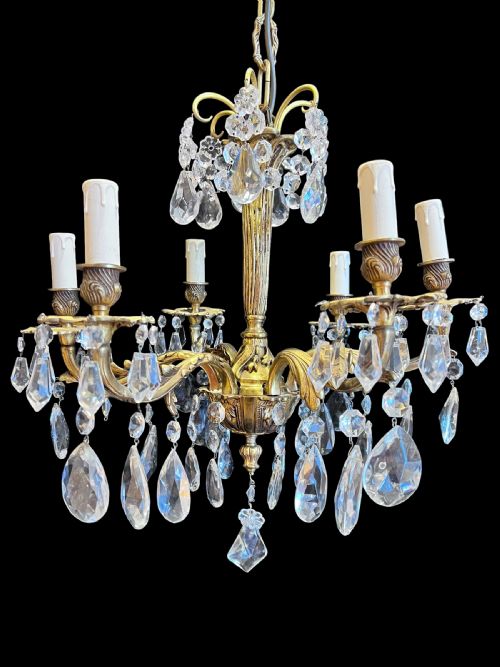
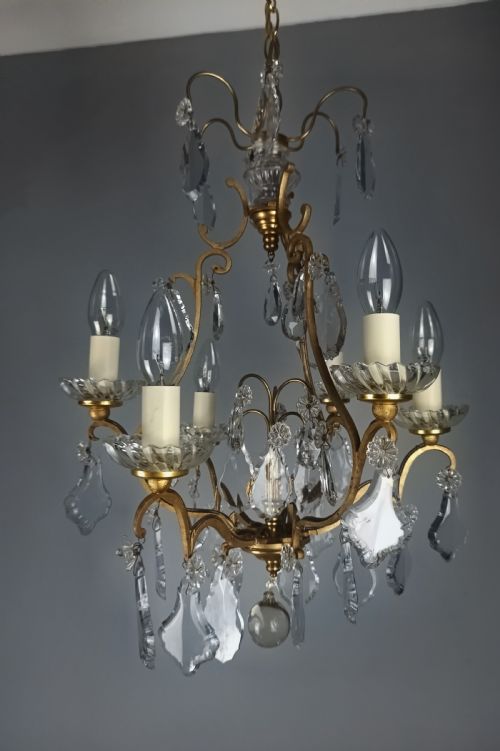
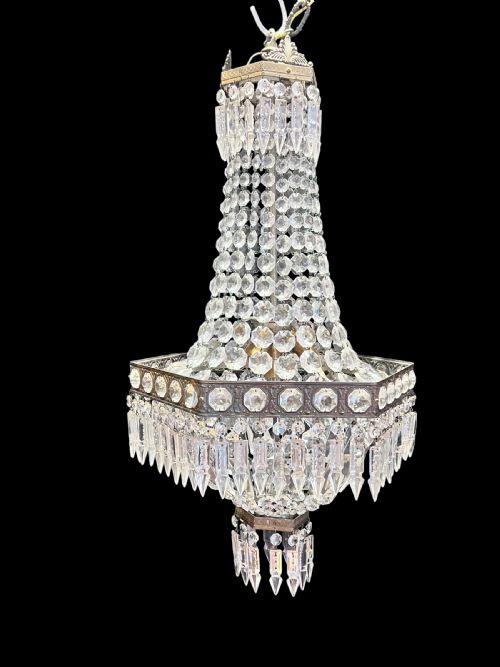
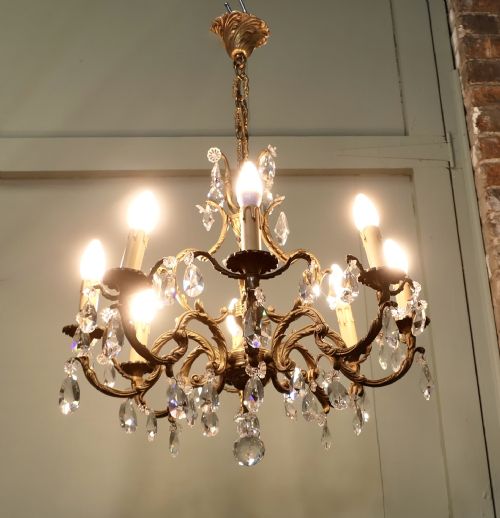
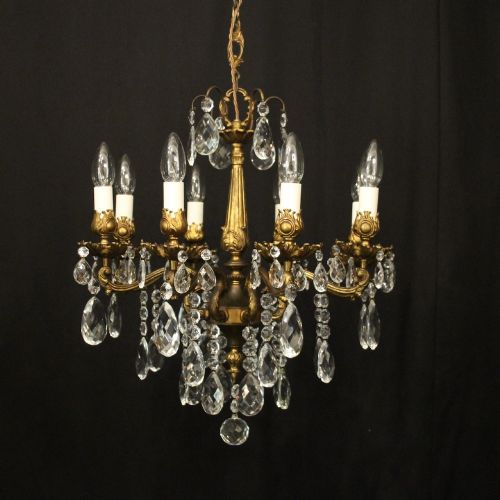
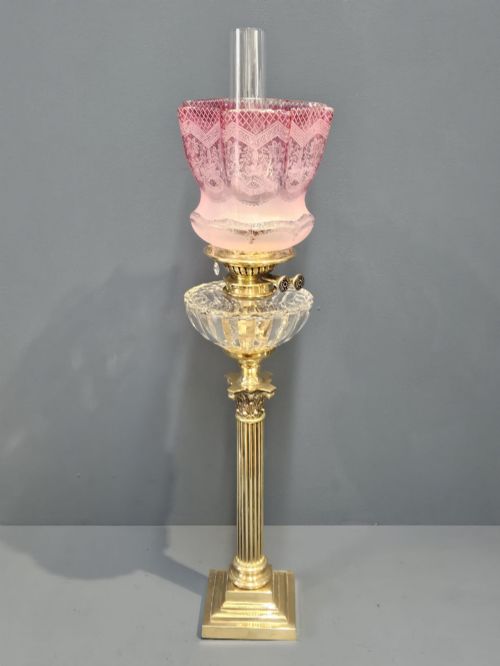
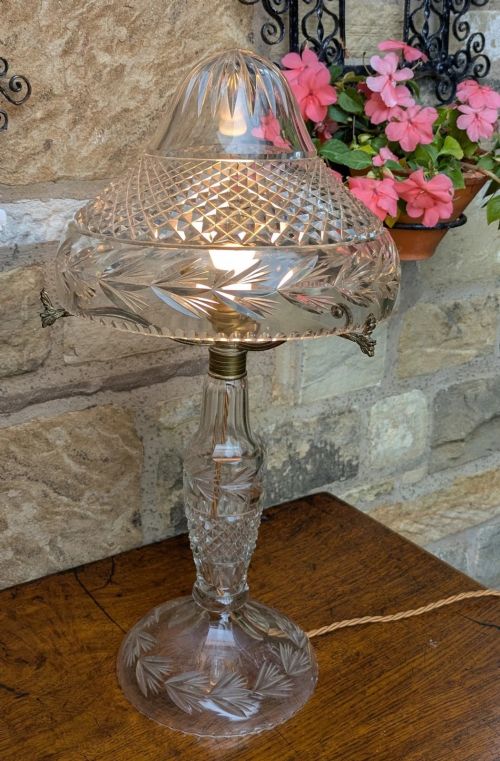
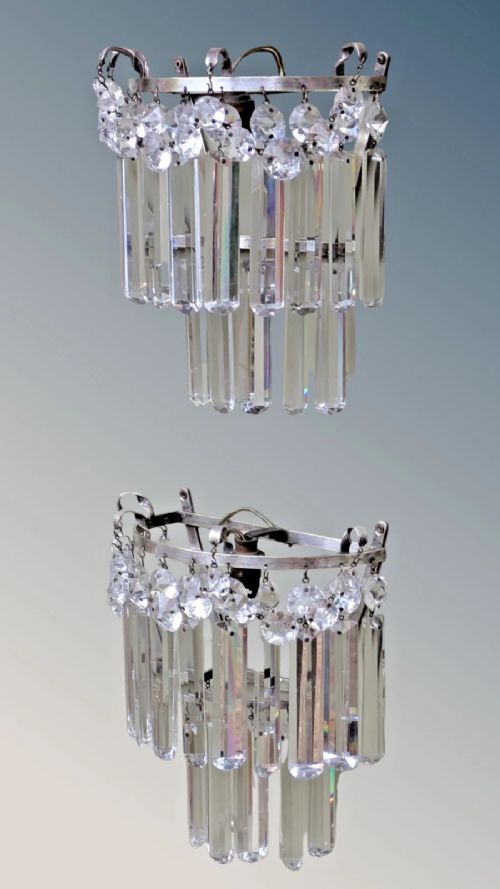
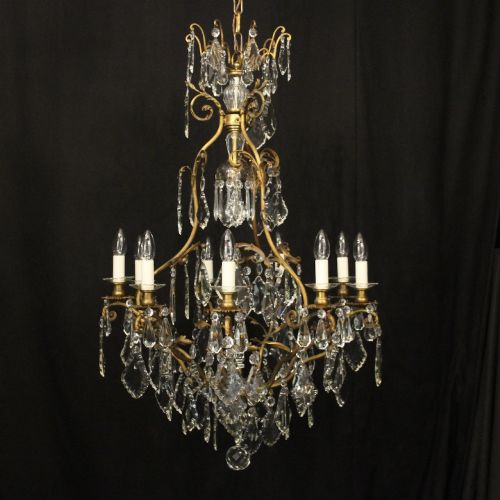
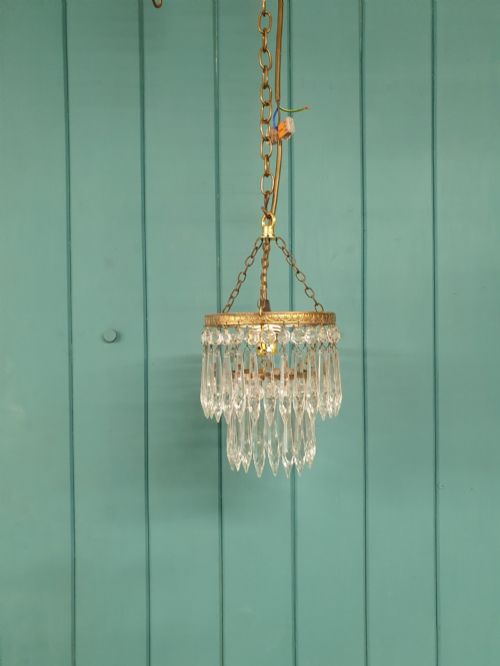
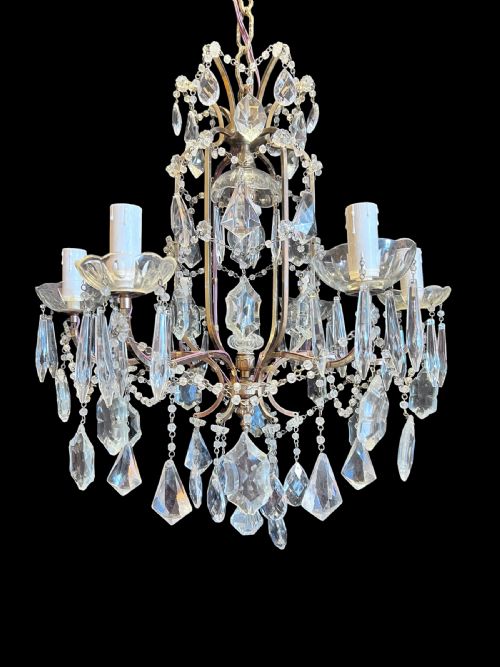
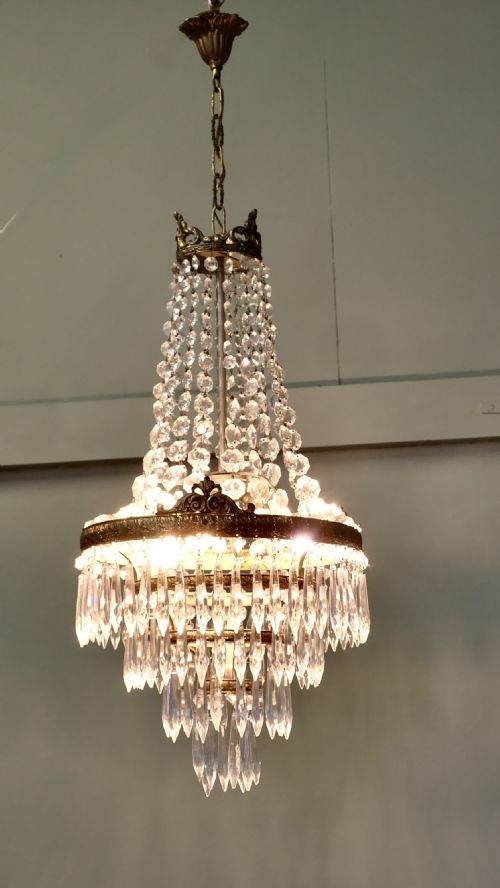
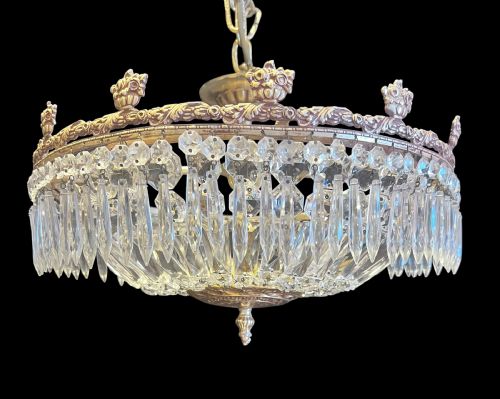
When searching for a brass cut glass light, buyers encounter a diverse selection of period ceiling fixtures, wall lights, and hanging lanterns originating from the nineteenth and early twentieth centuries. Chandeliers dominate the selection, ranging from small basket and bag designs to large multi-armed French and Italian specimens. Plafonniers and single pendant lights featuring distinct cut glass shades also appear frequently across Edwardian and Victorian examples.
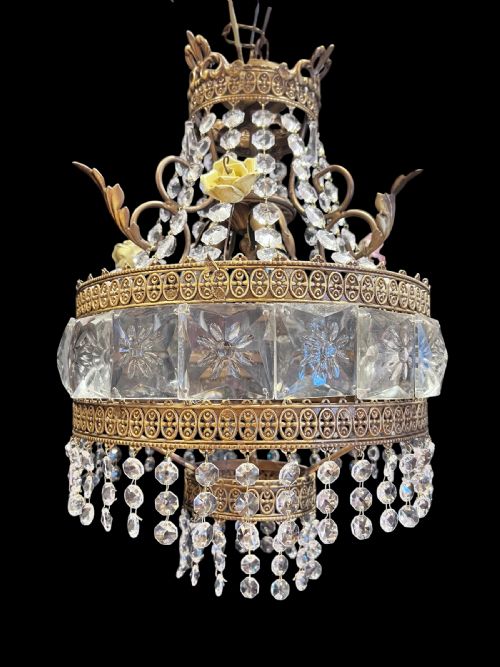
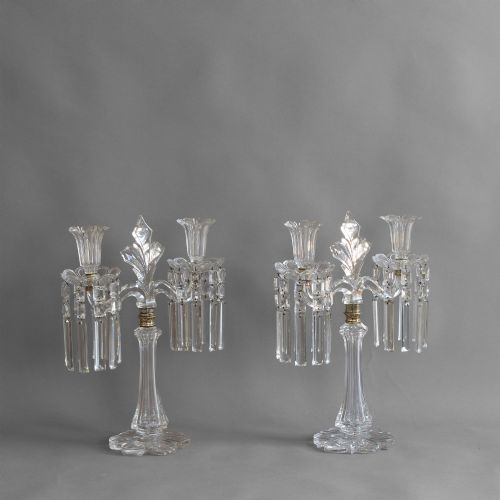
The objects serve primarily to cast patterned light across a space while acting as sculptural decorative centerpieces. Common forms include tent and waterfall chandeliers, flush-mounted dome fixtures, and wall-mounted sconces paired with matching lustres. Many survive from the Edwardian era and the nineteen-twenties, reflecting popular revival styles spanning French Rococo to Empire aesthetics.
Construction and materials
Constructed around a solid metal skeleton, these fixtures utilise brass, gilt bronze, or gilded brass to form the structural arms, bands, and decorative galleries. Cast mounts and spun brass components secure the glass elements while providing the mechanical strength needed to support heavy glass drops.
The optical components rely on cut glass and crystal, shaped through grinding and polishing to create faceted surfaces that refract illumination. Individual glass drops, beads, and moulded shades hang from the metal frames using wire pins or delicate chains, producing the characteristic sparkle associated with the category.
Listings feature brass cut glass lights spanning the Victorian, Edwardian, and 1920s periods, incorporating cut crystal, gilt bronze, and porcelain flower details.
Assessing craftsmanship
Quality reveals itself in the precision of the metal casting and the depth of the glass cutting. Superior frames display crisp detailing on motifs such as lion masks or leaf ornamentation, whereas simpler pieces rely on plain spun brass bands and minimal mounts.
The clarity and weight of the glass differentiate standard production from finer examples. Heavy crystal with sharp, clean facets scatters light more effectively than thinner, moulded glass variants, while integrated components like matching original shades or complete lustres elevate the integrity of the piece.
F. & C. Osler·S. FAUER
The Brass Cut Glass Light Glossary
- Lustre
- A decorative ornamental stand or hanging pendant adorned with cut glass drops. These pieces reflect ambient light even when unlit.
- Tent and waterfall chandelier
- A fixture style featuring strings of small glass beads gathered into a tent shape above a tiered drop cascade. This design creates a dense curtain of refractive crystal.
- Gallery
- The metal ring or mount that grips a glass shade or bowl in place. Galleries often display cast patterns or maker registration numbers.
- Bag chandelier
- A compact hanging light enclosed in a tapered or rounded bag-like mesh of small glass crystals. It concentrates illumination within a defined geometric profile.
Brass Cut Glass Light: Frequently Asked Questions
How do I clean an antique glass chandelier?
Maintenance involves wiping individual glass drops and metal arms with a soft cloth dampened in a mild cleaning solution while the fixture hangs. Avoid harsh chemical sprays that might damage the gilt or aged brass surfaces.
For thorough cleaning, delicate crystals can be removed one section at a time to prevent accidental breakage against the metal frame. Ensuring the power remains disconnected during the process is essential.
Were these lights originally wired for electricity?
Many surviving examples from the nineteenth century were initially configured for candles, oil, or gas before being converted later. Fixtures from the Edwardian period onwards frequently adopted early electric wiring alongside traditional burners.
Modern buyers often find pieces that have undergone professional rewiring to meet contemporary safety standards while retaining their original brass galleries and shades.
How do I determine the period of a fixture?
Dating relies on examining the construction methods, metal finishes, and mounting hardware used in the frame. Victorian examples often incorporate heavy cast brass or bronze components, while Edwardian pieces frequently utilise lighter pressed metal galleries and delicate cut glass drops.
Stylistic cues such as neoclassical motifs, Art Nouveau curves, or specific registration numbers stamped into the brass also help pinpoint the exact era of manufacture.
Can heavy chandeliers hang from standard ceilings?
Support requirements depend entirely on the total weight of the brass frame and the dense crystal components. Secure installation typically demands fixing directly into ceiling joists or utilising heavy-duty toggle anchors rather than relying on standard plasterboard.
Consulting a professional electrician ensures the mounting point safely bears the load of multi-tiered or large format fixtures.