
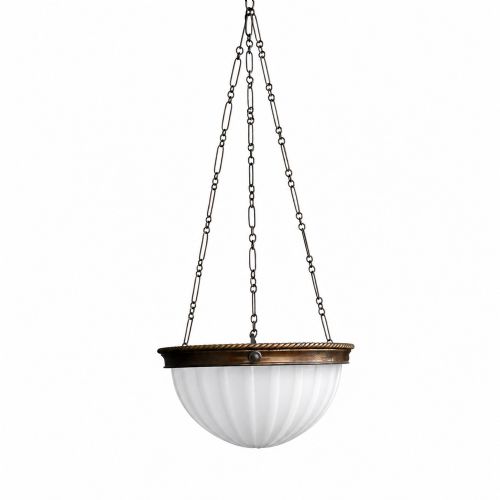
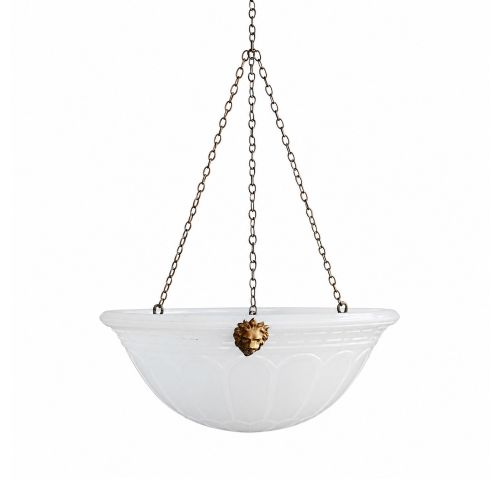
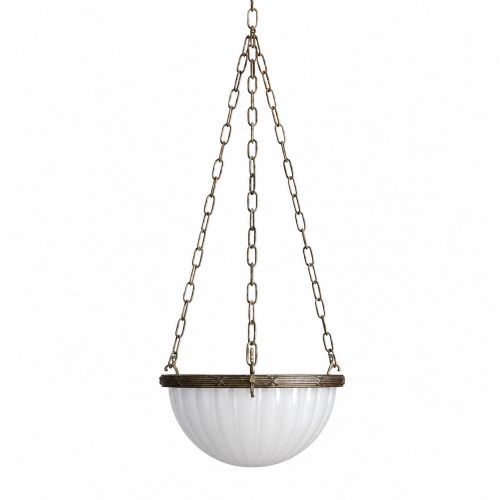


White Glass Pendant Shade
A white glass pendant shade brings honest illumination to a room, casting a steady, soft light through opaline or frosted surfaces.
White Glass Pendant Shade
When you search for a white glass pendant shade, you encounter functional lighting spanning the Victorian era through the mid-twentieth century. The selection ranges from compact English pharmacy fixtures to large French conical designs and industrial chapel lights.
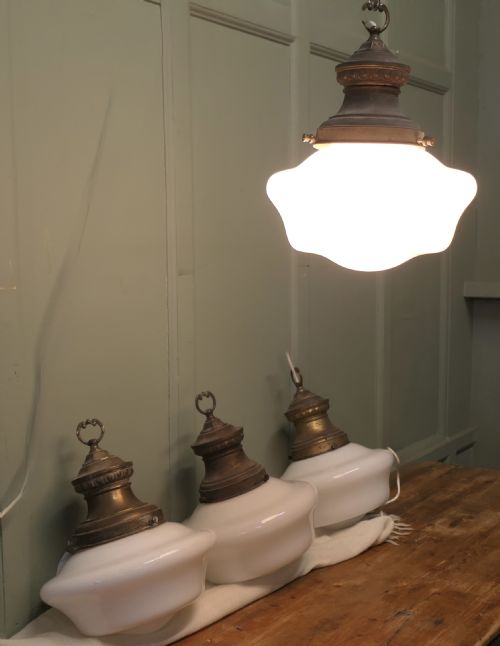
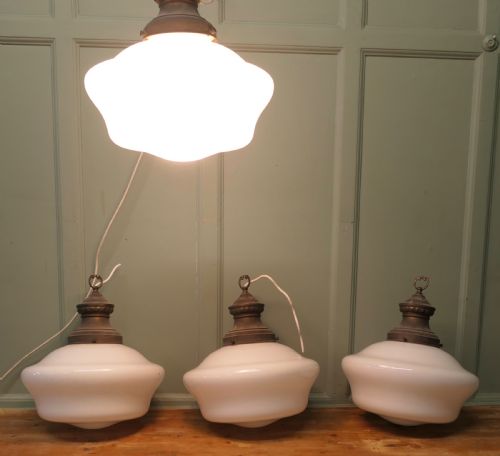
Most pieces you meet here date from the early twentieth century, taking the form of opaline, moonstone, or frosted glass shades suspended on brass, bronze, or chrome fittings. These include pear-shaped pendants, reeded designs, and dramatic art deco domes intended for central ceiling placement.
Origins trace across English, French, and general European workshops, encompassing styles from arts and crafts to art nouveau and industrial utilitarianism. They serve equally well in hallways, kitchens, and living spaces as practical overhead sources.
How they were made
Glassmakers utilised opaline, opal, and moonstone glass to achieve a milky, translucent quality that diffuses harsh bulb glare. Techniques involved blowing or moulding the white glass into specific profiles such as conical, pear-shaped, or dish forms.
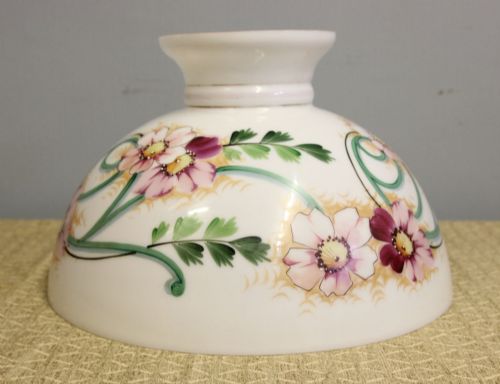
Metal components in brass, bronze, chrome, and iron provide the structural suspension and galleries that hold the glass shades. Enamel and painted decoration occasionally supplement the plain white surfaces on specific period examples.
White Glass Pendant Shade Retail Price Guide 2026
Typical asking prices for white glass pendant shade among the pieces listed under this phrase on Sellingantiques today, from the lower quarter to the upper quarter. They describe what is for sale here now, not the wider market.
Listings feature white glass pendant shades spanning the Victorian period through the 1940s, utilising brass, chrome, and opaline glass.
What varies in quality
The weight and thickness of the glass distinguish simpler utilitarian shades from substantial architectural pieces. Heavier opaline and moonstone batches create a deeper, more even diffusion of light.
The refinement of the metal fittings, whether cast brass, bronze, or polished chrome, sets apart standard production items from finer artistic commissions. Hand-etched details and precise moulding on the glass body also indicate superior execution.
The White Glass Pendant Shade Glossary
- Opaline glass
- A milky-white semi-translucent glass popular in nineteenth and early twentieth century lighting. It diffuses light evenly without strong glare.
- Plafonnier
- A ceiling-mounted bowl shade or flush light fixture. This French term frequently applies to decorative glass dome lighting.
- Gallery
- The metal ring or collar that grips the top rim of a glass shade. It connects the glass body to the suspension rod or chain.
- Moonstone glass
- A specific variety of translucent white glass with a soft, iridescent depth. It resembles the appearance of natural moonstone mineral.
- Reeded
- Surface decoration featuring parallel moulded ridges or grooves running vertically along the shade. This pattern catches and refracts the light.
White Glass Pendant Shade: Frequently Asked Questions
How do I clean my pendant shade?
Wash the glass gently in warm soapy water using a soft cloth to avoid scratching the surface. Dry thoroughly before reattaching it to the metal suspension.
Keep metal galleries dry and polish them only with appropriate cleaners suitable for brass, bronze, or chrome.
Are these shades original to their fittings?
Many surviving shades retain their period brass, bronze, or chrome galleries and suspension systems from the early twentieth century. Others are paired with compatible period hardware that matches the style of the glass.
Check the listing details to confirm whether the fixture includes its original ceiling rose and suspension chain or cord.
How do I date a white glass shade?
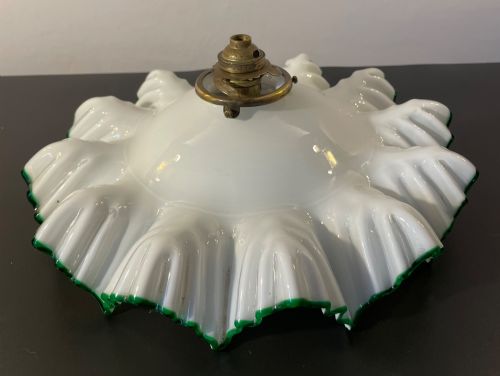
Dating relies upon stylistic markers such as art deco geometric lines, arts and crafts simplicity, or Victorian brass ornamentation. The manufacturing technique and specific shade form, like a French frill or an industrial chapel bowl, also indicate the period.
Early twentieth century pieces often display distinct moulding seams and mounting collar sizes typical of that era.