

Vintage Ceiling Lamp Shade
These vintage ceiling lamp shade options span the Victorian era to the 1940s, offering distinct historical character for overhead illumination.
Vintage Ceiling Lamp Shade
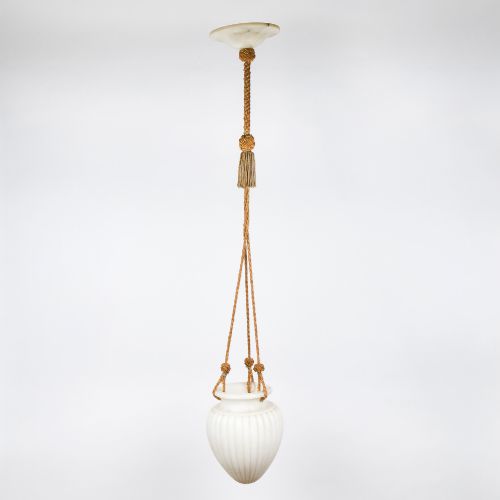
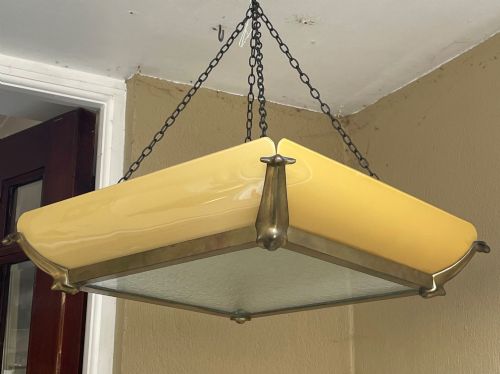
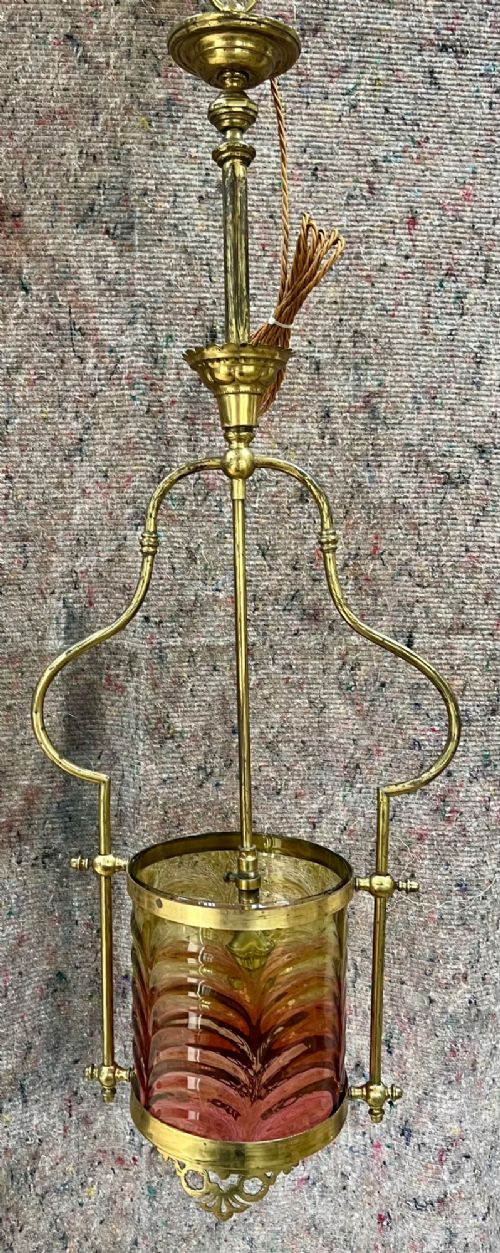
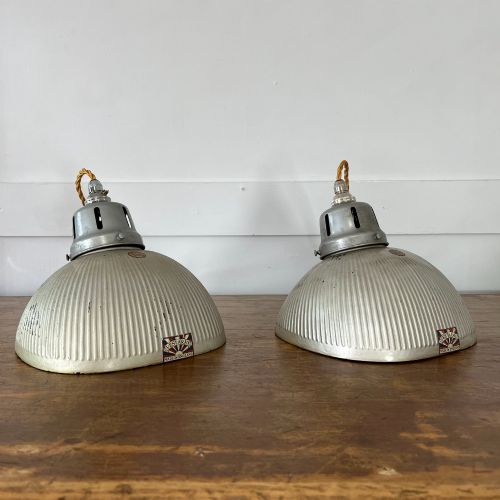
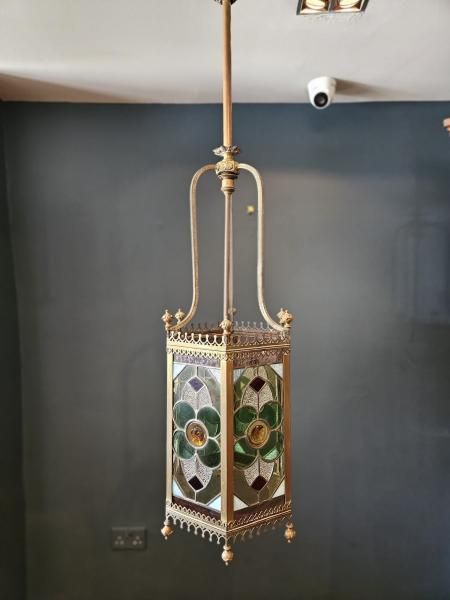
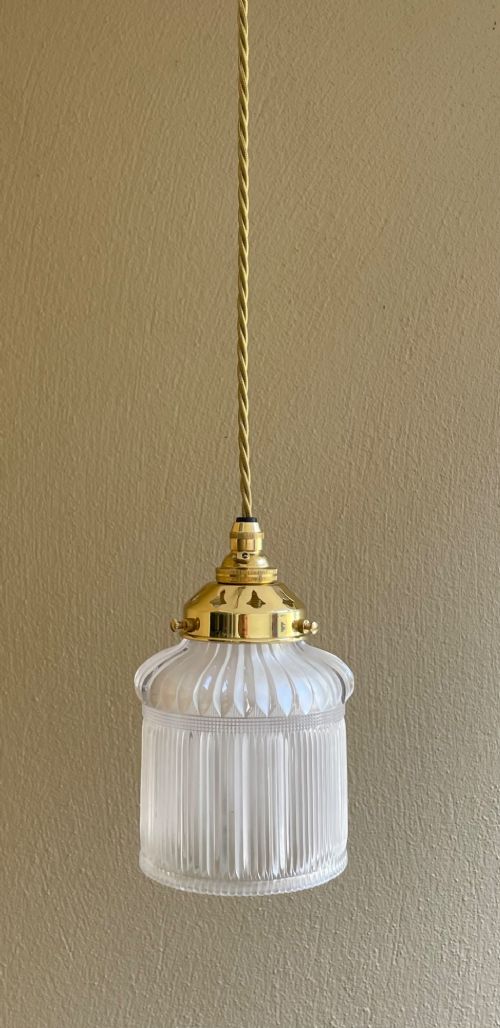
When searching for a vintage ceiling lamp shade, buyers encounter pendant lights, chandeliers, and hanging lanterns originating from the Victorian period through to the 1940s. The selection includes styles ranging from ornate Victorian leaded glass and brass leaf designs to streamlined Art Deco opaline glass and utilitarian industrial fixtures.
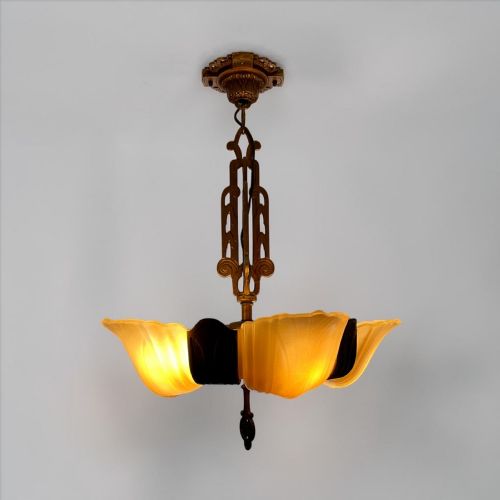
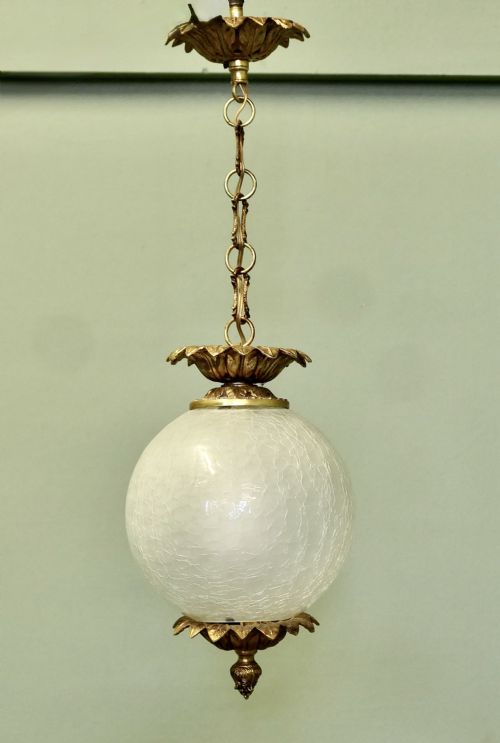
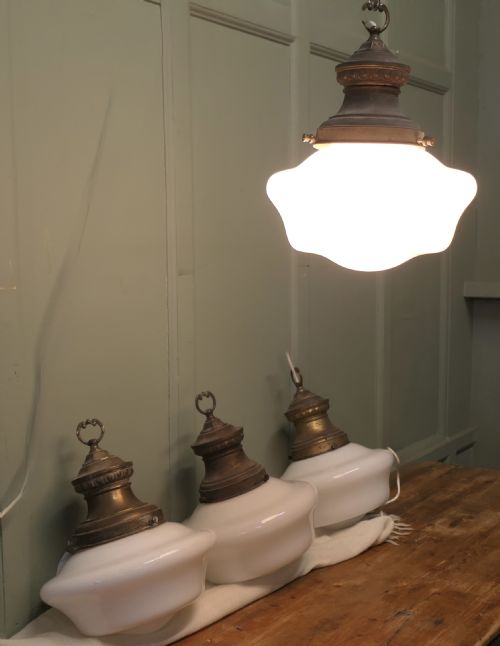
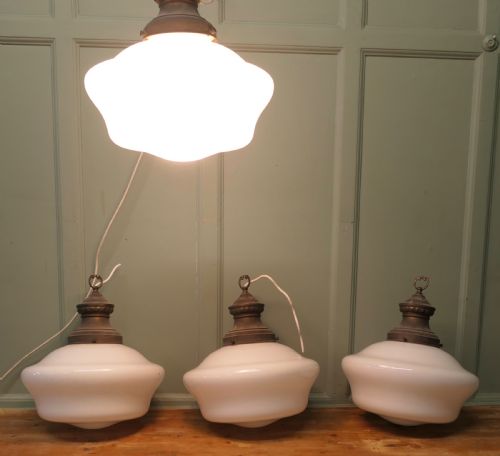
The version a buyer is most likely to meet on this page is a pendant light or hanging shade from the 1920s or 1930s, frequently combining brass fittings with frosted, crackle, or opaline glass. These twentieth-century pieces reflect the shifts towards geometric Art Deco forms and practical industrial lighting.
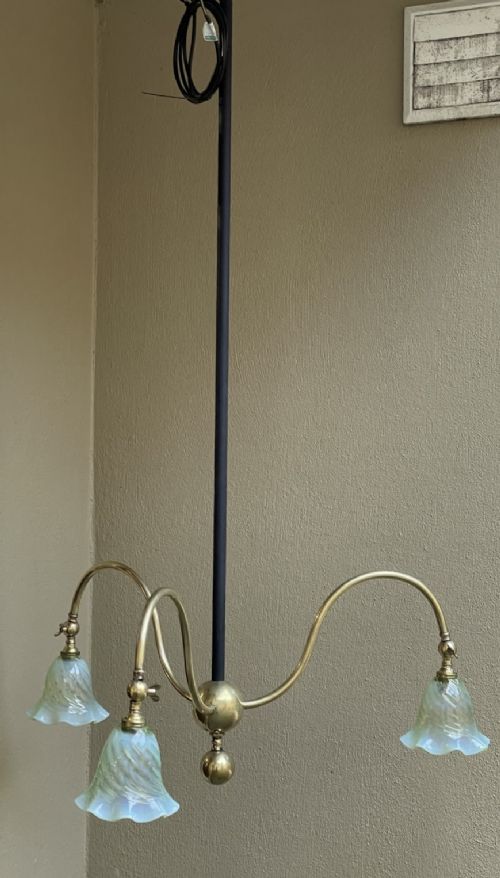
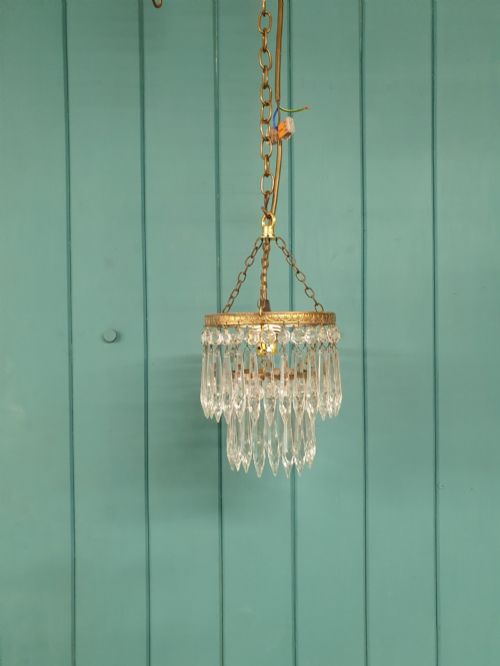
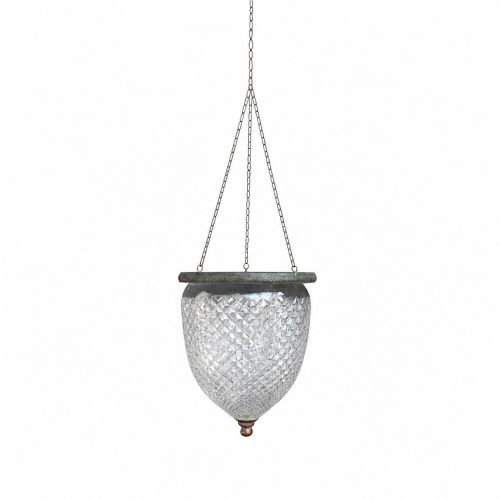
Earlier examples from the nineteenth century and Edwardian era also appear, showcasing cut glass crystals, copper railway lanterns, and multi-armed brass chandeliers. Regional influences emerge through French frill shades, American slip shades, and North African electrified lanterns.
How they were made
Makers utilised brass, copper, and iron for the structural mounts, chains, and galleries that support the hanging fixtures. These metals were cast, spun, or assembled to hold the glass elements securely in place.
Glass production took diverse forms, utilising mould-blown opaline, pressed frosted glass, leaded panels, and hand-cut crystal spikes. Specific techniques produced textured surfaces such as crackle glass, crimped edges, and hand-painted details on the shades.
Listings span from the 19th Century through the 1940s, featuring materials such as brass, copper, crystal, and opaline glass.
What varies in quality
The calibre of a vintage ceiling lamp shade rests primarily on the weight and finish of its metal components and the purity of the glass. Heavier brass castings and finely detailed copper work demonstrate superior manufacturing standards compared to lighter, utilitarian alternatives.
Subtleties in glass manufacture, such as even thickness in opaline globes, depth in cut crystal, and precise moulding in Art Deco clam shell or slip shades, distinguish standard utility fittings from more ambitious decorative examples.
Émile-Jacques Ruhlmann·VESTARAY·Jefferson Light
The Vintage Ceiling Lamp Shade Glossary
- Opaline Glass
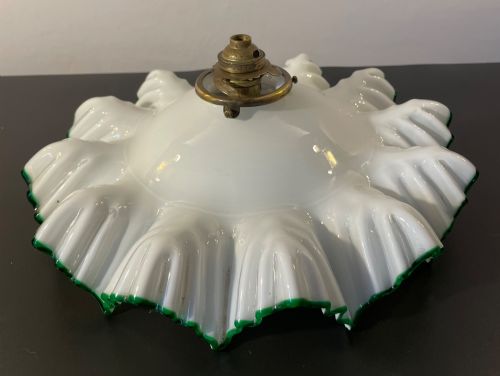
- A milk-white or tinted translucent glass developed to soften light glare. It appears frequently in twentieth-century pendant lighting.
- Plafonnier
- A shallow ceiling-mounted bowl shade that sits close to the ceiling fixture. This French term describes flush or semi-flush lighting forms.
- Rise and Fall
- A mechanical pulley system allowing the hanging height of a chandelier or pendant to be adjusted. It uses weighted counterbalances.
- Holophane
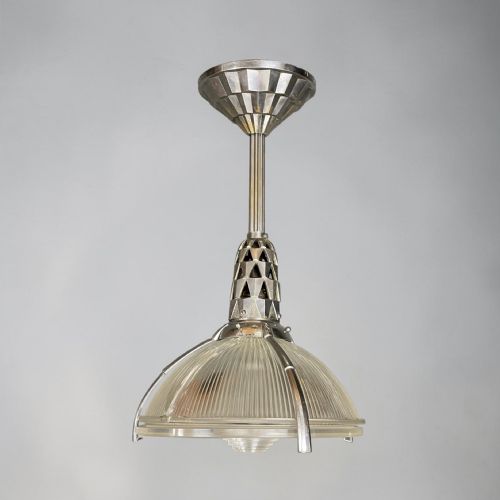
- A brand of prismatic glass designed to direct and diffuse light efficiently. These shades feature distinctive exterior ribs.
- Slip Shade
- A type of glass shade that slips into a metal frame or basket. It is particularly characteristic of American Art Deco lighting.
Vintage Ceiling Lamp Shade: Frequently Asked Questions
How do I date a vintage ceiling lamp shade?
Dating relies on identifying stylistic markers, manufacturing techniques, and materials characteristic of specific decades from the Victorian era to the 1940s. Art Deco geometric lines, Edwardian brass work, and Victorian leaded glass each correspond to distinct periods.
Examining the wiring methods, screw types, and fitter galleries can also provide clues to the age of the fixture. Original components offer the most reliable evidence for chronological placement.
Can these vintage shades take modern light bulbs?
Most vintage fittings accommodate modern LED or standard bulbs, provided the fitter size matches the bulb holder. Electric standards have evolved, so rewiring is often recommended for safety.
Consulting a professional electrician ensures that older brass or metal fixtures comply with current safety regulations while accommodating contemporary illumination.
What is the difference between a pendant and a plafonnier?
A pendant light hangs down from the ceiling by a cord, chain, or rod, suspending the shade at a lower level. This makes them suitable for hanging over tables or in rooms with high ceilings.
A plafonnier sits flat or very close against the ceiling surface, enclosing the bulb within a shallow bowl. This design works well in spaces with lower ceiling heights.
How do I clean antique glass shades safely?
Cleaning requires removing the glass shade from its metal mount if possible, avoiding harsh abrasive chemicals that might damage hand-painted details or fragile surfaces. Warm soapy water and a soft cloth generally suffice for opaline or frosted glass.
Cut crystal and leaded glass panels demand extra care around soldered joints or delicate edges. Drying thoroughly prevents water spots on older glass surfaces.