


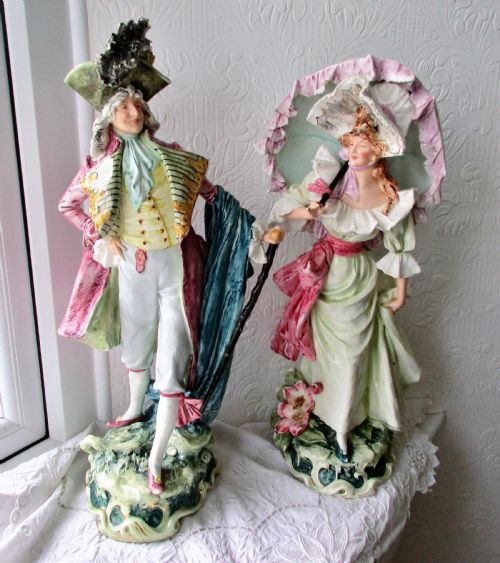
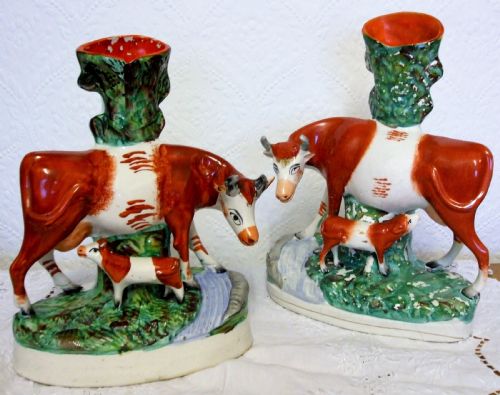


Green Earthenware Figure
These green earthenware figure selections bring character to a room through centuries of moulded ceramic craft.
Green Earthenware Figure
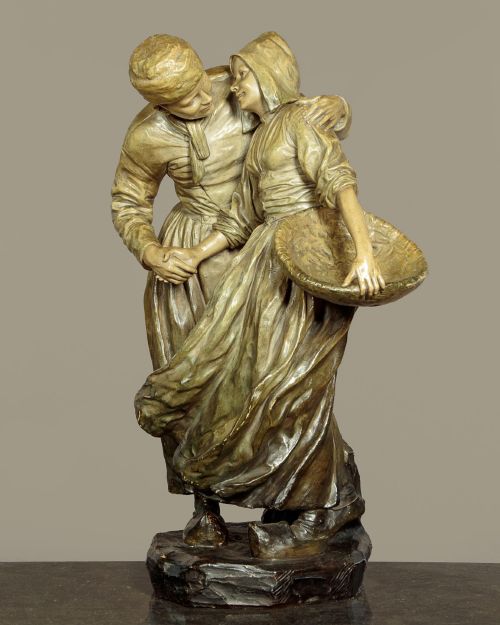
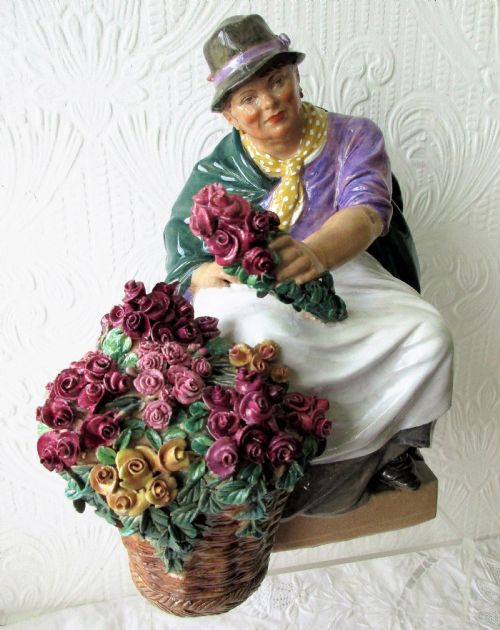
A green earthenware figure brings sculptural form and glazed colour together, drawing collectors who appreciate historic ceramic traditions. The examples found here span centuries of production, from English factory models to Asian export works and continental European pieces.
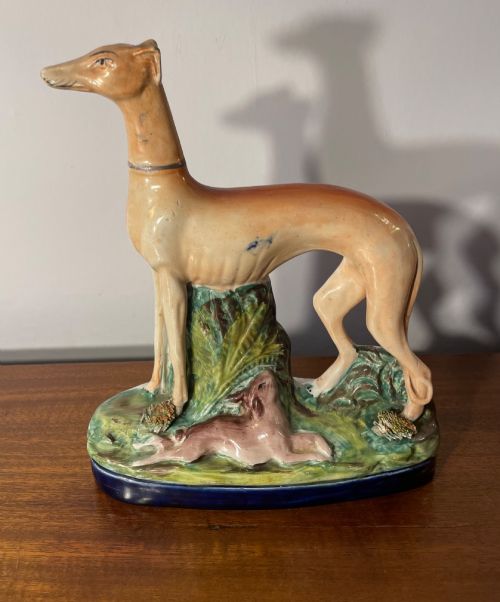
Most pieces likely to be met on this page belong to the nineteenth century, particularly Staffordshire pottery traditions depicting animals, figures and pastoral groups. Alongside these are earlier eighteenth-century pearlware and tin-glazed works, as well as twentieth-century studio pottery and revival styles.
Makers and makers' types range widely across these categories, including Staffordshire potters such as Walton and Enoch Wood, alongside continental manufacturers and studio artists. Forms vary from simple decorative ornaments and spill vases to large musical band sets and architectural roof ornaments.
Materials and technique
Makers shaped these objects using earthenware, terracotta, pearlware and ceramic bodies, often building them through press-moulding or slip-casting techniques. The resulting bodies provided a porous yet sturdy foundation for the layers of decoration that followed.
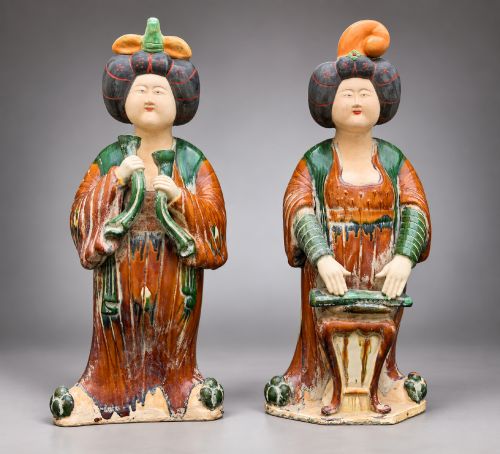
Surface treatments rely heavily on lead glazes, enamel colours, tin glaze, lustre and Sancai glazing to achieve rich tonal variations. These chemical finishes vitrified during firing to seal the clay body while imparting characteristic green, yellow, brown and white hues.
Green Earthenware Figure Retail Price Guide 2026
Typical asking prices for green earthenware figure among the pieces listed under this phrase on Sellingantiques today, from the lower quarter to the upper quarter. They describe what is for sale here now, not the wider market.
Materials documented across the inventory include terracotta, pearlware, ceramic, enamel, tin glaze and lead glaze.
Judging quality in moulded ceramics
Surface finish also separates standard productions from exceptional works, visible in the depth, gloss and even distribution of the glaze across complex contours. Superior glazes pool naturally in recessed areas, accentuating the sculptural lines of the subject.
Charles Vyse·Enoch Wood factory·Ernst Wahliss·Goldscheider·Minton·Walton·Wedgwood and Co. Ltd
The Green Earthenware Figure Glossary
- Earthenware
- Porous pottery fired at relatively low temperatures which requires a glaze to become waterproof. It forms the primary body material for the majority of figures listed.
- Pearlware
- A refined fine-grained earthenware developed in the late eighteenth century featuring a subtle bluish-white glaze that pooled in crevices. Staffordshire potters utilised this body extensively for animal and human figures.
- Lead glaze
- A glossy coating composed largely of lead compounds applied to pottery before a second firing. It provides a transparent protective layer that intensifies the underlying colours.
- Spill vase
- A hollow cylindrical holder attached to a figure, designed originally to hold wooden spills for lighting candles or fires. These dual-purpose objects are frequently encountered in Staffordshire pottery groups.
- Sancai
- A tripartite low-firing glaze tradition using green, amber and cream colours, characteristic of Chinese pottery and later revival pieces. The term translates literally as three colours.
Green Earthenware Figure: Frequently Asked Questions
How do I date a Staffordshire figure?
Dating relies on examining the base construction, glaze characteristics and the style of decoration. Earlier eighteenth-century pieces often feature hollow, unglazed bases with thinner potting, whereas Victorian examples tend to have heavier flat backs with painted or glazed undersides.
Changes in palette and modelling styles also provide clues. Pearlware bodies with bright enamel colours generally point to the late eighteenth or early nineteenth century, while later Victorian items adopt heavier clay formulations and distinct tonal ranges.
What is the purpose of a spill vase?
A spill vase served a practical domestic function before the invention of safety matches, holding thin slips of wood used to transfer a flame from the fireplace to lamps or candles. Potters often combined these tubes with animal or human figures to create decorative yet useful chimney-piece ornaments.
Collectors prize these dual-purpose pieces for their narrative charm and everyday utility in nineteenth-century households. They frequently depict domestic animals, rustic architecture or theatrical characters beside the upright holder.
What does pearlware mean?
Pearlware is a refined type of earthenware perfected by Staffordshire potters to mimic the whiteness of Chinese porcelain. The body incorporates calcined flint and clay, finished with a transparent lead glaze containing small amounts of cobalt that settled blue in the recesses.
This subtle bluish tint distinguishes pearlware from earlier creamware and later whiteware bodies. It provides a diagnostic feature for identifying figures produced during the Georgian and early Victorian eras.