



Grandfather Clock Face
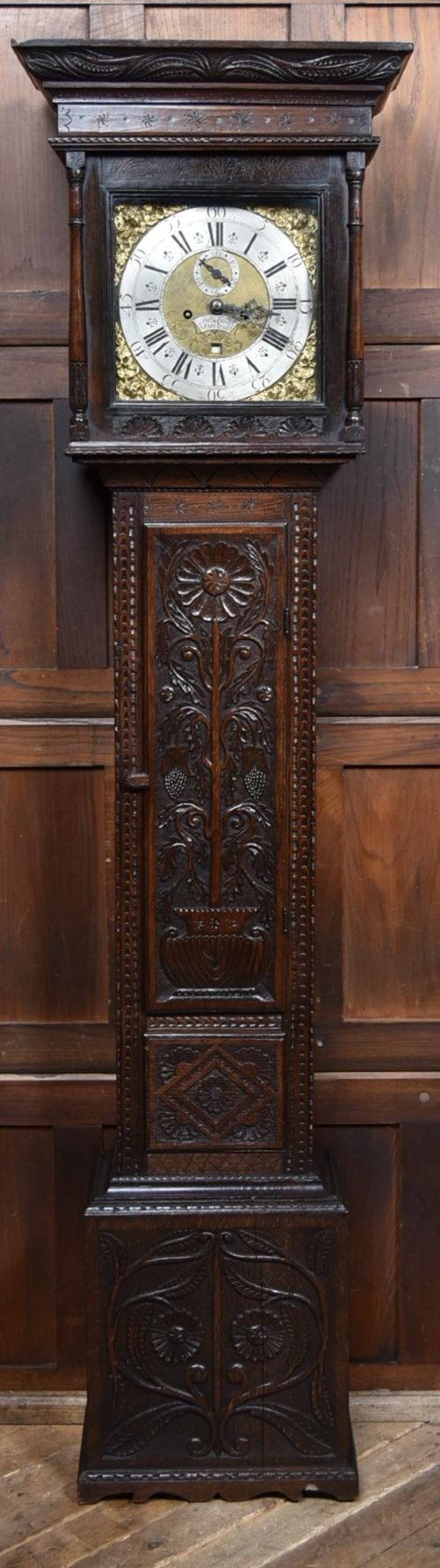
A grandfather clock face carries the engraved brass and painted iron details that mark centuries of domestic timekeeping.
Grandfather Clock Face
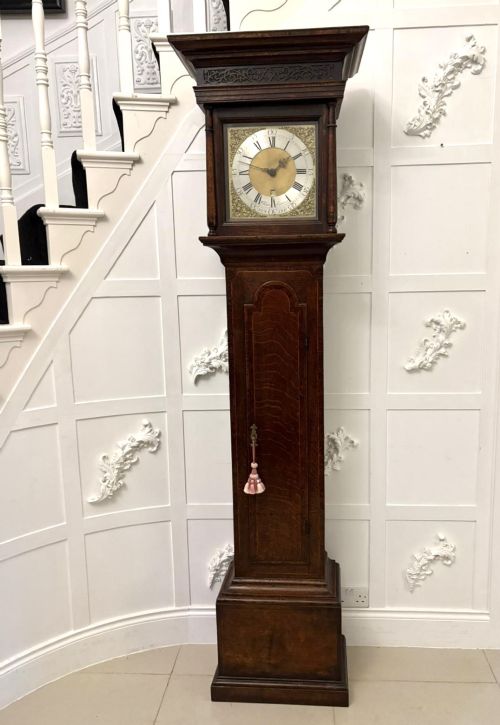
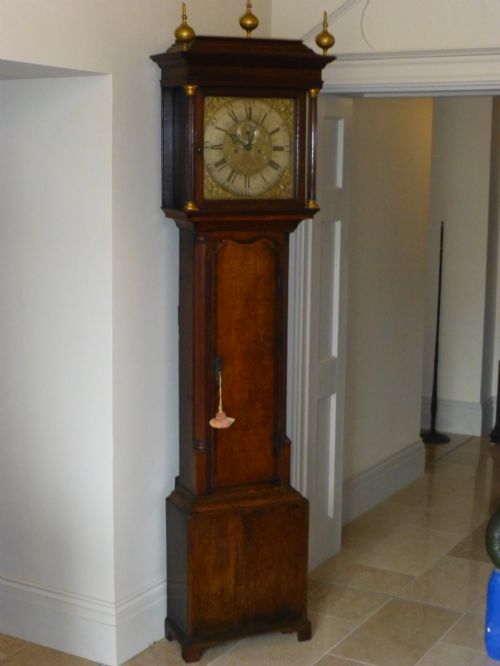
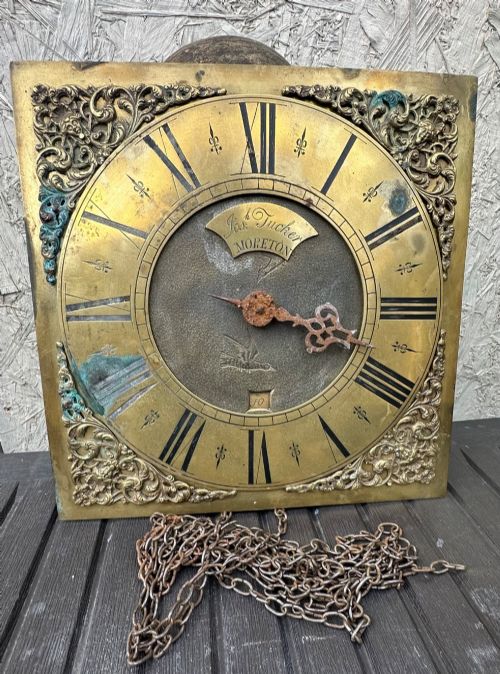
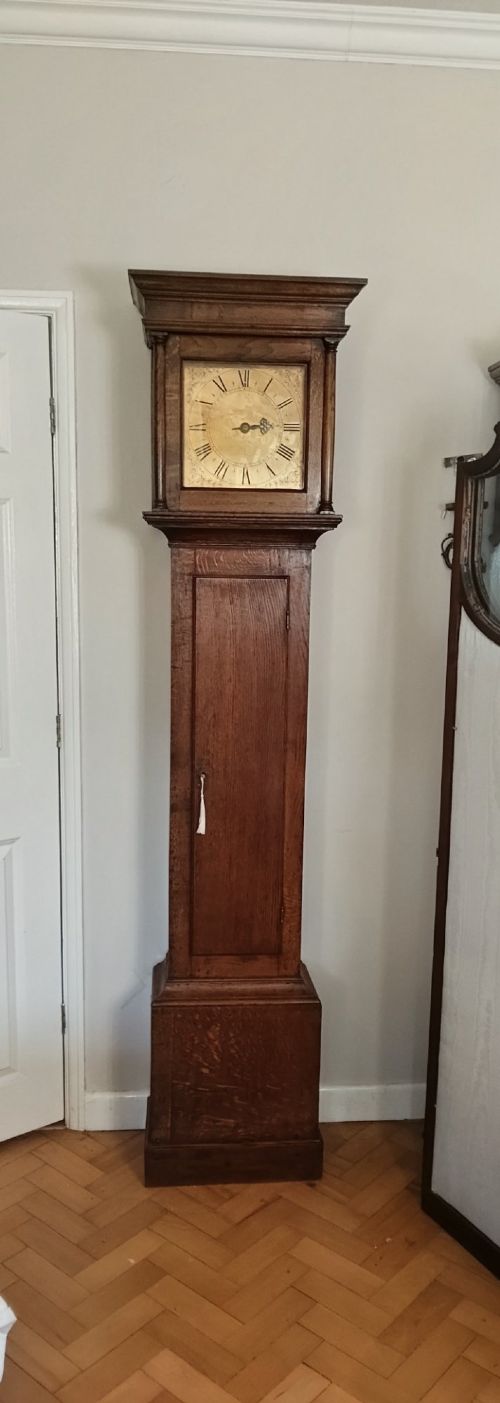
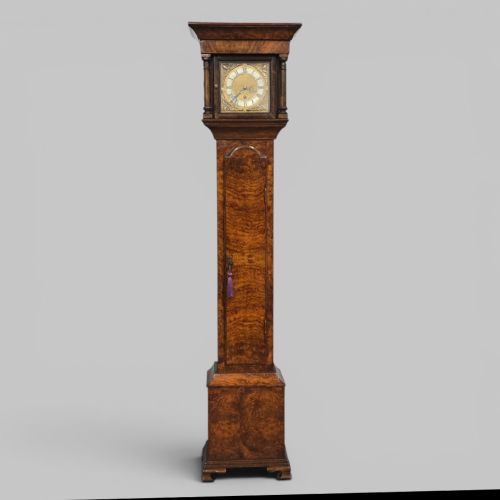
A grandfather clock face forms the visible dial and mechanism plate of a tall case timekeeper, serving as both a functional indicator and the decorative centrepiece of the instrument.
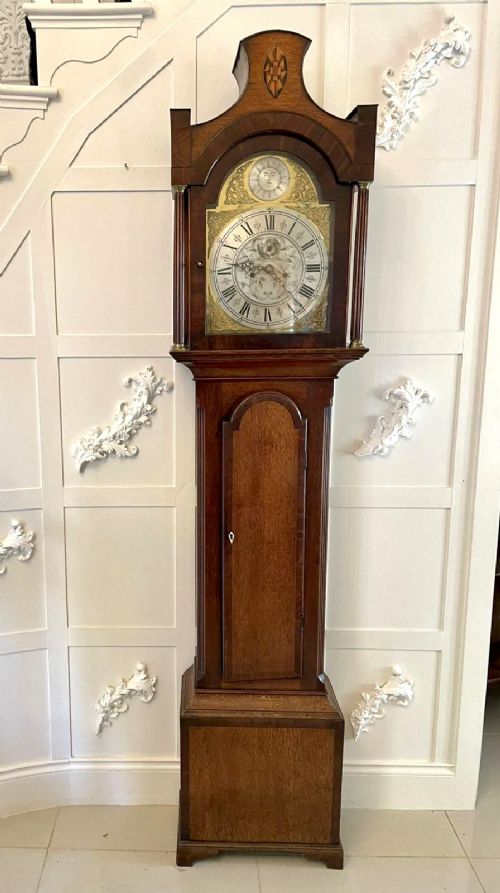
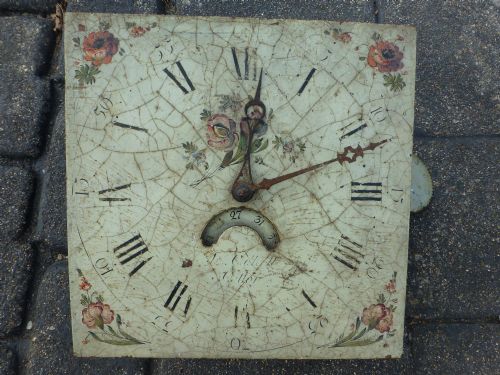
Buyers seeking a grandfather clock face will encounter square and arched brass plates alongside painted iron dials housed within eighteenth-century and nineteenth-century longcase clocks.
The material record spans early brass dials with engraved spandrels to later painted iron versions, often accompanied by subsidiary seconds hands and calendar apertures.
How they were made
Clockmakers cast plates from brass or forged them from iron, subsequently finishing the surfaces by hand-engraving floral corners, silvering chapter rings, and applying black lacquer to numerals.
Painted iron dials emerged later, requiring skilled artists to brush botanical or lunar scenes onto curved metal sheets before firing the enamel layers.
Some dials record high water times in Bristol for mariners who needed to check the tide before looking at the hours.
What varies in quality
The crispness of the hand-engraving on brass spandrels and the depth of the signature punch marks distinguish superior dial makers from routine provincial producers.
Painted iron examples depend upon the preservation of the original pigments and the subtlety of the brushwork within the arch decoration.
Jn Smith Macclesfd·Smith of Chester·Joseph Gibson Ecclefechan·William Betagh Dublin·David Morice of Auchtermuchty·Samuel Young Nantwich·John Pollard of Crediton·Jn Wright Linton·Richard Northen·Robert Thomson Boness·James Draycot Wells·Standring of Bolton·George Clapham of Whitton·Jonathan Blake Fulham·John Douglas of Galston·Newman of Norwich
The Grandfather Clock Face Glossary
- Spandrel
- The decorative metal corner ornament fixed outside the central chapter ring on a brass dial, often cast in brass and chased by hand.
- Chapter ring
- The circular band bearing the hour and minute numerals, typically silvered brass pinned to the main dial plate.
- Moonphase
- A rotating disc showing the lunar cycle through an arched aperture at the top of the dial.
- Grandmother clock
- A smaller, more slender version of the traditional longcase clock produced during the twentieth century.
Grandfather Clock Face: Frequently Asked Questions
What is a grandfather clock face?
A grandfather clock face is the engraved brass or painted iron dial that displays the hours, minutes, and subsidiary indicators on a tall case clock.
These plates were produced by regional makers and workshops across Britain during the eighteenth and nineteenth centuries.
How do I know if a dial is brass or painted iron?
Brass dials feature engraved decorative corners and silvered chapter rings fixed to a metal plate.
Painted iron dials show smooth, enamelled surfaces with hand-brushed numerals and floral motifs.
What is a moonphase dial?
A moonphase dial includes a rotating arched disc that tracks the phases of the moon over a lunar month.
This complication often appears alongside high-water indicators on maritime clocks.
How do I date a clock face?
Dating relies on the dial shape, corner spandrel styles, and the lettering used for the maker's signature.
Square brass dials typically point to earlier periods, while arched brass and painted iron plates emerged towards the end of the eighteenth century.