



Grand Canal Canvas Art
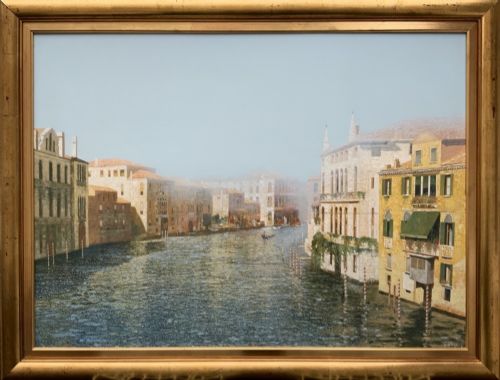
Grand canal canvas art brings the light and architecture of Venice into a room through oil paintings from the nineteenth and twentieth centuries.
Grand Canal Canvas Art
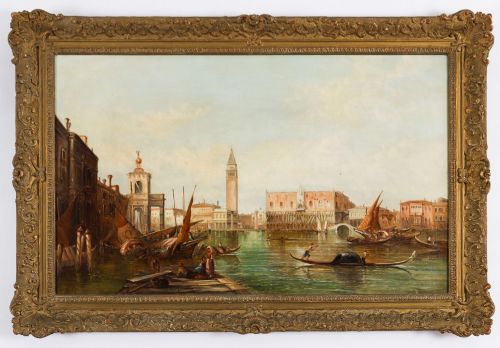
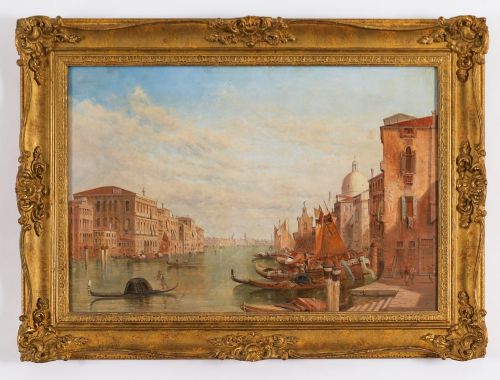
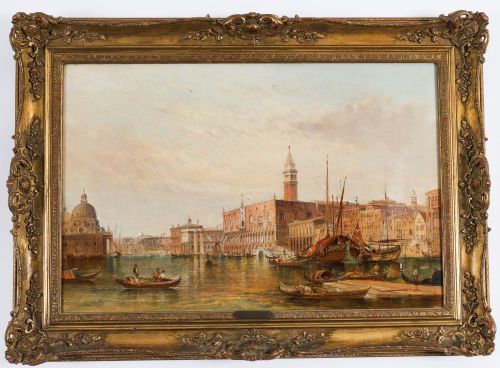
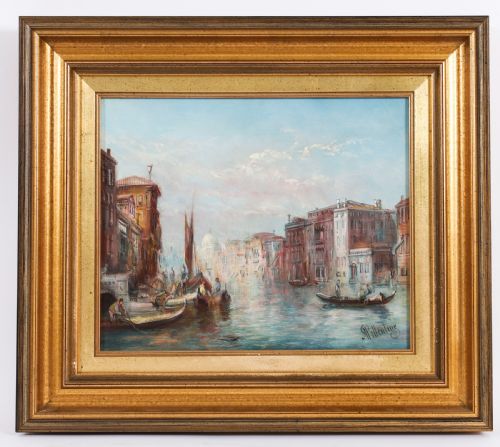
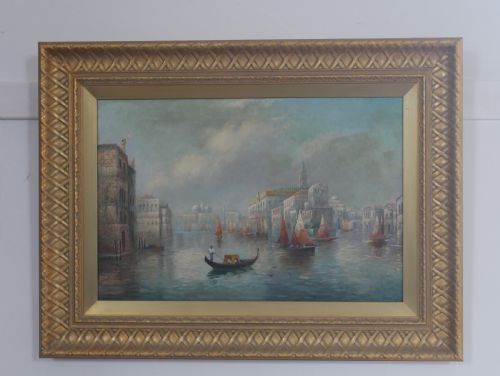
Grand canal canvas art consists of oil paintings depicting Venetian waterways, palaces, and landmarks such as the Doge's Palace, the Dogana, and Santa Maria della Salute. These works range from nineteenth-century romanticism and veduta to later interpretations produced up through the mid twentieth century.
Buyers frequently encounter nineteenth-century works executed in oil on canvas, often housed in heavy giltwood or gesso frames. The compositions frequently capture gondolieri, bustling canal scenes, and iconic architectural vistas under varied atmospheric conditions.
Materials and Construction
These works are painted using oil paint applied to woven canvas supports stretched over wooden frames. The handling of the medium allows for rich texture in architectural stonework and luminous effects on the water.
Many canvases are paired with decorative frames constructed from wood, finished with gesso and gold leaf or giltwood. These frames provide structural support and enhance the visual depth of the townscape.
Grand Canal Canvas Art Retail Price Guide 2026
Typical asking prices for grand canal canvas art among the pieces listed under this phrase on Sellingantiques today, from the lower quarter to the upper quarter. They describe what is for sale here now, not the wider market.
The listings show works spanning from 1850 through 1960, utilising oil paint, canvas, wood, gold leaf, and gesso.
Determinants of Quality
The sophistication of perspective and the handling of light distinguish different examples of grand canal canvas art. Finer works capture the atmospheric haze and complex architectural proportions of Venice with precise tonal control.
The condition of the oil paint surface and the originality of the associated giltwood or gesso frame contribute significantly to the overall integrity of the piece.
Alfred Pollentine·Marc Aldine·Antoine Bouvard Senior·E. Perez Senet·William Raymond Dommersen·Jane Vivian·J. Yates
The Grand Canal Canvas Art Glossary
- Oil on Canvas
- A painting medium where pigments bound in drying oil are applied to a woven fabric stretched across a frame. This combination allows for rich blending and varied surface textures.
- Giltwood
- Wood that has been decorated with a thin layer of gold leaf or powder. It provides a reflective and ornate border for nineteenth-century paintings.
- Veduta
- A highly detailed, topographical painting of a cityscape. This style was particularly popular for views of Venice.
- Gesso
- A paint mixture consisting of a binder mixed with chalk, gypsum, or pigment. It is applied to wooden frames as a base before gilding.
Grand Canal Canvas Art: Frequently Asked Questions
How do I date these paintings?
Dating relies on stylistic clues, stretcher construction, canvas type, and artist signatures where available. Nineteenth-century works often exhibit distinct veduta conventions compared to later twentieth-century interpretations.
Examining the reverse of the canvas and the framing materials also provides contextual evidence for the period of creation.
Where should I hang a large canvas?
These townscapes require wall space that allows the perspective and detail to be appreciated from a distance. Placing them away from direct sunlight protects the oil paint and the giltwood frame.
Consider eye-level placement in principal rooms where the lighting complements the luminous tones of the Venetian water and sky.
Are original frames important?
Original giltwood and gesso frames complement the historical context of nineteenth-century canvases. They are constructed to match the aesthetic standards of the period in which the artwork was produced.
Matching frames preserve the presentation intended by the artist or contemporary framers.
What subjects are most common?
Views focusing on the Grand Canal, the Doge's Palace, Santa Maria della Salute, and the Dogana appear frequently. Gondolieri navigating beneath bridges also recur across the selections.
These motifs reflect the enduring appeal of Venetian topography to European artists throughout the nineteenth century and beyond.