



Traditional Italian Oil Landscape
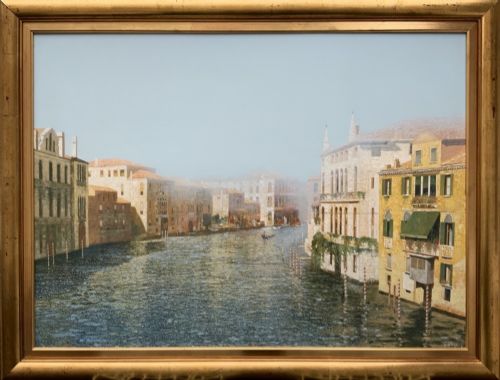
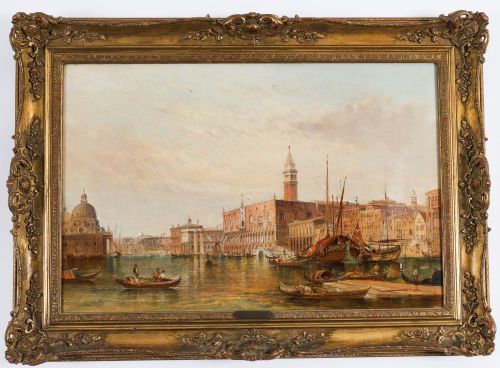
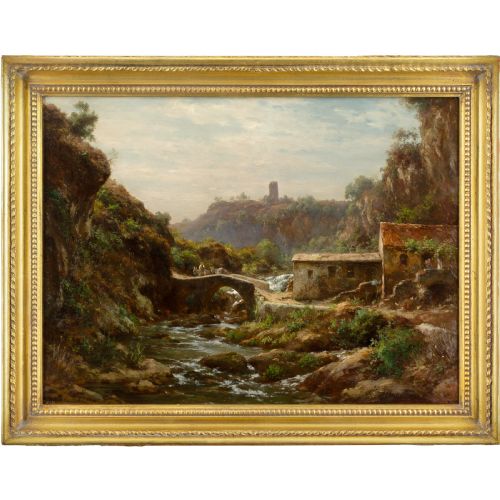
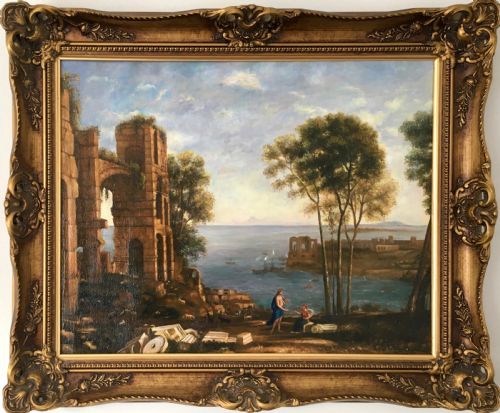
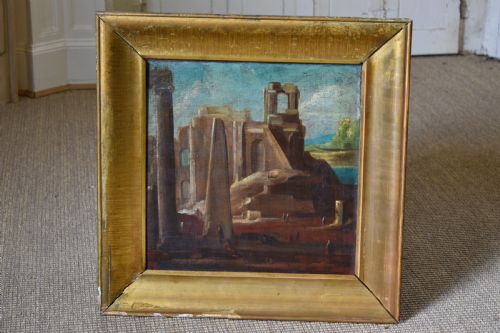
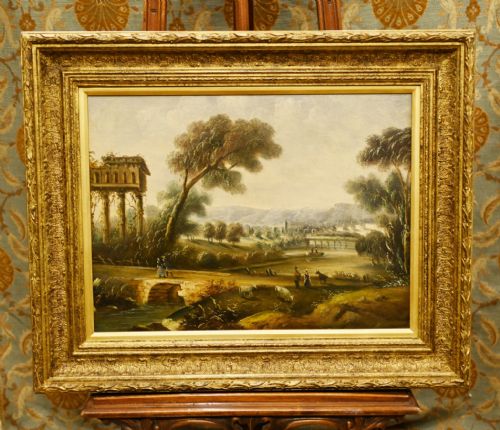
These traditional italian oil landscape works capture sunlit canals, ruined arches and distant mountains across canvases framed in giltwood.
Traditional Italian Oil Landscape
A traditional italian oil landscape brings the sun-drenched scenery of Venice, Rome and Tuscany into domestic interiors through the medium of oil paint on canvas. These works span the nineteenth century and mid-twentieth century, recording scenes from the Grand Tour alongside pastoral views.
The subjects on this page lean heavily towards Venetian waterways, featuring the Doge's Palace, the Grand Canal and the lagoon alongside mountainous lake vistas and classical ruins. Travellers crossing arched bridges and women near vineyards appear frequently in these compositions.
Grand Tour souvenirs and Victorian fine art comprise the main groupings here, shifting from topographical accuracy to imaginative capriccio scenes. Buyers encounter both signed works by known nineteenth-century painters and canvases produced by the broader Italian school.
Materials and methods
Frames frequently incorporate gesso and gold leaf to create elaborate giltwood borders that complement the oil paintings. These traditional techniques ensure the preservation of pigment and support across the centuries.
Traditional Italian Oil Landscape Retail Price Guide 2026
Typical asking prices for traditional italian oil landscape among the pieces listed under this phrase on Sellingantiques today, from the lower quarter to the upper quarter. They describe what is for sale here now, not the wider market.
Venetian canal scenes and pastoral Italian landscapes form the primary artistic subjects across these canvases.
Distinctions in quality
The skill of the brushwork and the precision of architectural detail separate superior canvases from standard regional views. Master painters handle light on water and stone with a conviction that lesser hands miss.
Frame construction also marks a division, as original giltwood mouldings with hand-applied gesso and gold leaf command greater interest than later replacements. Signed works by documented artists carry distinct weight over anonymous school pieces.
Alfred Pollentine·Adolf Johann Höffler·Francesco Guardi·Giulio Cecchini·Jane Vivian·Karel Frans Philippeau
The Traditional Italian Oil Landscape Glossary
- Capriccio
- An architectural fantasy placing together ancient ruins, bridges and classical buildings in a fictional composition. This style was particularly popular among artists painting Italian scenes for foreign travellers.
- Grand Tour
- The traditional journey of Europe undertaken by upper-class young men of the eighteenth and nineteenth centuries to absorb classical culture. Paintings produced as souvenirs of this travel form a major part of this group.
- Giltwood
- Wood carved and prepared with gesso before receiving a thin layer of gold leaf or metal leaf. This material forms the ornate frames typical of nineteenth-century oil paintings.
- Gesso
- A paint mixture consisting of a neutral binder mixed with chalk, gypsum or pigment. It served as a smooth preparation layer for gilding frames with gold leaf.
- Dogana
- The customs house building located at the entrance to the Grand Canal in Venice. It appears frequently as a landmark in Venetian canal scenes.
Traditional Italian Oil Landscape: Frequently Asked Questions
What is a capriccio painting?
A capriccio is an architectural fantasy that combines real and imagined ruins, bridges and landscapes into a single composition. Artists working in Italy often used this genre to create picturesque views for collectors.
These pieces depart from strict topographical accuracy to achieve a more striking visual balance.
How do I date a nineteenth-century landscape?
Dating relies on stylistic evidence, canvas stamps, stretcher construction and framing techniques typical of the period. Signatures and biographical details of artists like Jane Vivian or Alfred Pollentine also help anchor the date.
Comparative analysis with dated school works provides further confirmation.
Where were these paintings displayed originally?
Wealthy travellers brought these canvases home from the Grand Tour to display in British and European drawing rooms. They served as tangible reminders of Italian travels and cultured taste.
Today, they continue to function as focal points in period and contemporary interiors.
What subjects are most common?
Venetian canals, the Doge's Palace, the lagoon and Tuscan pastoral scenes dominate the available subjects. Mountainous lake vistas and travellers crossing bridges also appear regularly across the nineteenth-century works.
These motifs reflect the favourite routes of nineteenth-century travellers in Italy.