



Italian Canal Artwork
Italian canal artwork captures the architectural light and water of Venice through nineteenth-century oils and watercolours.
Italian Canal Artwork
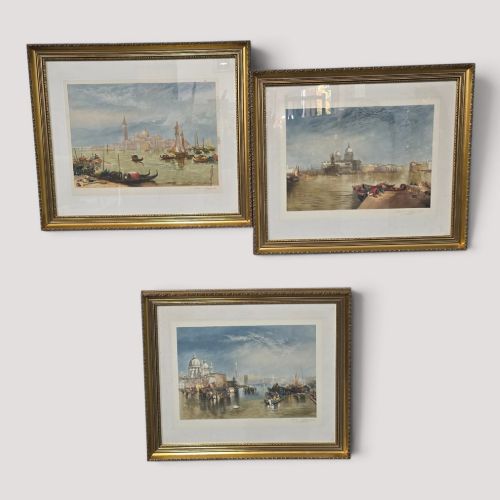
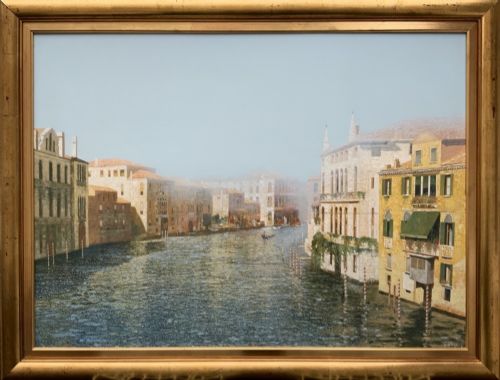
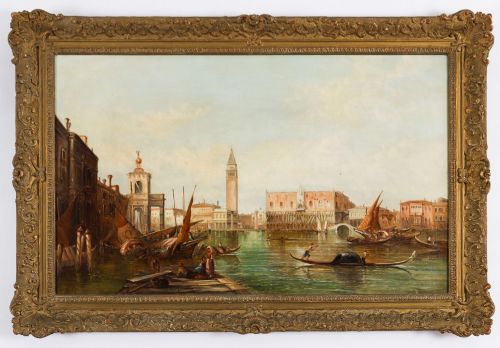
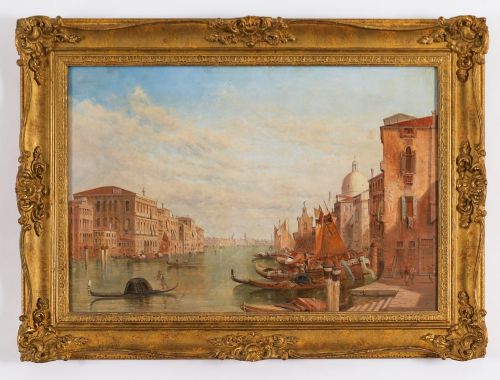
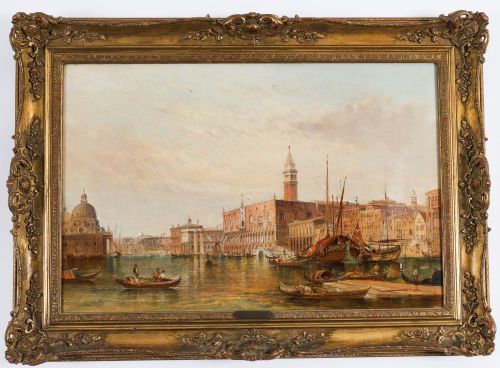
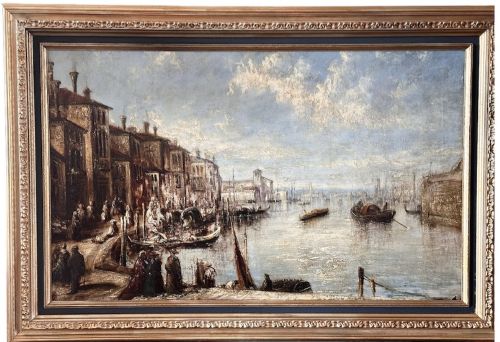
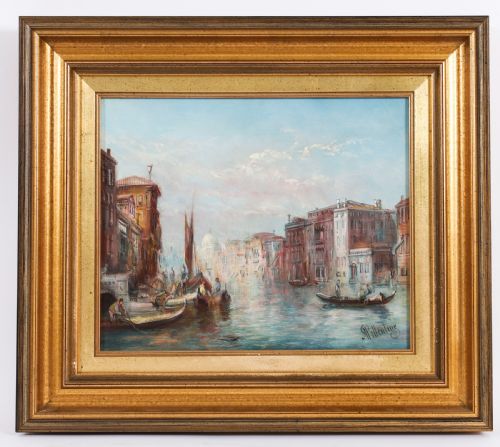
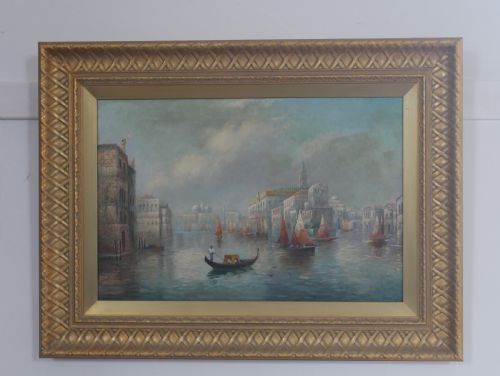
Italian canal artwork centres on depictions of Venice, showing landmarks such as the Grand Canal, the Doge's Palace, and the Bridge of Sighs. These pieces record the changing light upon historical palazzos and busy waterways through townscapes and marine views.
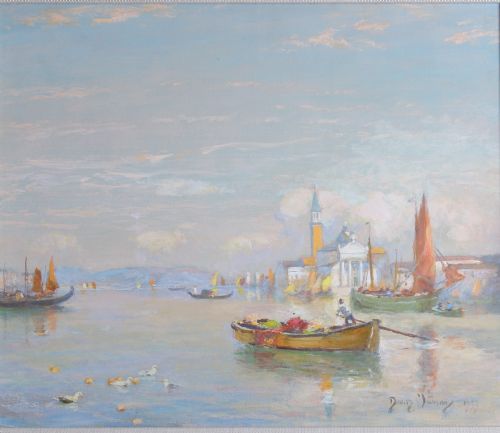
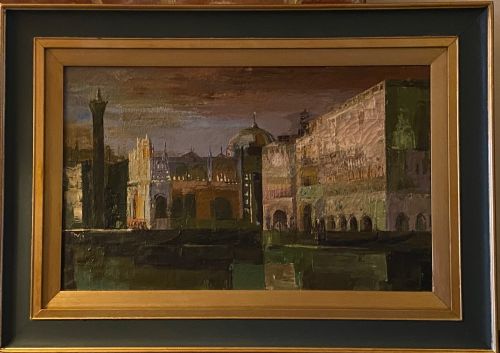
The selection on this page consists predominantly of nineteenth-century and early twentieth-century paintings. Oil on canvas works and watercolours dominate the offerings, spanning periods from Victorian fine art through to impressionism and mid-century modern interpretations.
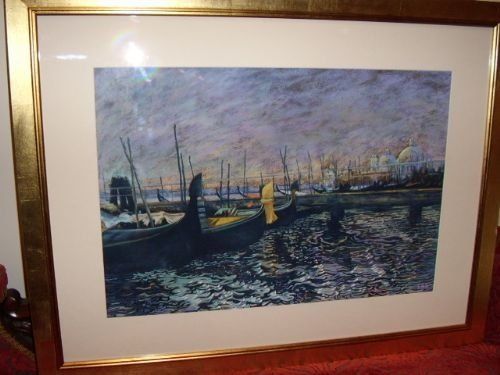
Works range from detailed architectural studies of the Dogana and Santa Maria della Salute to atmospheric moonlight pastels and gouache drawings. Collectors encounter both grand oil paintings intended for formal display and more intimate watercolour studies.
Materials and Techniques
Painters applied oil paint directly onto stretched canvas or wooden board, building up rich textures to render the shimmering reflections of water and stone. Many works incorporate framing in giltwood or gilt wood, which enhances the visual depth of the composition.
Italian Canal Artwork Retail Price Guide 2026
Typical asking prices for italian canal artwork among the pieces listed under this phrase on Sellingantiques today, from the lower quarter to the upper quarter. They describe what is for sale here now, not the wider market.
Represented artistic styles span Victorian fine art, classical realism, impressionism, and mid-century modern.
Evaluating Quality
Quality rests upon the artist's ability to handle perspective and the distinct atmospheric light of the Venetian lagoon. Superior examples demonstrate confident brushwork in rendering architectural details like the Doge's Palace alongside natural reflections on the water.
The integration of the original frame, often in giltwood or gilt wood, contributes significantly to the integrity of the piece. Works by established named artists command attention through their precise draughtsmanship and proven exhibition histories.
Alfred Pollentine·Sushila Singh·Francis Moltino·Claude Jousset·Antonietta Brandeis·Vittore Zanetti Zilla·Hercules Brabazon Brabazon·Jane Vivian·David Law·Wilfred Knox·Henry Wimbush·Charles Clement Calderon·Helen Donald-Smith
The Italian Canal Artwork Glossary
- Oil on canvas
- Pigment suspended in drying oil applied to a woven fabric support. This traditional method allows for rich colour blending and textured brushwork.
- Watercolour
- Paint consisting of transparent pigment suspended in a water-soluble binder applied to paper. It creates luminous washes well suited to marine scenes.
- Giltwood
- Wood carved and coated with a thin layer of gold leaf or gold paint. It provides ornate framing that complements nineteenth-century canvases.
- Gouache
- An opaque water-based paint featuring pigment mixed with water and a binding agent. Artists use it alongside watercolours for solid areas of colour and highlights.
- Impressionism
- A nineteenth-century painting style focusing on accurate depiction of light in its changing qualities. Artists employing this approach capture fleeting atmospheric conditions over the canals.
Italian Canal Artwork: Frequently Asked Questions
What periods do these paintings date from?
The works span from the nineteenth century through to the mid-twentieth century, capturing shifting artistic movements.
Victorian pieces sit alongside later impressionist and mid-century interpretations of the same Venetian views.
Which landmarks appear most often?
Artists frequently painted the Grand Canal, the Doge's Palace, and the Bridge of Sighs.
Views of Santa Maria della Salute and the Dogana also recur across both oils and watercolours.
How should I care for a canvas painting?
Keep oil paintings away from direct sunlight and sources of extreme temperature fluctuation to protect the canvas and paint.
Dust the surface gently with a soft, dry brush and avoid using liquid cleaners on the pigment.
Are watercolours framed differently than oils?
Watercolours require framing behind glass on paper supports to protect them from airborne moisture and dust.
Oils on canvas are typically stretched over wooden frames and displayed within decorative giltwood surrounds without glass.