



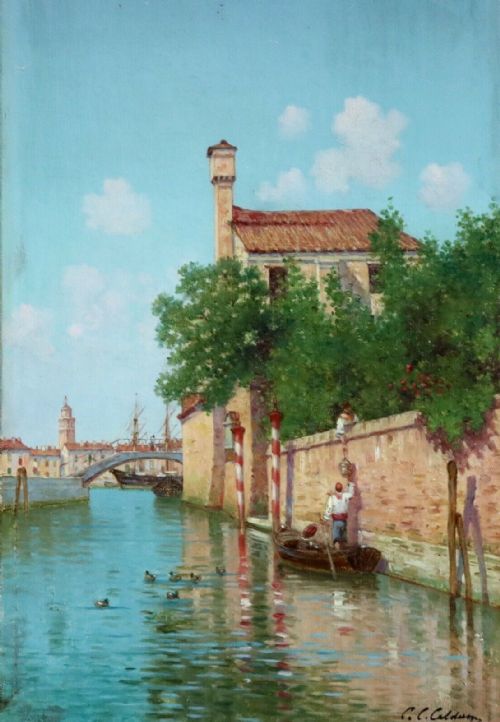


Venetian View Oil Painting
A venetian view oil painting captures the luminous canals and historic architecture of Italy, bringing a sophisticated nineteenth-century atmosphere to any interior.
Venetian View Oil Painting
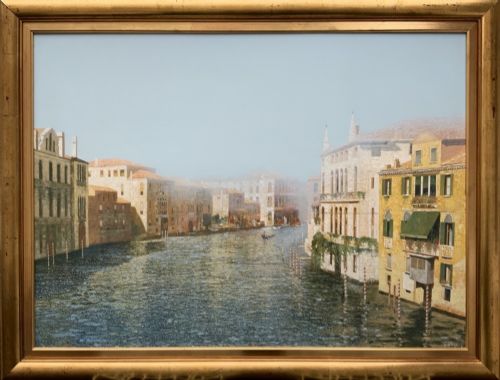
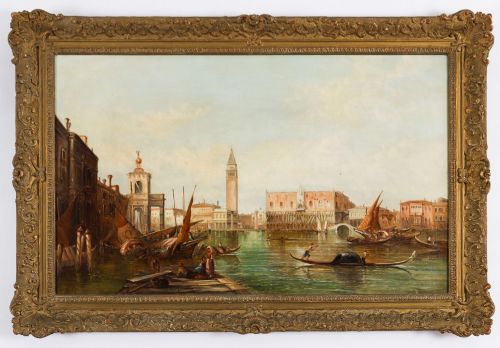
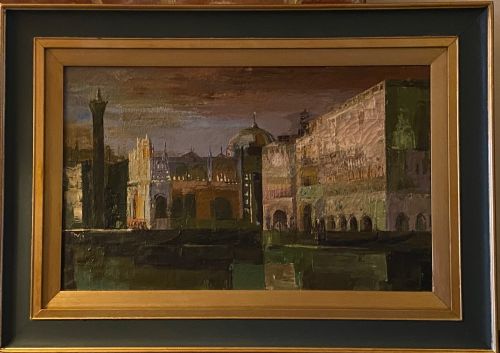
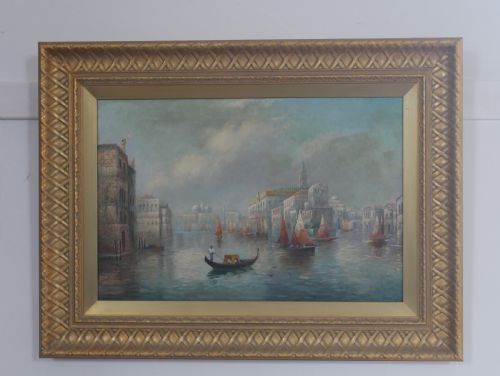
A venetian view oil painting depicts famous lagoon landmarks such as the Grand Canal, the Doge's Palace, and Santa Maria della Salute. These works range from Victorian canvases to mid-century interpretations, capturing the distinct light and water of Italy.
Buyers are most likely to encounter nineteenth-century works executed in oil on canvas, often framed in ornate giltwood. Townscapes by artists such as Alfred Pollentine and Jane Vivian frequently appear, alongside later twentieth-century examples.
How they were made
These works utilise oil paint applied to canvas, capturing the shifting light and atmosphere of the lagoon. Pigments were built up to create depth in the water and architecture.
Many of these paintings are housed in wood frames embellished with gesso, gold leaf, and gilt. These decorative surrounds complement the classical realism and romanticism of the art.
Venetian View Oil Painting Retail Price Guide 2026
Typical asking prices for venetian view oil painting among the pieces listed under this phrase on Sellingantiques today, from the lower quarter to the upper quarter. They describe what is for sale here now, not the wider market.
Canals were painted so often because nineteenth-century artists simply refused to stop bringing waterproof boots to Italy.
What varies in quality
The precision of architectural detail and the handling of atmospheric light distinguish finer examples from simpler compositions. Works by established nineteenth-century artists demonstrate a sophisticated command of colour and perspective.
The condition of the canvas and the preservation of the original giltwood frame influence the overall character of the piece. Brushwork that successfully captures the reflection of light on water marks the upper tier of these townscapes.
Alfred Pollentine·Sushila Singh·F.D. Campo·Jane Vivian·William Raymond Dommersen·Charles Clement Calderon
The Venetian View Oil Painting Glossary
- Oil on Canvas
- A traditional painting medium where pigments suspended in drying oils are applied to stretched fabric. This method allows for rich colour blending and textured brushwork.
- Giltwood
- Wood carved and covered with a thin layer of gold leaf or metallic powder. This material provides an ornate border that enhances the visual weight of the artwork.
- Gesso
- A plaster-like mixture applied to wood frames as a base for gilding. It allows craftsmen to carve intricate decorative details before applying gold leaf.
- Classical Realism
- An artistic style focused on accurate observation and lifelike representation of subjects. This approach underpins many nineteenth-century townscapes of Italy.
Venetian View Oil Painting: Frequently Asked Questions
What subjects do these paintings show?
These works focus primarily on Italian townscapes, featuring landmarks such as the Grand Canal, the Doge's Palace, and the lagoon. Artists captured the architecture and waterways under varying conditions of light.
Venice inspired numerous nineteenth-century painters to record its unique topography and daily maritime life on canvas.
How do I date a nineteenth-century view?
Dating relies upon artist signatures, stylistic movements like romanticism or classical realism, and framing techniques. Nineteenth-century works often carry specific biographical details of the painter.
Material analysis of the canvas and underlying gesso also assists in confirming the period of production.
Where should I hang this art?
These townscapes suit drawing rooms, studies, or hallways where traditional oil paintings can be displayed with adequate lighting. The giltwood frames complement period interiors and classic furnishings.
Avoid placing canvases in direct sunlight to protect the oil pigments and the gilded frame over time.
Who were the prominent artists?
The selection includes notable nineteenth-century painters such as Alfred Pollentine, Jane Vivian, and William Raymond Dommersen. Their works document specific architectural views of the Venetian lagoon.
Later twentieth-century artists also contributed interpretations of the same canal scenes.