
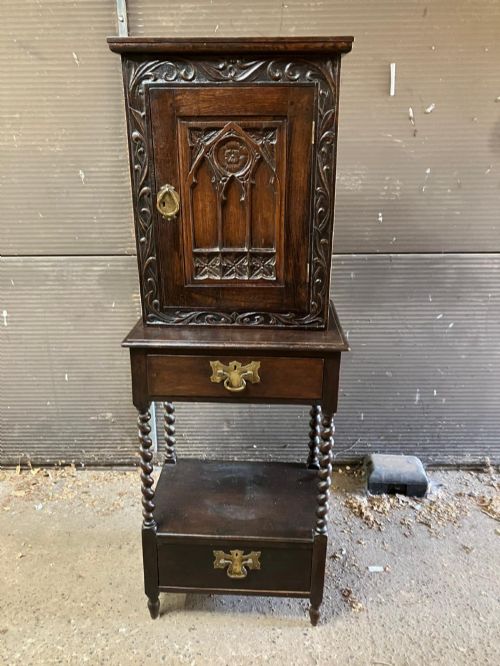
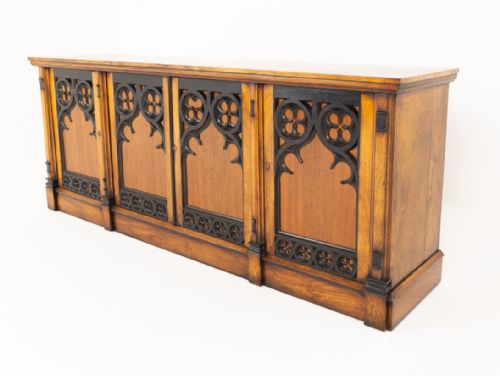


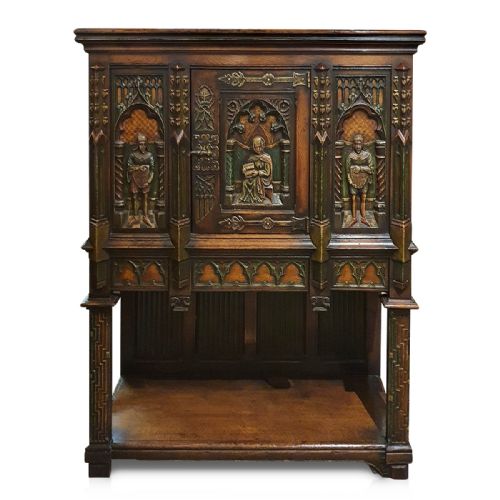
Gothic Tracery Carved Cabinet
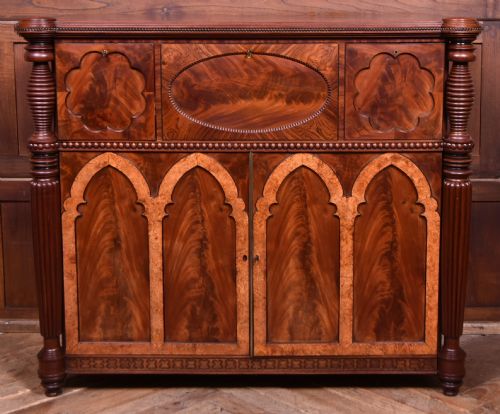
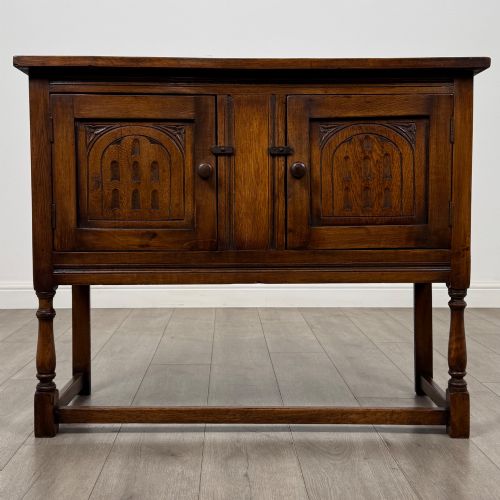
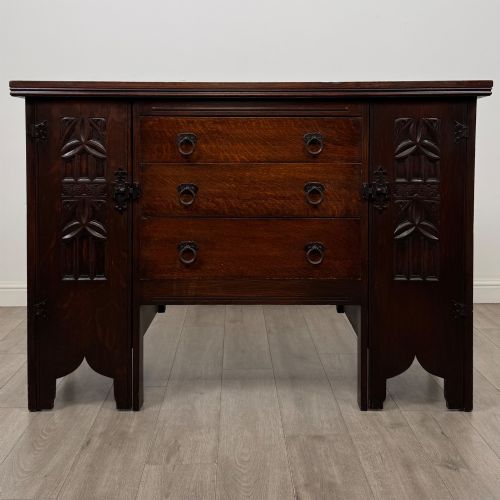
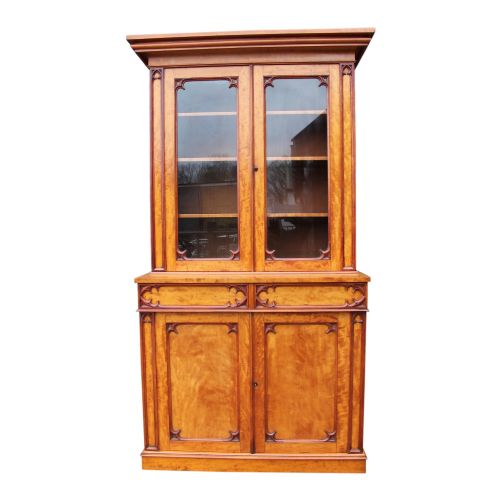
These gothic tracery carved cabinet pieces bring architectural stone forms into timber furniture, offering serious storage with pointed arch and window motifs.
Gothic Tracery Carved Cabinet
A gothic tracery carved cabinet takes architectural window and arch patterns and applies them directly to timber furniture storage forms. These pieces serve as practical cupboards, sideboards, bookcases, and hall units designed to bring medieval church and cathedral aesthetics into domestic interiors.
You will most frequently meet 19th-century and Victorian Gothic Revival examples on this page, alongside Edwardian interpretations. These common pieces combine solid oak construction with surface carving that mimics stone stonemasonry and pointed arch tracery.
Less common variations stretch from sixteenth-century flamboyant examples to Regency items and walnut breakfront bookcases. Whatever the precise period, each piece relies on vertical emphasis, panel construction, and piercing or relief carving to define its character.
How they were made
Makers built these cabinets using heavy timber framing, primarily oak, alongside occasional flame mahogany, burr walnut, and satinwood. Panels received deep relief carving or piercing to form the signature window tracery patterns.
Metalwork played a structural and decorative role, incorporating brass and iron hinges, lock plates, and handles. Glass also appeared in bookcase doors, allowing light into shelved interiors behind the wooden tracery frameworks.
Listings feature oak predominantly, alongside mahogany, walnut, and satinwood across the Victorian, Edwardian, and sixteenth-century periods.
What varies in quality
Depth and sharpness of the hand carving separate simpler production from superior cabinet work. Crisp relief work in the tracery panels demonstrates skilled woodworking rather than shallow mechanical stamping.
The choice of timber and the integrity of the joinery define the upper tier of these pieces. Dense oak boards, well-fitted two-part construction, and original brass or iron hardware elevate the build standard.
Gillows
The Gothic Tracery Carved Cabinet Glossary
- Tracery
- The stonework support in Gothic windows that evolved into carved wooden patterns on furniture panels. It creates decorative geometric frameworks across cupboard doors.
- Creedence cabinet
- A small storage piece traditionally used for holding church communion elements before service. In secular furniture, it describes a compact cupboard with ecclesiastical styling.
- Breakfront
- A cabinet design where the central section projects forward from the flanking wings. This layout adds visual depth and architectural presence to large bookcases and sideboards.
- Secretaire
- A cabinet incorporating a pull-down writing desk flap concealing internal compartments and drawers. It combines a writing surface with lower cupboard storage.
- Ebonised wood
- Timber treated with chemical finishes or dark stains to imitate ebony. This dark surface treatment provides high contrast against carved architectural details.
Gothic Tracery Carved Cabinet: Frequently Asked Questions
What periods do these cabinets come from?
The pieces span multiple centuries, ranging from sixteenth-century examples up through nineteenth-century Victorian Gothic Revival work and early twentieth-century Edwardian production. Nineteenth-century iterations dominate the available styles.
Craftsmen across these periods reinterpreted medieval architecture differently, moving from original flamboyant construction to later Victorian revival movements.
How were these cabinets used originally?
These storage pieces served varied domestic functions, acting as hall cupboards, sideboards, table cabinets, and bookcases. They held books, household provisions, and tableware.
Larger variations stood in principal rooms to display status, while smaller bedside cabinets and corner cupboards fitted into specialised domestic spaces.
What woods were used for these?
Oak is the predominant timber found across these listings, reflecting the heavy medieval architectural inspiration. Makers also utilised alternative woods including satinwood, burr walnut, and flame mahogany.
Some pieces incorporate ebonised wood to create dark, high-contrast surfaces that emphasise the carved panel details.
How do I identify Gothic Revival styles?
Gothic Revival pieces borrow heavily from medieval stone architecture, featuring pointed arches, trefoils, quatrefoils, and intricate window tracery carved into wooden doors and panels. Vertical lines dominate the proportions.
Hardware such as heavy iron hinges and brass fittings often echoes ecclesiastical metalwork, reinforcing the architectural aesthetic.
Are these cabinets made in multiple parts?
Certain larger forms, such as bookcases and sideboards, utilise a two-part construction method that separates upper shelving from lower cupboards. This aided transport and positioning in domestic rooms.
Smaller items like hall cupboards, table cabinets, and bedside units were built as single solid pieces.