


Antique Gothic Pedestal Cabinet
These antique gothic pedestal cabinet examples bring architectural weight and rich timber grain to an interior.
Antique Gothic Pedestal Cabinet
When you search for an antique gothic pedestal cabinet, you encounter sturdy storage pieces defined by architectural motifs drawn from medieval buildings. The selection here ranges from compact bedside chests to larger sideboards, side cabinets, and desks produced across the nineteenth century.
Victorian examples dominate the evidence, frequently rendered in carved oak with distinct revival detailing. You also meet Georgian and Regency interpretations alongside nineteenth-century continental works, showing how cabinetmakers adapted ecclesiastical design for domestic rooms.
The forms span pairs of bedside cupboards, hall cupboards, and writing desks alongside larger sideboards and wine cooler tables. Oak and mahogany provide the primary structural timber, often enriched with painted finishes or contrasting inlay.
How they were made
Cabinetmakers relied heavily on solid oak and mahogany to build these substantial forms, utilising pine and pollard oak as secondary or decorative timbers. Brass hardware and wrought iron fittings supplied structural reinforcement and functional handles.
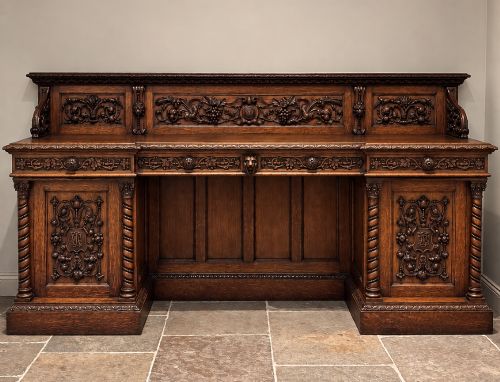
Carving serves as the principal decorative technique, featuring detailed woodwork such as Green Man motifs and panelled doors. Marble inserts occasionally top these surfaces, while painted black finishes alter the natural timber appearance.
Current listings feature pieces spanning the Georgian, Regency, and Victorian periods, constructed primarily in oak, mahogany, and pine.
What varies in quality
The depth and crispness of the timber carving dictate the visual standard of each piece, distinguishing routine production from ambitious cabinet work. Superior examples display carefully chosen grain patterns in pollard oak or mahogany alongside precise joinery.
Hardware selection and secondary timber choice also influence the piece, with solid brass fittings and substantial framing separating fine commissions from simpler workshop output.
The Antique Gothic Pedestal Cabinet Glossary
- Gothic Revival
- An architectural and decorative style drawing on medieval ecclesiastical design, featuring pointed arches, tracery, and heavy mouldings. It influenced domestic furniture significantly during the nineteenth century.
- Pollard Oak
- Timber harvested from trees that have been pollarded, producing a dense, highly figured grain pattern prized for decorative cabinet fronts. It creates striking visual movement on large surfaces.
- Green Man
- A sculptural motif depicting a face carved from or entwined with leaves and vines, symbolizing rebirth. It appears frequently on nineteenth-century oak furniture.
- Pedestal Cabinet
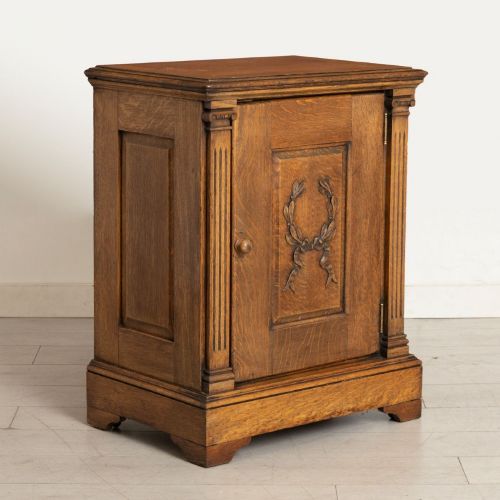
- A freestanding storage unit typically built with a central column or pedestal configuration, offering enclosed shelving or drawers. These forms function well as bedside units or side tables.
- Specimen Wood
- Various distinct timber species utilised within a single piece for decorative inlay or banding. This technique showcases the natural colour variation of different woods.
Antique Gothic Pedestal Cabinet: Frequently Asked Questions
What rooms suit these cabinets?
These pieces fit naturally into studies, bedrooms, and hallways where substantial timber storage is required. Their architectural presence anchors a room without demanding matching furnishings.
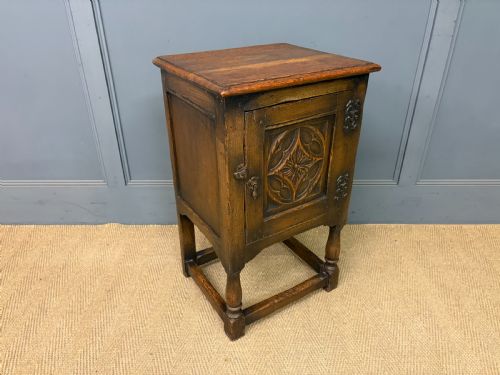
Smaller bedside chests and cupboards serve effectively beside low beds or in narrow corridors, while larger sideboards operate in dining spaces.
How do I identify the period?
Dating relies on timber choice, construction methods, and stylistic cues within the Gothic Revival movement. Georgian and Regency pieces show lighter proportions and specific mahogany grain, whereas Victorian examples lean towards heavier carved oak.
Examining drawer linings and backboards reveals the age of the construction and the specific tools utilised by the maker.
How should I care for the timber?
Maintenance requires stable indoor humidity and protection from direct sunlight to prevent timber splitting and fading. Regular dusting with a dry cloth preserves the finish.
Occasional application of appropriate wax feeds the oak or mahogany without building up a heavy residue that obscures the carved detail.
Are pairs common in these listings?
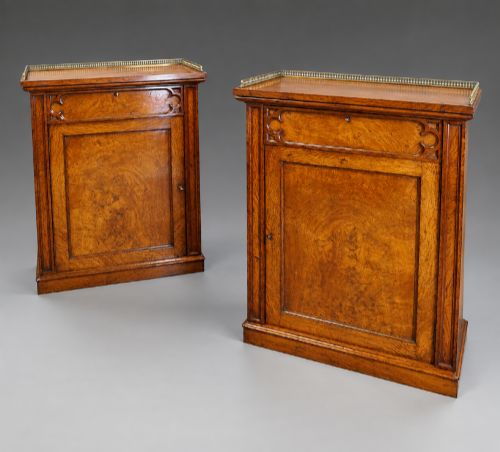
Matched pairs appear frequently among bedside chests and smaller side cabinets, providing symmetrical placement options for a bedroom. These sets share identical timber characteristics and carving styles.
Single pieces dominate the larger sideboard and desk categories due to their original domestic function.