
Dark Oak Gothic Cupboard
These heavy dark oak gothic cupboards span centuries of revivalist design, bringing deep timber and medieval architectural motifs into domestic rooms.
Dark Oak Gothic Cupboard
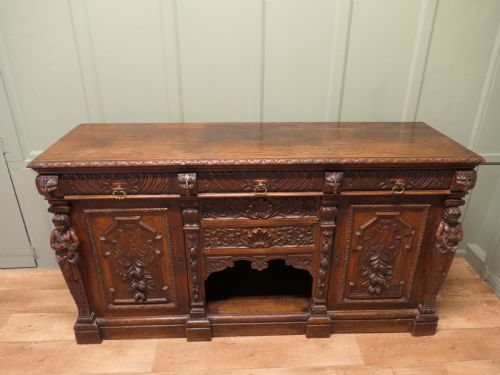
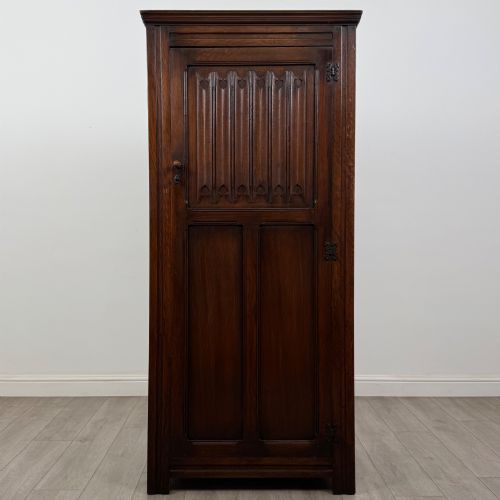
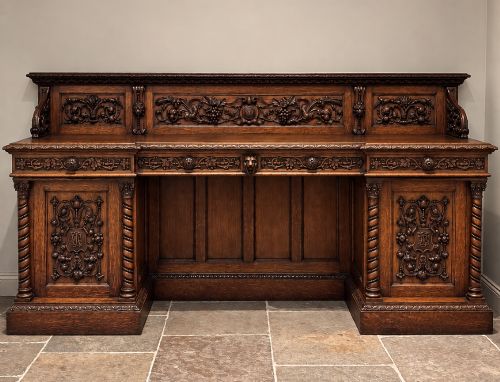
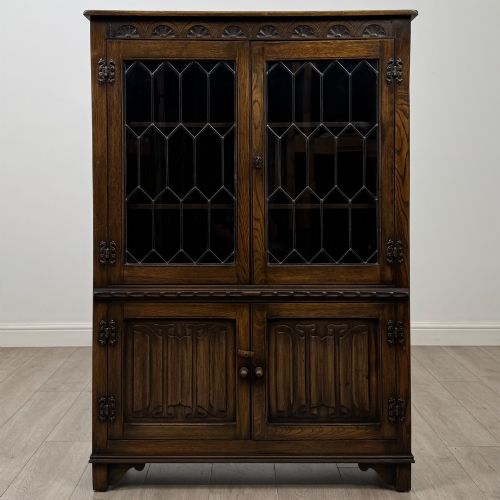
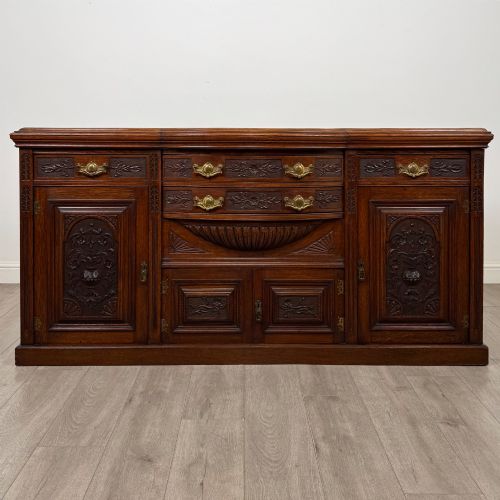
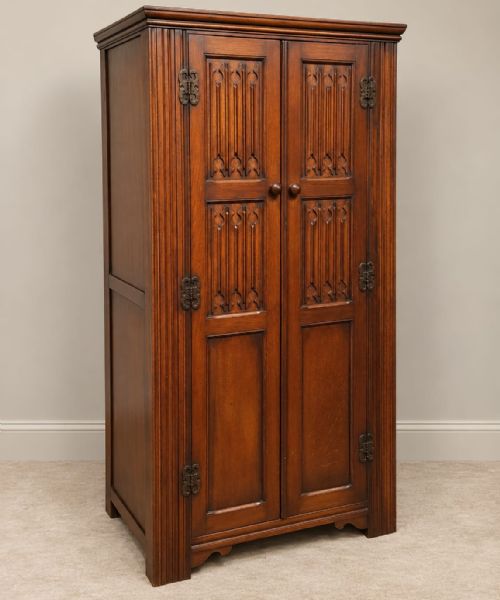
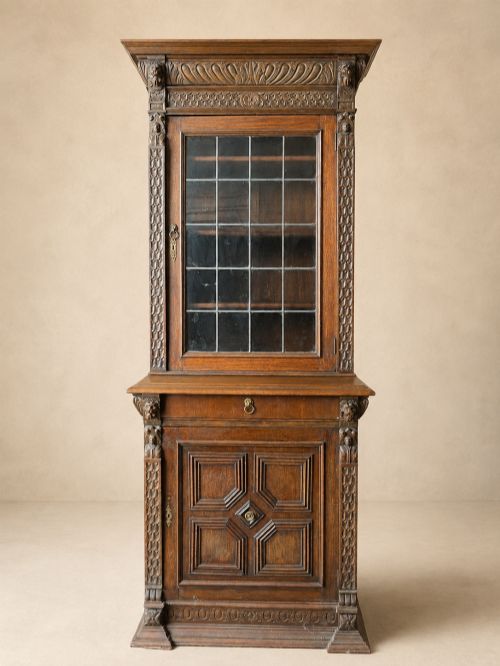
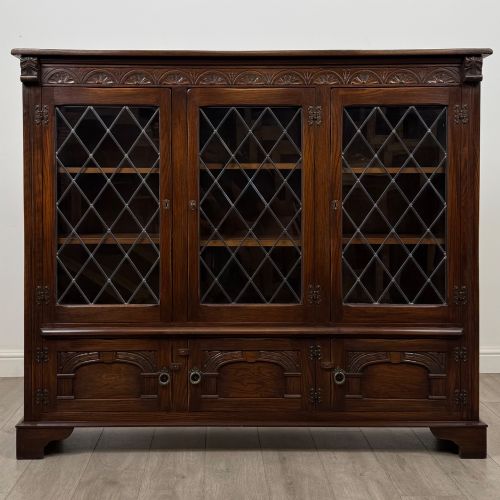
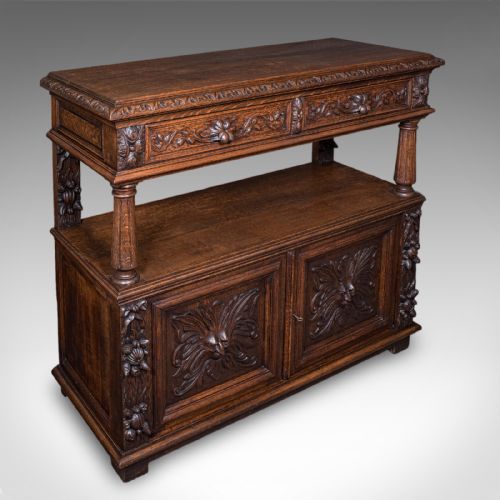
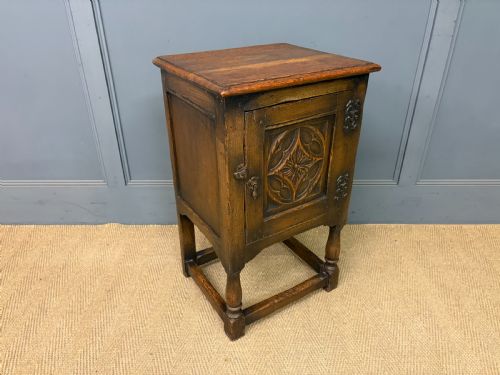
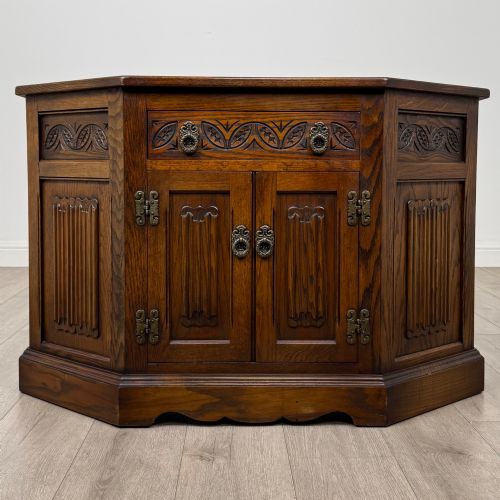
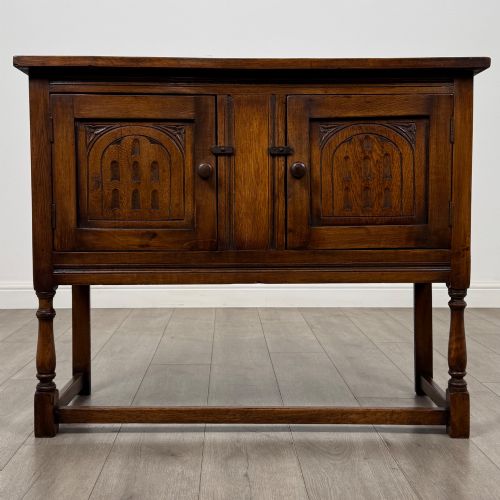
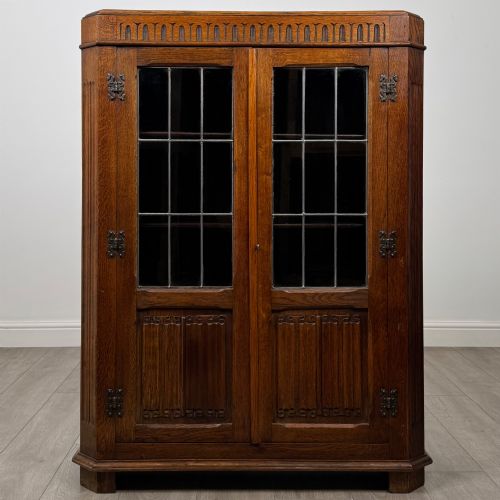
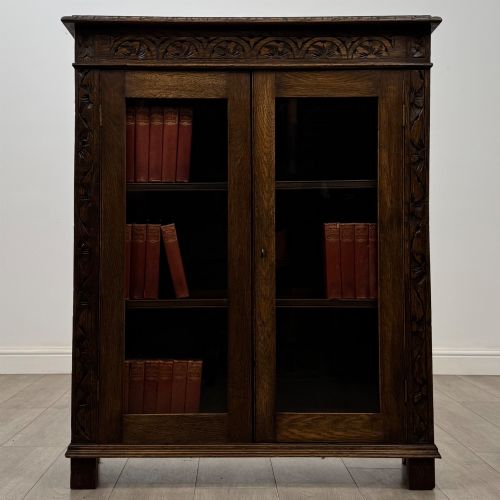
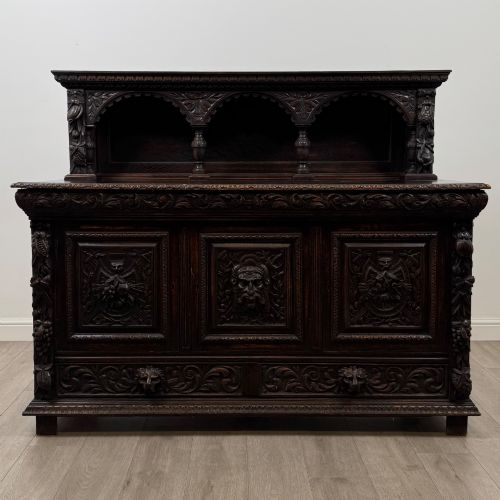
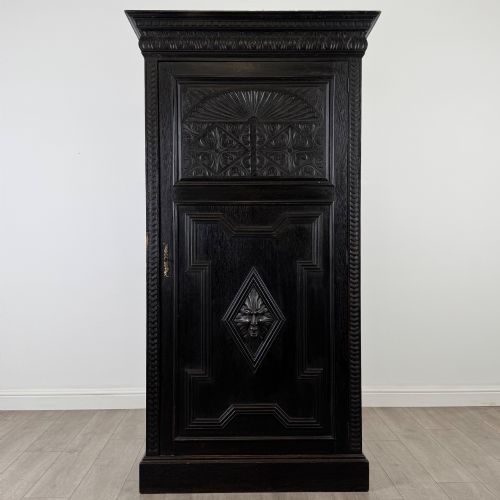
A dark oak gothic cupboard combines heavy timber construction with medieval architectural ornamentation like linenfold panels, pointed arches, and tracery. You will encounter various forms here, ranging from sideboards and bookcases to small hall cabinets and wardrobes.
The pieces listed span multiple revival periods, most notably the Victorian and Edwardian eras alongside 19th-century interpretations. Makers drew inspiration from earlier Tudor and Jacobean styles, resulting in substantial storage furniture built for display and utility.
Earlier centuries also appear through rustic examples, including 17th-century French manoir pieces and 16th-century flamboyant forms. These provide the authentic historical roots that later Victorian and Edwardian craftsmen sought to emulate.
How they were made
Construction relies heavily on solid oak, frequently paired with ebonised wood and supporting elements in iron and brass. Cabinetmakers used traditional joinery alongside heavy carving to build structurally robust carcases that would endure for generations.
Hardware such as wrought iron hinges and brass handles secure heavy doors fitted with glass or leaded panels. Surfaces often display rich dark finishes, deep relief carvings, and occasional painted highlights on pine and oak structures.
A French manoir cellar contributed one rustic oak alcove cupboard, retaining the scent of old wine and centuries of quiet history.
What varies in quality
The depth and crispness of the carved ornamentation separate standard production items from exceptional commissions. Master carvers rendered tracery, linenfold panels, and Green Man motifs with sharp detail and dimensional depth.
The selection of timber grain and the integrity of the original joints dictate structural longevity. Heavier pieces utilising solid oak throughout maintain superior stability compared to later revival items with applied decorative elements.
John Moyr Smith
The Dark Oak Gothic Cupboard Glossary
- Linenfold
- A style of wood carving that imitates folded parchment or linen, commonly seen on Tudor and revival cupboard panels.
- Creedence cabinet
- A small medieval or revival side table or cupboard originally used for checking food for poison before serving.
- Green Man
- A sculptural mask carved from foliage representing faces, frequently incorporated into Victorian gothic woodwork.
- Tracery
- Openwork stonework patterns translated into wooden cabinet panels and glazing bars during the gothic revivals.
Dark Oak Gothic Cupboard: Frequently Asked Questions
What periods do these cupboards date from?
The selection includes 19th-century Victorian and Edwardian pieces alongside earlier 16th and 17th-century examples.
Craftsmen across these eras utilised traditional oak to produce various revivalist storage forms.
How were gothic cupboards originally used?
These pieces served multiple domestic storage functions, acting as sideboards, wardrobes, display cabinets, and hall cupboards.
Larger variations stored tableware and linens while smaller versions housed books or bedside items.
How do I identify a gothic revival piece?
Look for architectural motifs including pointed arches, linenfold panels, heavy hardware, and dark timber finishes.
Victorian and Edwardian makers heavily borrowed these medieval church details for domestic furniture.
How should I care for dark oak timber?
Keep wooden furniture away from direct heat sources and sudden humidity changes to prevent the solid oak from splitting.
Apply natural beeswax periodically to nourish the dark finish and maintain the surface sheen.