



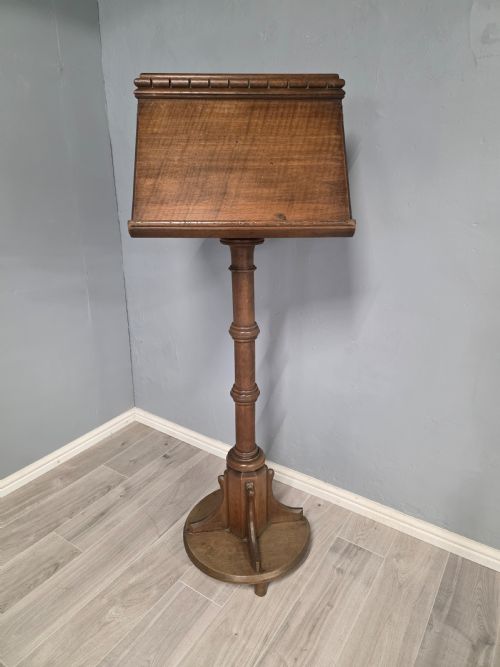


Brown Oak Gothic Stand
A brown oak gothic stand brings heavy architectural timber and earnest nineteenth-century craftsmanship into a modern interior.
Brown Oak Gothic Stand
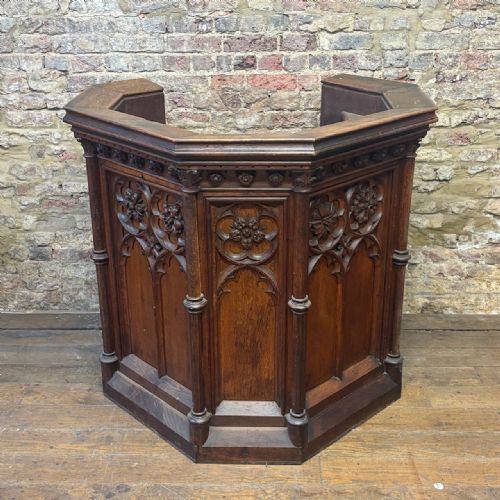
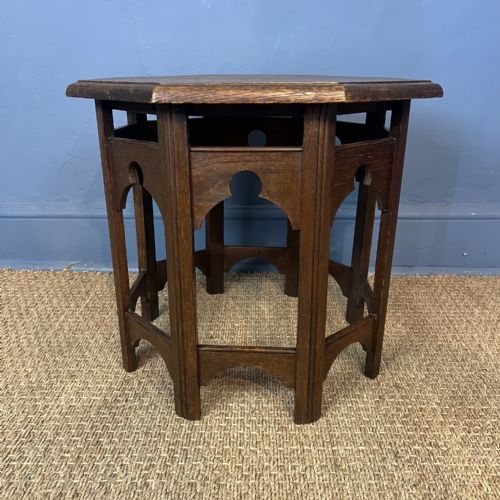
A brown oak gothic stand unites heavy nineteenth-century ecclesiastical design with domestic utility through forms such as lecterns, tables, and pedestals. Buyers seek these pieces for their rich timber tones and pointed arch details originating from Victorian and Edwardian workshops.
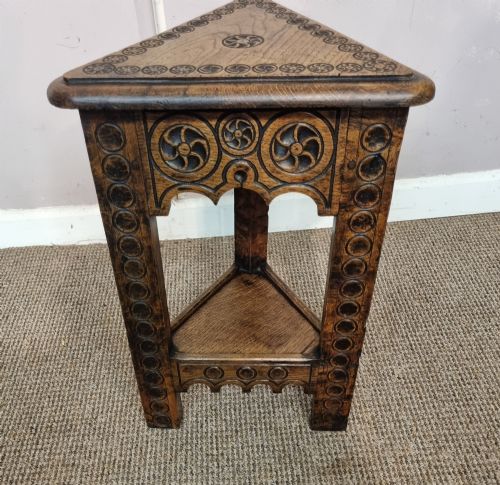
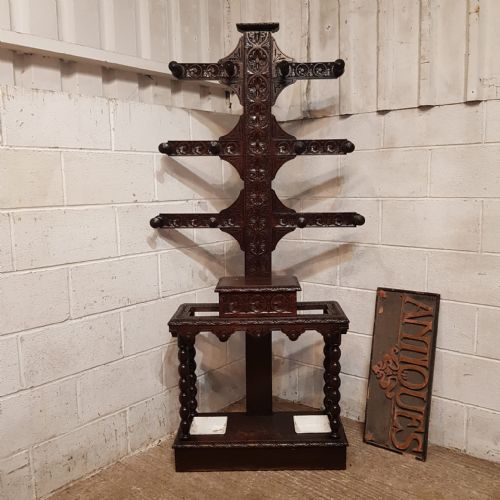
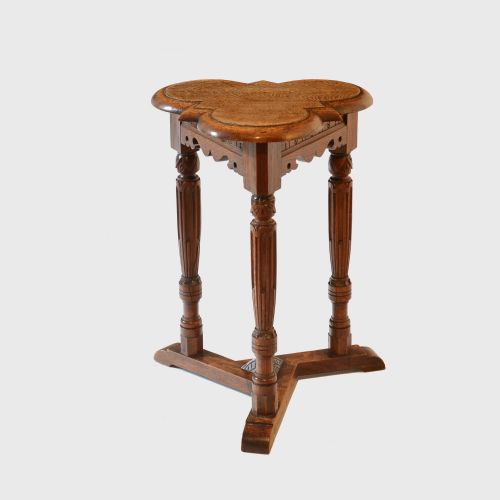
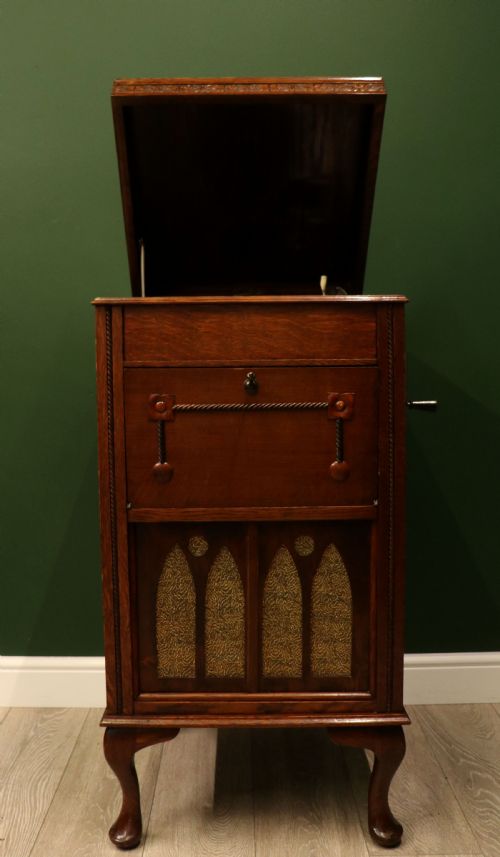
The selection here encompasses diverse utilitarian objects sharing a strong regional or revivalist vocabulary, including hall stands, bookcases, and occasional tables. These items reflect the enduring appeal of medievalism adapted for Victorian and Edwardian domestic and institutional spaces.
Most examples date from the nineteenth and early twentieth centuries, displaying characteristic dark finishes and robust construction methods. The presence of oak across these varied forms defines the visual weight expected in a gothic revival interior.
Materials and construction methods
Makers utilised solid oak as the primary structural timber, often selected for deep natural colour variation and durability. Secondary materials such as brass fittings, iron hardware, and occasional marble or ceramic tile inserts appear in functional components.
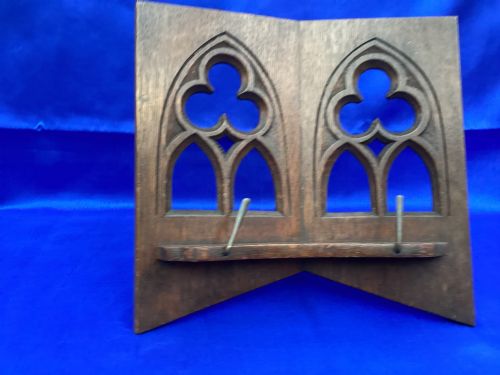
Hand carving defines the surface enrichment, utilising gouges and chisels to render trefoils, tracery, and figurative elements like Greenman motifs directly into the timber. Joinery relies on traditional pegged mortise and tenon joints designed to bear substantial weight without modern adhesives.
A solitary King peers out from a carved clock case while church lecterns watch silently from the corner.
Factors determining quality
The depth and precision of hand carving separate ordinary production from superior examples, particularly where figures and architectural tracery display crisp undercut details. Superior pieces maintain integrity in the timber grain and patination without excessive modern intervention.
Structural heft and proportion dictate the calibre of a stand, with well-balanced bases and robust joinery indicating careful design. The integration of secondary materials like cast brass hinges or fitted glass demonstrates the maker's commitment to finish.
Baillie Scott·Benjamin Taylor and Sons·U Phone of Leeds
The Brown Oak Gothic Stand Glossary
- Gothic Revival
- An architectural and decorative style drawing inspiration from medieval forms, prevalent during the nineteenth century. It utilises pointed arches, trefoils, and heavy carved ornamentation.
- Trefoil
- A graphic ornament composed of three overlapping rings or leaf-shaped lobes. This motif appears frequently in panel tracery and table tops.
- Lectern
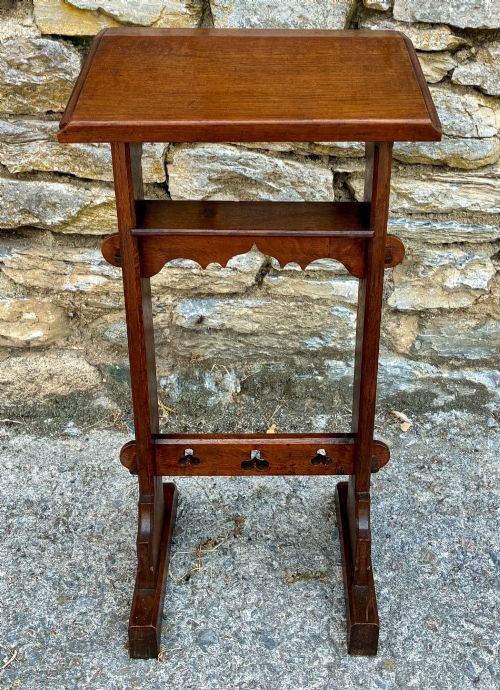
- A slanted reading stand designed to hold books or folios at a readable angle. These frequently incorporate heavy oak framing and pivoting mechanisms.
- Patina
- The surface sheen and colour depth developed by timber over decades of handling and exposure. It serves as an indicator of age and careful maintenance.
Brown Oak Gothic Stand: Frequently Asked Questions
What rooms suit a gothic stand?
These pieces suit entrance halls, studies, and libraries where their architectural weight balances large proportions. They anchor a room by introducing dark timber and historic ornament.
Positioning a stand away from direct heat sources preserves the antique oak and prevents timber splitting over time.
How are lecterns and display stands different?
Lecterns feature a sloping top designed specifically for reading books or manuscripts at a standing height. Display stands offer flat or tiered surfaces intended for decorative objects.
Both types share heavy revivalist framing and structural oak supports characteristic of the period.
How do I care for antique oak?
Maintenance requires occasional waxing with a traditional beeswax formulation to nourish the dry timber and protect the surface. Avoid liquid polishes containing silicones that degrade historic finishes.
Keeping the piece in a stable environment with moderate humidity protects the structural joinery.
How can I date a gothic oak piece?
Dating relies on examining tool marks, construction techniques, and stylistic markers such as Victorian Gothic versus Arts and Crafts simplicity. Machine-sawn timber often indicates a late nineteenth-century origin, while hand-planed surfaces point earlier.
Hardware styles, including brass hinges and iron brackets, provide additional clues to the exact decade of manufacture.