
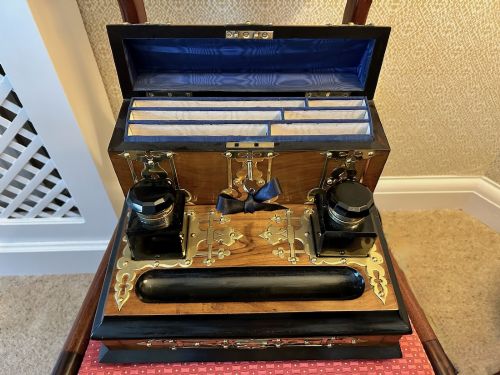


Gothic Revival Desk Casket
These gothic revival desk casket examples are sturdy nineteenth-century receptacles built to organise correspondence and hold valuables upon a writing table.
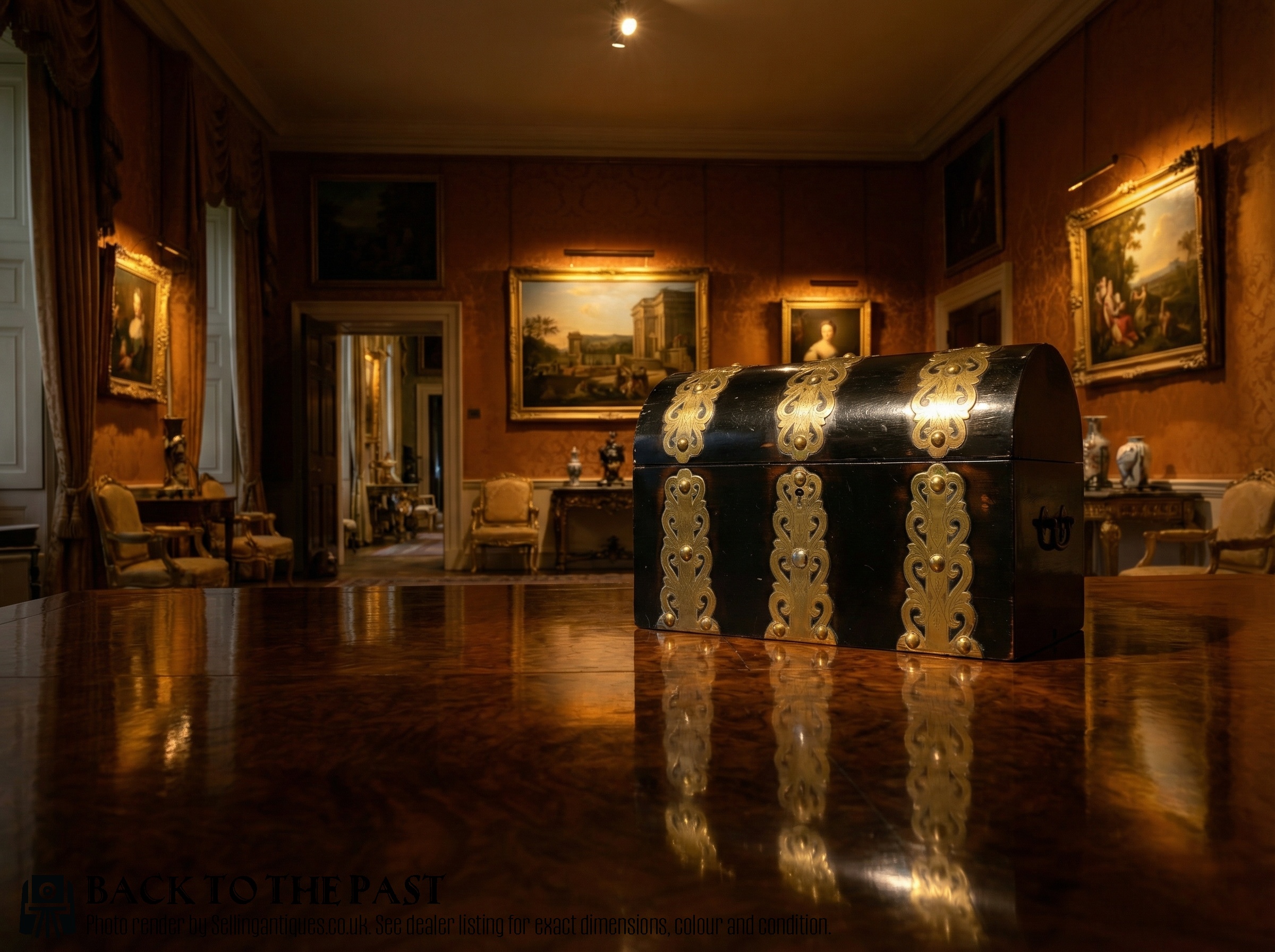
Gothic Revival Desk Casket
When you search for a gothic revival desk casket, you encounter nineteenth-century stationery boxes, letter caskets, and desk sets produced during the Victorian period. These pieces take the form of dome-topped boxes and rectangular containers designed to sit upon a desk and secure private papers.
How they were made
Cabinet makers built these pieces using dense hardwoods like burr walnut, coromandel wood, pollard oak, and amboyna over solid carcases. These figured timbers provided rich natural grain patterns that formed the visual foundation of the piece.
Craftsmen then mounted heavy brass strapwork, hinges, and ormolu mounts to the wooden bodies, frequently incorporating cabochon-cut agate stones into the metalwork for added decorative colour and texture.
What varies in quality
The choice of primary timber dictates the initial tier of quality, with exotic woods like coromandel and burr walnut sitting above standard oak or plain walnut. Cabinet making standards also separate standard production items from pieces displaying superior joinery and thoughtful grain matching.
The ambition of the metal mountings and decorative additions further divides the range. Heavy cast brass strapwork, intricate ormolu mounts, and polished agate cabochons elevate a simple wooden container into an elaborate desk accessory.
The Gothic Revival Desk Casket Glossary
- Stationery box
- A desk accessory designed to hold writing paper, envelopes, and letters in an upright or stacked position. These boxes often feature compartmentalised interiors for orderly storage.
- Coromandel wood
- A dense, heavy timber sourced from Southeast Asia, prized for its dark brown colour and striking black stripes. It was frequently utilised for luxury nineteenth-century boxes.
- Ormolu
- Gilded bronze applied to furniture and decorative objects as mounts and handles. The technique produces a bright gold-coloured finish that complements dark timber.
- Cabochon
- A gemstone or piece of hardstone shaped and polished rather than faceted. In these pieces, agate cabochons are typically set into brass mounts.
- Burr walnut
- Wood taken from a walnut tree growth where the grain has grown in a distorted, swirling pattern. This produces highly decorative circular patterns across the surface of a box.
Gothic Revival Desk Casket: Frequently Asked Questions
How were nineteenth century desk boxes used?
These boxes served to keep writing paper, envelopes, and incoming correspondence organised and secure upon the surface of a desk. They acted as functional desktop furniture for the Victorian study or drawing room.
Many examples include fitted internal compartments designed specifically for writing implements, stamps, and folded letters.
What woods were used for desk caskets?
Cabinet makers utilised a range of domestic and exotic timbers when constructing these nineteenth-century desk accessories. Figured woods like burr walnut and pollard oak provided varied natural grain patterns.
Dense tropical hardwoods such as coromandel wood and amboyna also appear frequently, chosen for their distinctive dark coloration and durability.
How do you date a Victorian desk box?
Dating these pieces relies on examining the construction methods, timber choices, and decorative styles characteristic of the nineteenth century. The presence of specific hardware styles and architectural revival motifs points towards the Victorian period.
Most surviving examples date from the mid to late nineteenth century, aligning with the height of the Gothic Revival movement in Britain.