


Dome Top Stationery Box
A dome top stationery box organises correspondence with curved timber lids and fitted desk compartments.
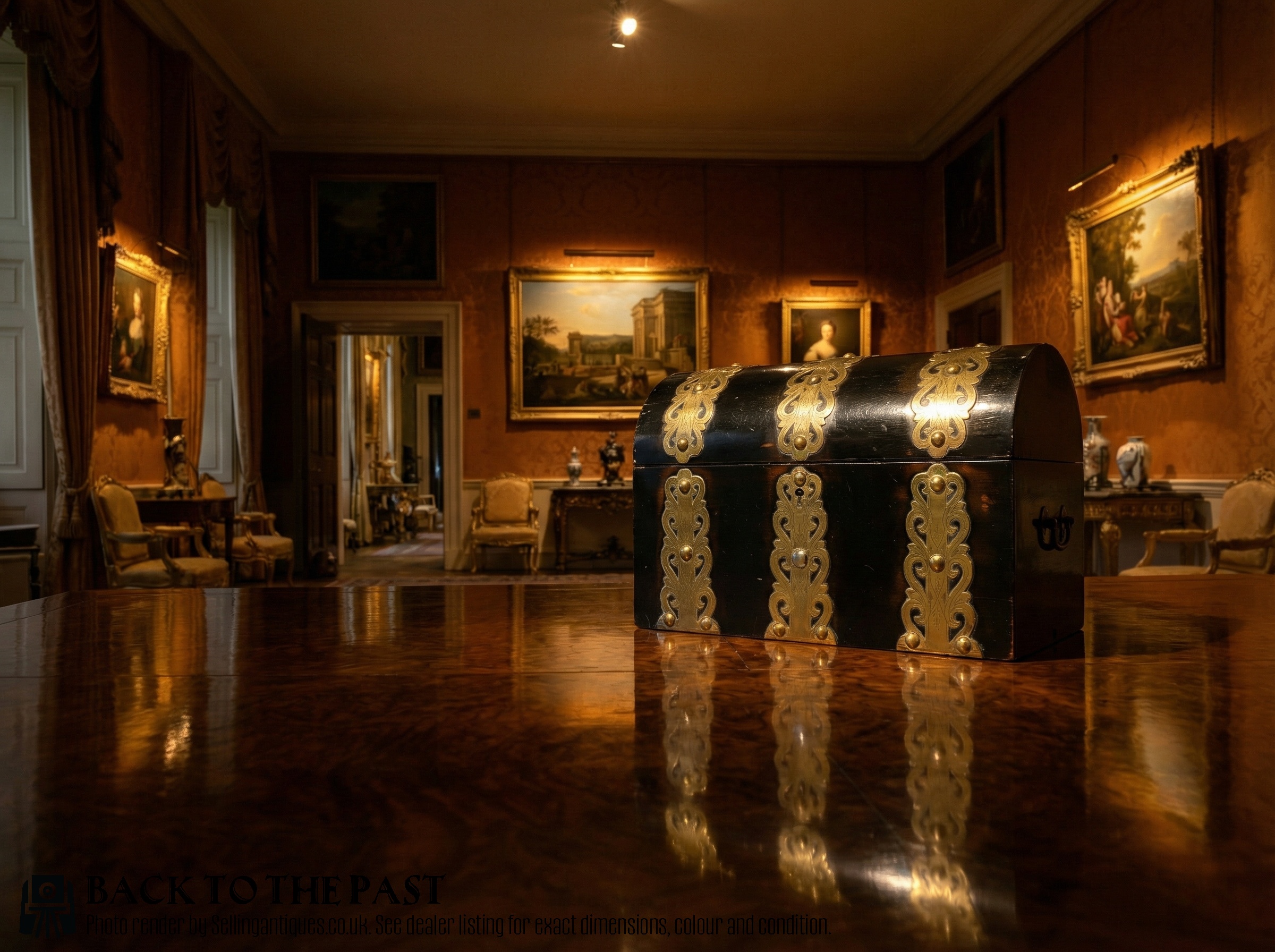
Dome Top Stationery Box
A dome top stationery box is a desk accessory designed to hold letters, paper, and envelopes securely within a curved timber casing. These pieces date from the Victorian era, specifically appearing around eighteen sixty and through the nineteenth century.
The primary forms found here include stationery boxes, caskets, and letter boxes created for nineteenth-century writing desks. They often feature curved lids that rise above fitted internal compartments for correspondence.
Victorian examples dominate the selection, spanning simple walnut constructions to ornate Gothic Revival designs. Buyers encounter both plain timber surfaces and brass bound variations across the inventory.

How they were made
Cabinet makers constructed these pieces using dense hardwoods such as walnut, burr walnut, figured walnut, pollard oak, and coromandel wood. These luxury timbers provided striking grain patterns suited to prominent display on Victorian desks.
Many examples incorporate heavy brass banding, mounts, and hinges to reinforce the curved lids and corners. Selected pieces also integrate ceramic elements or gilded leather bindings to enhance the decorative scheme.
Dome Top Stationery Box Retail Price Guide 2026
Typical asking prices for dome top stationery box among the pieces listed under this phrase on Sellingantiques today, from the lower quarter to the upper quarter. They describe what is for sale here now, not the wider market.
What varies in quality
The choice of timber defines the primary tier of quality, with highly figured burr walnut and coromandel commanding greater visual presence than plain walnut. Finer boxes display exceptional grain matching across the curved dome lid.
Metalwork execution separates standard pieces from superior examples, particularly where heavy brass binding or bespoke strapwork follows the contours of the timber. Internal fittings, such as tiered letter partitions, show varying levels of bespoke carpentry.
The Dome Top Stationery Box Glossary
- Dome top
- A rounded or arched lid construction that provides extra internal height for stacked stationery. This curved form defines the silhouette of the box.
- Coromandel wood
- A dense, heavily figured exotic timber from Asia with dark brown and black striations. It was favoured by Victorian makers for luxury desk accessories.
- Burr walnut
- Timber taken from a walnut tree growth or burl, yielding intricate swirling grain patterns. It forms highly decorative surfaces on nineteenth-century caskets.
- Gothic Revival
- An architectural and decorative style popular during the Victorian period characterised by pointed arches and medieval motifs. It influences the brass mountings and overall proportions of specific boxes.
- Stationery box
- A desk container specifically proportioned to hold writing paper, envelopes, and correspondence. These fitted interiors often feature stepped wooden dividers.
Dome Top Stationery Box: Frequently Asked Questions
What is a dome top stationery box?
A dome top stationery box is a nineteenth-century desk container featuring a rounded lid designed to house writing paper and letters.
These pieces emerged during the Victorian era to keep correspondence organised on household and office desks.
How were these boxes used?
Victorians placed these caskets on writing tables to store envelopes, stationery, and unanswered letters out of sight.
The fitted interior compartments separated different sizes of paper for daily correspondence.
What woods are most common?
Walnut is the predominant timber found in these selections, frequently seen in figured, burr, or plain variations.
Coromandel wood and pollard oak also appear among the higher quality nineteenth-century pieces.
How do you date a Victorian box?
Dating relies on timber selection, construction methods, and stylistic cues such as Gothic Revival brass mounts.
Most examples originate from the middle and late nineteenth century around eighteen sixty to eighteen eighty.