

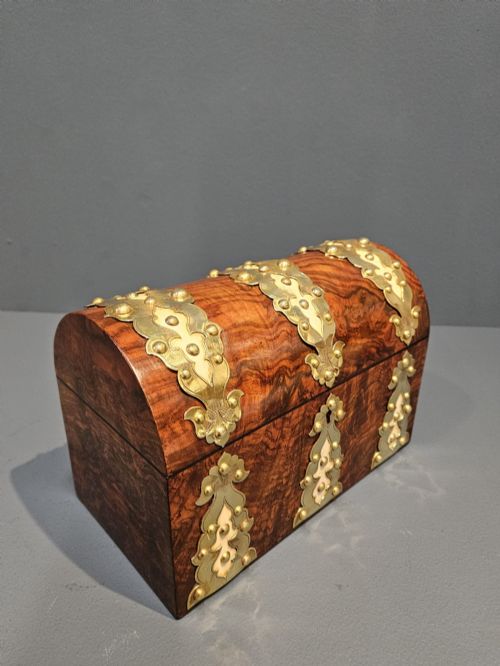



Gothic Revival Letter Casket
These gothic revival letter casket pieces are Victorian desk accessories designed to hold correspondence, built from rich woods and heavy brass.
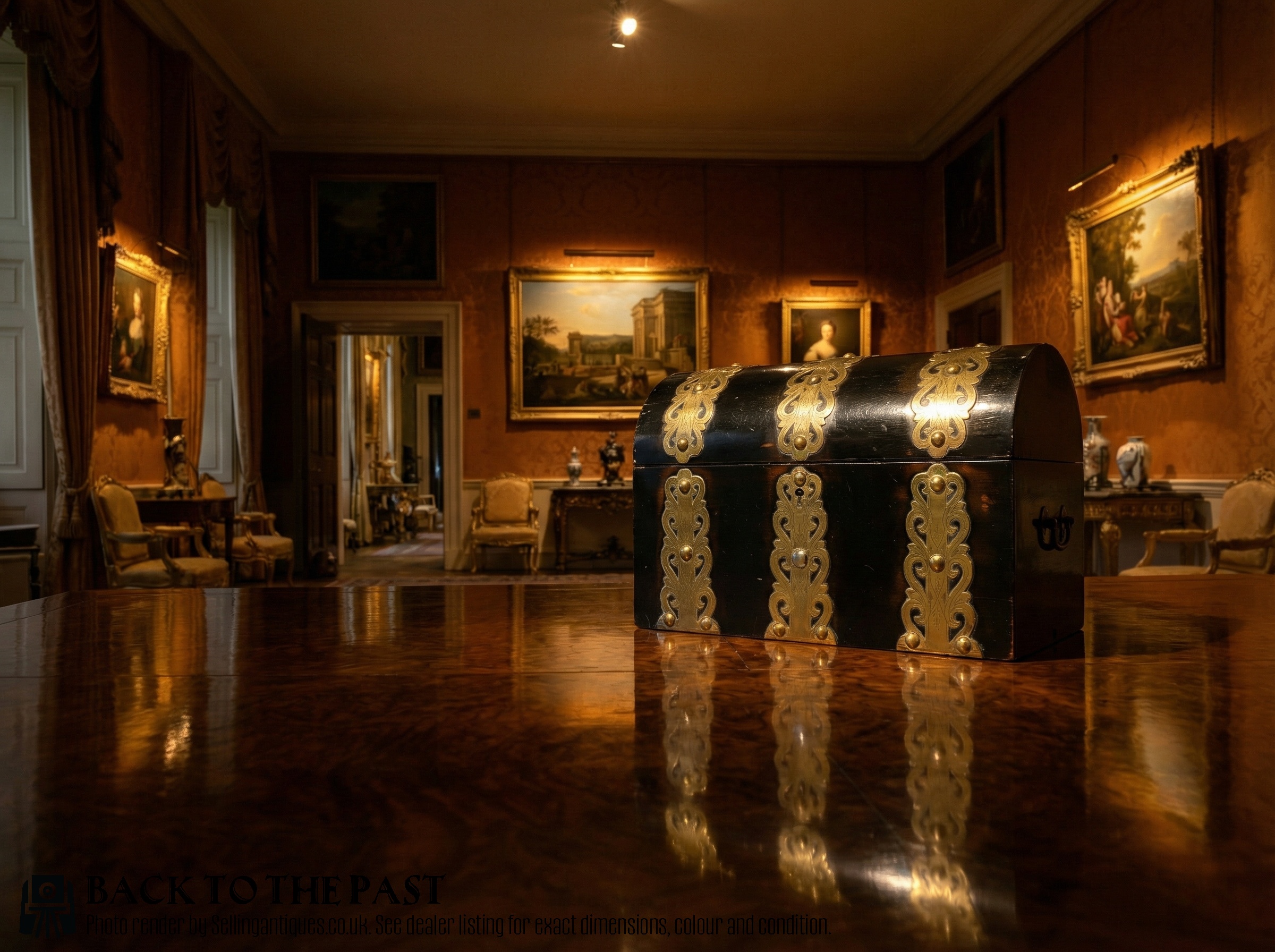
Gothic Revival Letter Casket
When you search for a gothic revival letter casket, you are looking at nineteenth-century desk furniture created to organise stationery. These items appear as stationery boxes or dome-topped letter caskets, designed for domestic and study use.
The versions you are most likely to meet on this page originate from the Victorian period, frequently dating from around 1860 to 1890. They combine architectural styling with practical storage compartments for letters and papers.
How they were made
Maker's workshops built these caskets from dense hardwoods such as coromandel, walnut, burr walnut, and pollard oak. These timbers provided a durable and decorative foundation for desk accessories.
Craftsmen mounted the wooden structures with heavy brass, ormolu, and glass components, often shaping the lids into distinctive dome tops influenced by Gothic architecture.
Gothic Revival Letter Casket Retail Price Guide 2026
Typical asking prices for gothic revival letter casket among the pieces listed under this phrase on Sellingantiques today, from the lower quarter to the upper quarter. They describe what is for sale here now, not the wider market.
Materials appearing across these selections include coromandel wood, walnut, burr walnut, pollard oak, brass, glass, and silk.
What varies in quality
The character of the grain in the timber sets one piece apart from another, with figured walnut and richly patterned coromandel representing the upper tier of production. Plainly timbered boxes lack the visual depth found in the finer examples.
The weight and elaboration of the brass mounts also dictate the standard of the piece. Heavy, detailed metalwork distinguishes a superior desk accessory from a more utilitarian box.
The Gothic Revival Letter Casket Glossary
- Coromandel wood
- A dense, heavily figured timber from Asia, prized for its dark brown colour and contrasting light stripes.
- Stationery box
- A desk accessory fitted with interior compartments to hold writing paper, envelopes, and letters.
- Dome top
- A curved lid style that echoes architectural arches found in Gothic design.
- Ormolu
- Gilded bronze mounts applied to furniture and decorative objects for ornamentation.
Gothic Revival Letter Casket: Frequently Asked Questions
What is a gothic revival letter casket?
A gothic revival letter casket is a Victorian desk box designed to store correspondence and writing materials. These items reflect nineteenth-century architectural tastes in miniature form.
They usually feature hinged lids, often with curved dome tops, and internal dividers made specifically for letters and envelopes.
How were letter caskets used?
These boxes sat on desks in studies, libraries, or drawing rooms to keep personal correspondence orderly and private. Their sturdy construction protected important papers from dust and damage.
Many included fitted interiors designed to separate incoming mail from unanswered letters or writing paper.
What woods are typical for these boxes?
Maker's workshops commonly utilised exotic and decorative hardwoods such as coromandel, walnut, burr walnut, and pollard oak. These timbers offered striking grain patterns suitable for display on a desk.
Brass bindings and mounts frequently reinforced the corners and edges of these wooden enclosures.
How do you date a letter casket?
Dating relies on stylistic clues, construction methods, and materials associated with the Victorian period between 1860 and 1890. The presence of specific Gothic revival architectural motifs helps place the piece within this nineteenth-century timeframe.
Examining the interior linings, such as silk, and the style of the brass hardware also aids in determining the era of manufacture.