





Gothic Revival Brass Box
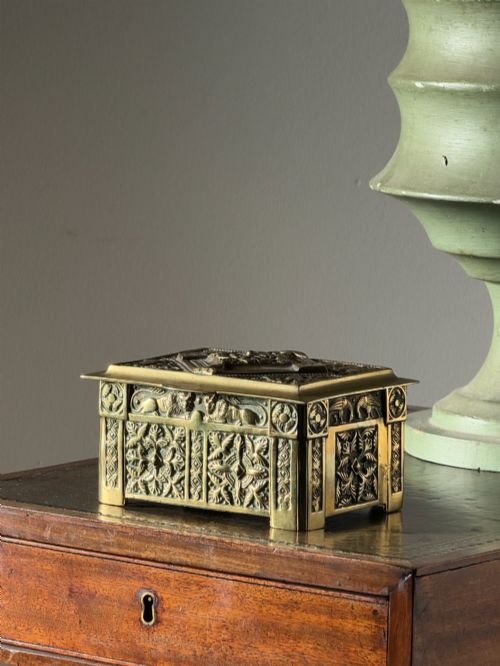
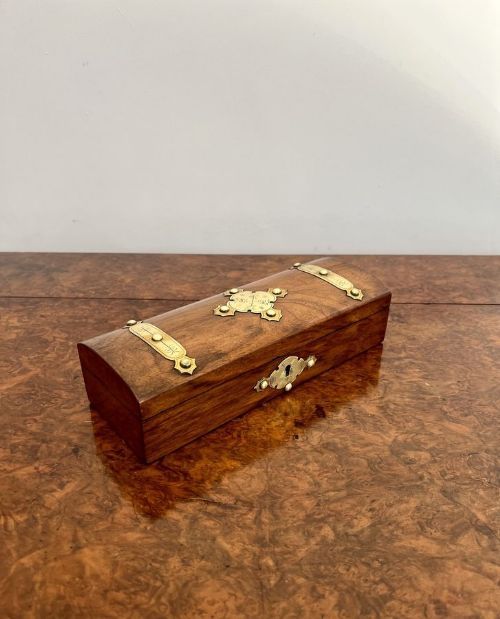
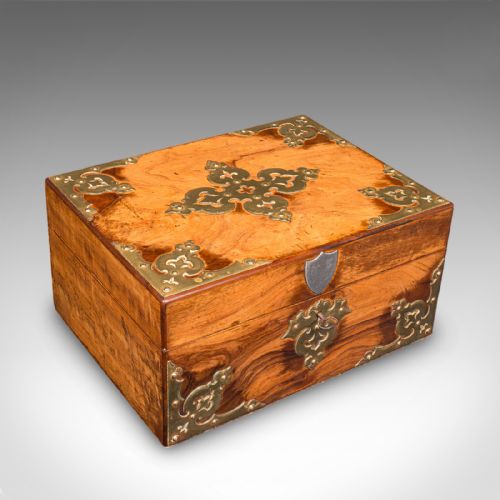
These gothic revival brass box examples combine heavy metal strapwork and mounts with rich timbers to serve nineteenth century desks and drawing rooms.
Gothic Revival Brass Box
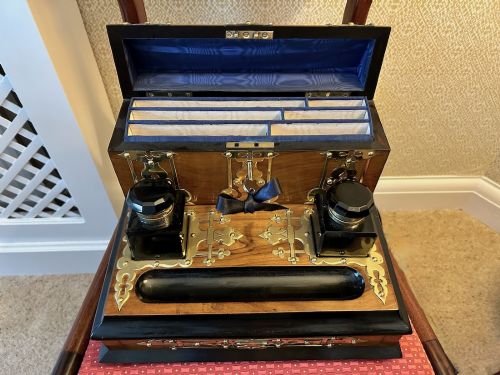
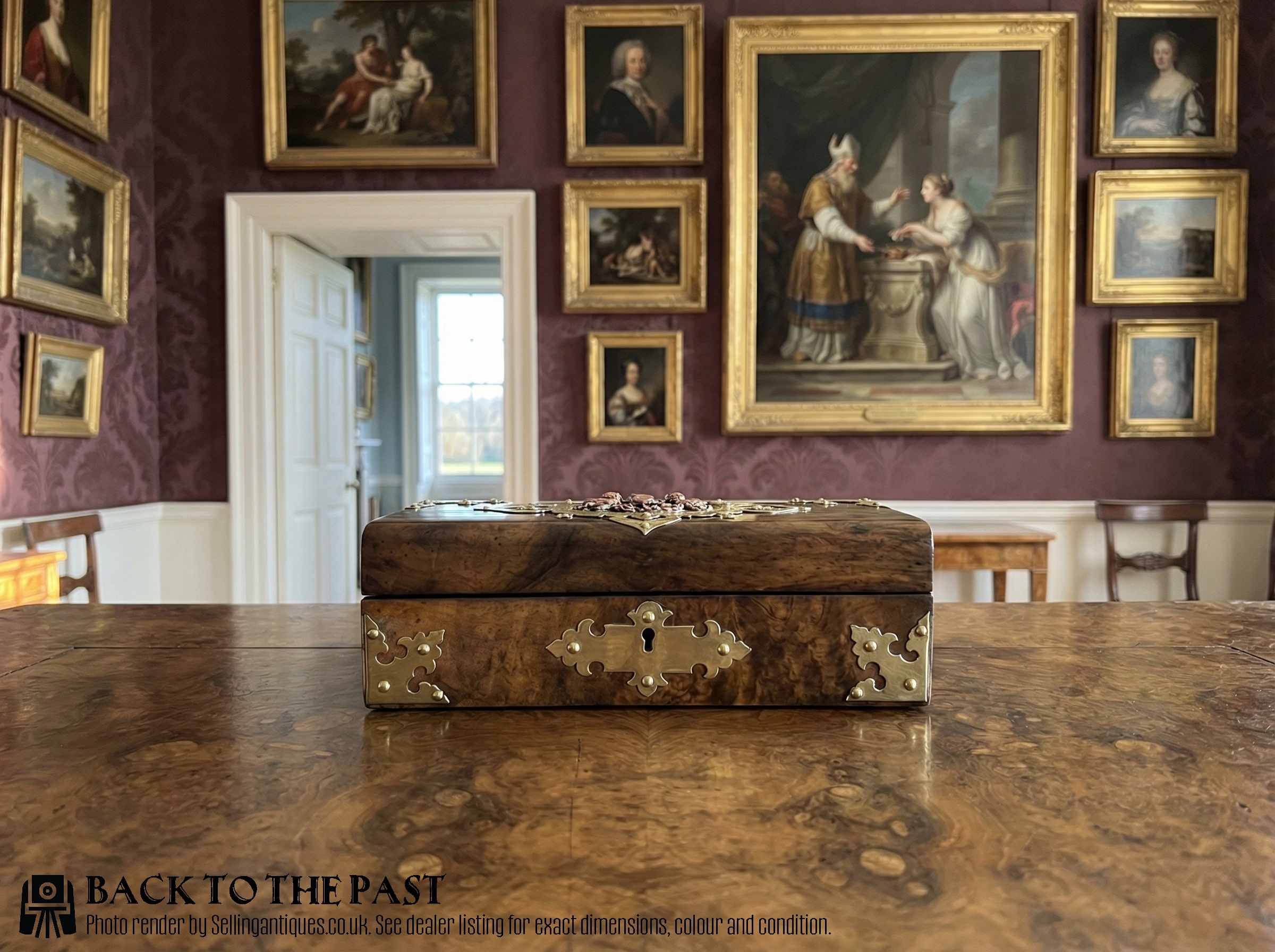
When you examine a gothic revival brass box, you are looking at nineteenth-century desk accessories and storage pieces built during the Victorian period. The selection on this page centres primarily on stationery boxes, correspondence caskets, and writing slopes produced in the decades between eighteen-fifty and nineteen-hundred.
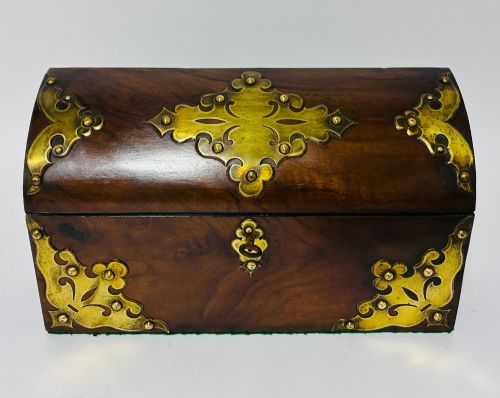
The most common form you will meet is the desk-top stationery box or letter casket, often featuring a dome top and heavy metal mounts. Alongside these come tea caddies, sewing cases, and desk stands built to satisfy Victorian organisational demands.
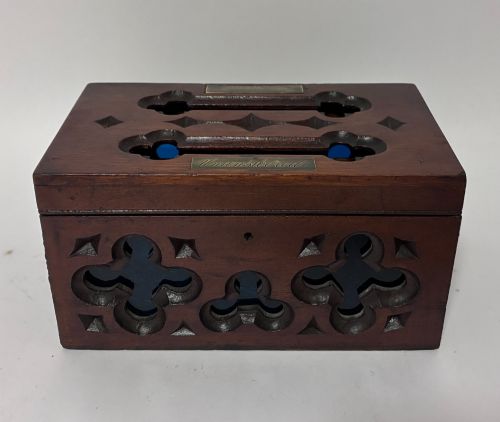
These pieces draw on architectural motifs from medieval design, translating pointed arches and strapwork hinges into domestic utility. They originate predominantly from English and Scottish workshops, utilising exotic veneers alongside native hardwoods.
How they were made
Cabinet makers built the foundational carcase from dense timbers such as coromandel, burr walnut, pollard oak, or mahogany, often applying decorative veneers over a softer wood core. These surfaces provided a dark, textured ground for applied metalwork.
Gilt brass, ormolu, and occasionally bronze formed the heavy strapwork, hinges, and mounts that defined the gothic style. Craftsmen secured these metal elements with numerous small brass screws, tracing structural lines and framing inset panels of glass, agate, or malachite.
Gothic Revival Brass Box Retail Price Guide 2026
Typical asking prices for gothic revival brass box among the pieces listed under this phrase on Sellingantiques today, from the lower quarter to the upper quarter. They describe what is for sale here now, not the wider market.
Listings show a strong preference for coromandel and burr walnut as the primary timbers used alongside Victorian brass mountings.
What varies in quality
The distinction between standard commercial output and superior pieces lies in the choice of timber veneer and the execution of the metalwork. Selected burr walnut or figured coromandel with matched grain patterns marks out the better examples on the market.
Quality also shows in the weight and detail of the brass mounts, where crisper casting and more intricate piercing elevate the piece. The internal fittings, such as fitted stationery divisions, velvet-lined writing slopes, and concealed secret drawers, further indicate higher workshop standards.
Briggs 27 Piccadilly London·Rodman and co of Belfast·Pugin
The Gothic Revival Brass Box Glossary
- Coromandel
- A dense, heavily figured timber imported from Southeast Asia, prized for its dark brown colour and contrasting black stripes.
- Strapwork
- Flat bands of metal applied to the surface of a box, providing both structural reinforcement and decorative framing.
- Ormolu
- Gilded bronze or brass applied to furniture and boxes as decorative mounts, hinges, and escutcheons.
- Stationery box
- A desk accessory designed to hold writing paper and envelopes, typically featuring tiered interior compartments and a hinged lid.
- Agate
- A hard quartz mineral often cut en cabochon to form decorative cabochon mounts set into the brasswork of desk sets.
Gothic Revival Brass Box: Frequently Asked Questions
What were gothic revival brass boxes used for?
These pieces served practical organisational roles in nineteenth-century studies and drawing rooms, housing correspondence, writing paper, inkwells, and personal valuables.
Their robust construction and compartmentalised interiors kept writing materials tidy while displaying fashionable medieval architectural tastes to visitors.
How do I date a gothic revival box?
Dating relies on examining the timber veneers, lock mechanisms, and the style of the brass mounts. Most pieces date from the Victorian era between eighteen-fifty and nineteen-hundred.
Earlier examples often use coromandel with heavy ormolu strapwork, whilst later iterations tend towards walnut stationery cabinets with simpler brass hinges.
How do I care for coromandel wood?
Protect the timber from direct sunlight and sudden humidity changes to prevent the dense veneers from drying out and lifting.
Apply a microcrystalline wax sparingly and buff gently with a soft cloth to maintain the polished finish without building up residue on the brass mounts.
Are all these boxes English?
The majority of pieces originate from English workshops, though Scottish makers and Irish retailers also produced notable examples.
Regional variations appear in the choice of native timbers like oak alongside imported exotic woods such as coromandel and amboyna.