
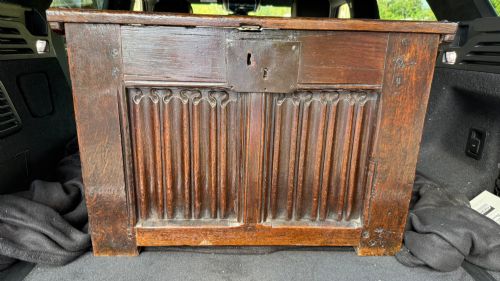
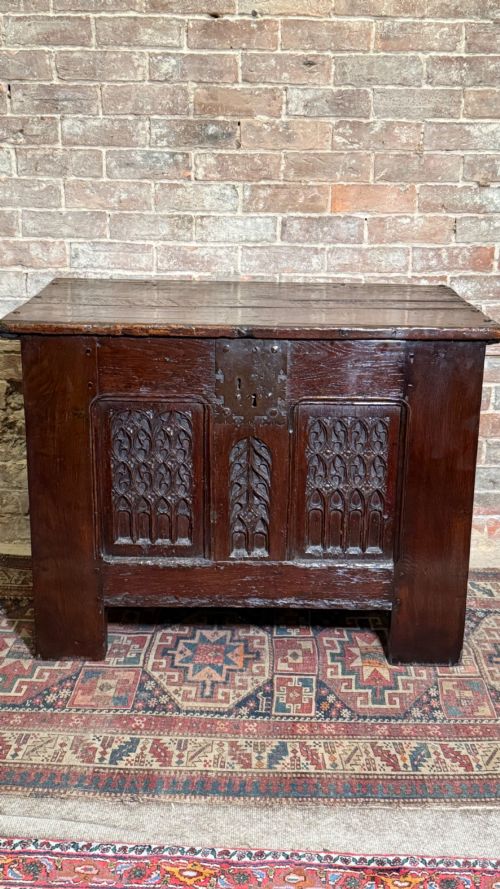
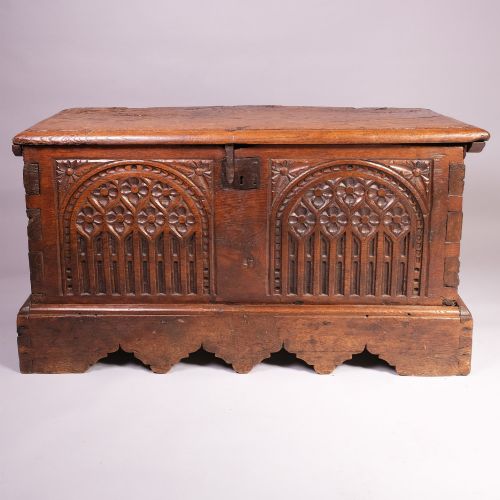
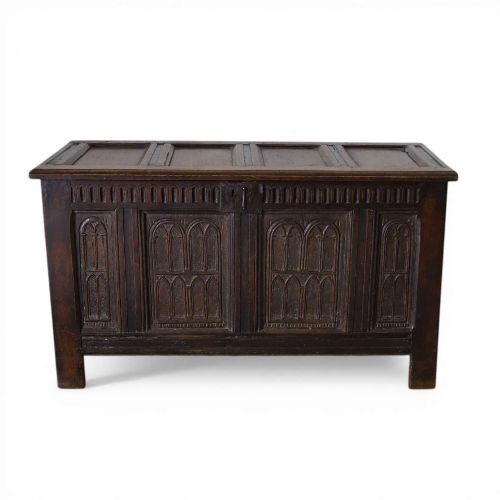




Gothic Carved Oak Box
A gothic carved oak box brings architectural detail and heavy timber into a room, spanning centuries of storage furniture from small desktop items to large coffers.
Gothic Carved Oak Box
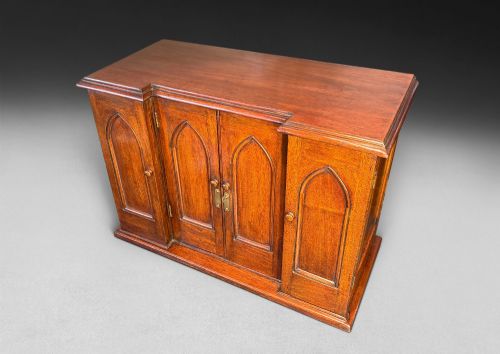
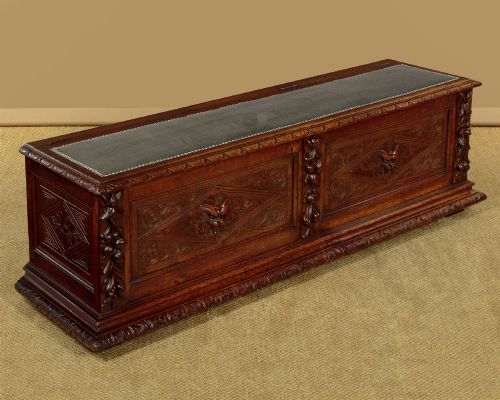
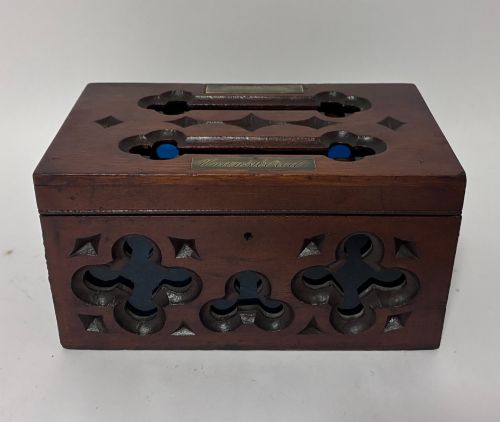
When searching for a gothic carved oak box, buyers encounter items ranging from small correspondence boxes and table-top collectors cabinets to substantial coffers, chests, and box settles. The selection bridges utilitarian storage and architectural decoration.
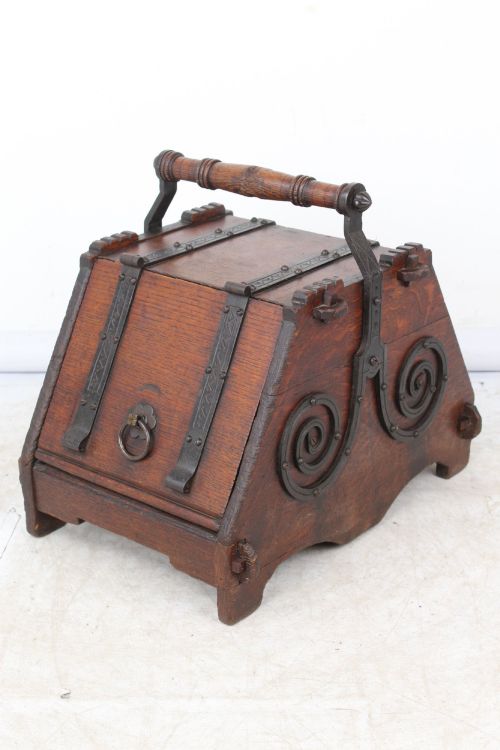
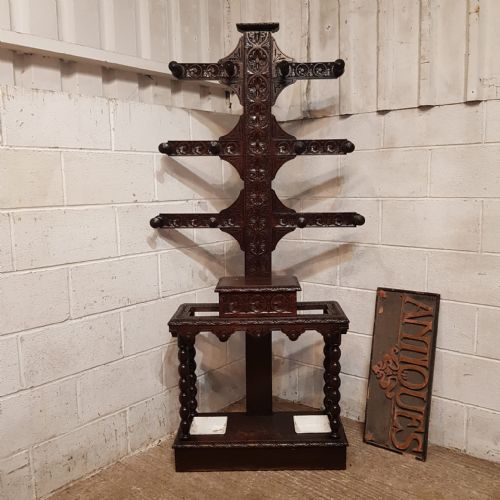
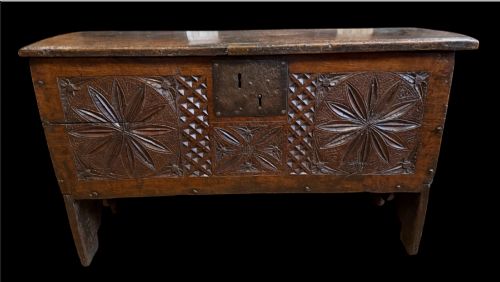
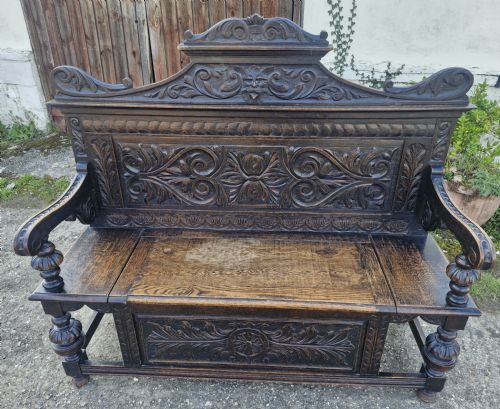
The pieces emerge from several distinct periods, most notably the sixteenth century and the nineteenth-century Gothic Revival. Early examples include plank coffers and linenfold chests, while Victorian variations take the form of coal scuttles, hall benches, and teapoys.
Origins vary across English, continental, and regional workshops, utilising heavy timber construction designed to secure valuables or domestic goods. The forms reflect both medieval ecclesiastical design and later nineteenth-century revivals of those styles.
How they were made
Construction relies heavily on solid oak and chestnut timbers, frequently augmented with iron, wrought iron, and brass hinges, locks, and handles. Wood surfaces receive deep hand-carved ornamentation including tracery, chip carving, and green man motifs.
Joinery methods range from early pegged plank construction and heavy framing on sixteenth-century coffers to nineteenth-century production techniques utilising applied mouldings and brass hardware on correspondence boxes and hall stands.
Materials extend beyond standard oak to encompass chestnut, elm, wrought iron, and brass fittings.
What varies in quality
The calibre of a piece rests upon the crispness of the hand-carving and the integrity of the timber framing. Depth of relief in architectural motifs and the survival of original iron or brass fittings distinguish superior examples.
Proportion and structural honesty separate exceptional early items from later revival copies. The weight of the timber and the harmony between the decorative carving and the functional form dictate the standing of each box or coffer.
Christopher Dresser·Jack Grimble
The Gothic Carved Oak Box Glossary
- Coffer
- A heavy wooden chest traditionally used for storing valuables or documents. These pieces often feature sturdy oak construction and hinged lids.
- Linenfold
- A style of relief carving used on wooden panels to imitate folded fabric. This technique appears frequently on sixteenth-century panels.
- Purdonium
- A dedicated household coal box or scuttle designed for domestic hearths. Victorian examples often incorporate gothic carved panels and metal liners.
- Tracery
- Architectural stone window ornamentation translated into woodwork. Carvers applied these geometric patterns to the front panels of boxes and chests.
- Teapoy
- A small container or box mounted on a stand, designed for storing loose tea leaves. These decorative items occasionally feature revival carving.
Gothic Carved Oak Box: Frequently Asked Questions
What is a gothic carved oak box used for?
These containers served primarily for secure domestic storage, holding everything from dry goods and candles to important documents and correspondence.
Over later centuries, smaller variations emerged for specific desktop or parlour functions, whilst larger coffers held linens and household valuables.
How do I date a gothic carved oak box?
Dating relies upon examining the construction methods, such as pegged joints and hand-riven boards found on sixteenth-century examples, versus nineteenth-century machine-sawn timber.
Stylistic cues also guide the timeline, distinguishing genuine medieval and Tudor architectural carving from Victorian Gothic Revival interpretations.
Where should I place this in my home?
Larger coffers and box settles suit hallways, living spaces, or bedroom ends, offering both surface display area and concealed storage within.
Smaller pieces like correspondence boxes, teapoys, and table-top cabinets fit comfortably on sideboards, desks, or occasional tables.
How do I care for antique oak furniture?
Maintain the timber by keeping pieces away from direct heat sources and sudden temperature shifts that cause wood to dry and split.
Apply a traditional beeswax polish sparingly to nourish the grain and protect the carved surfaces without building up heavy residue.