



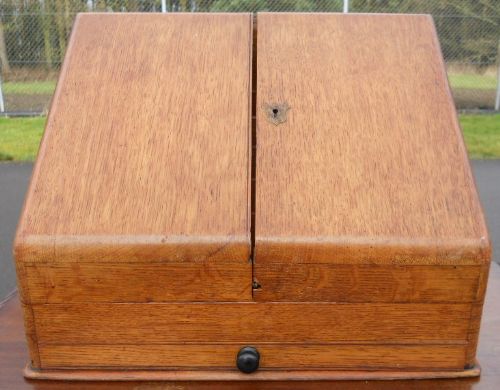
Slanted Top Wooden Box
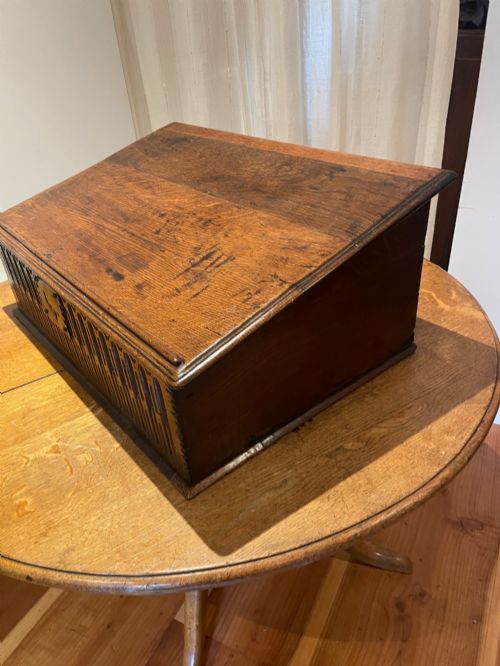
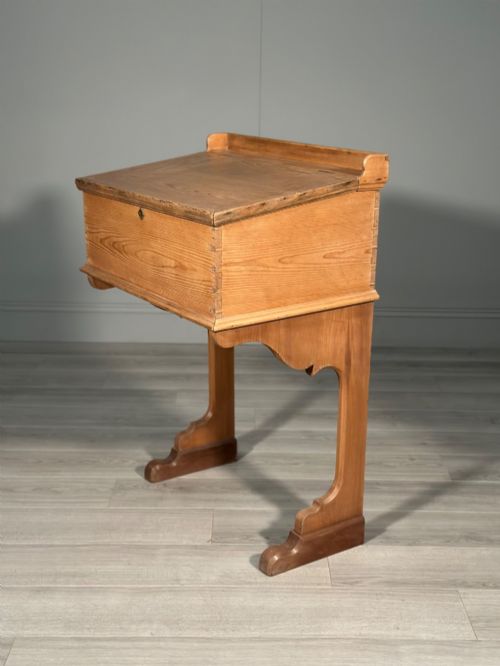
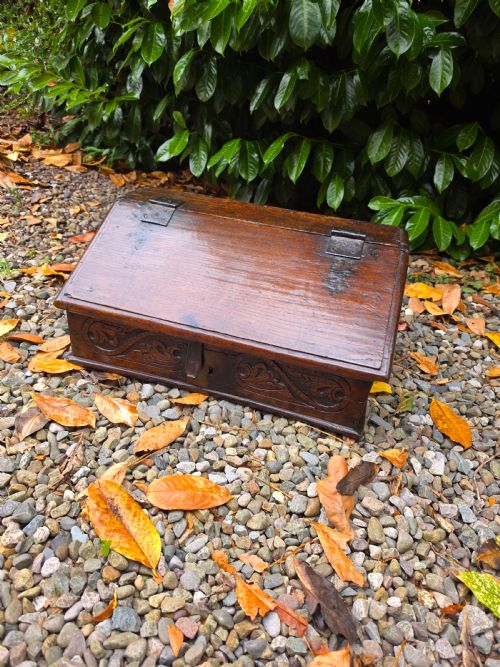
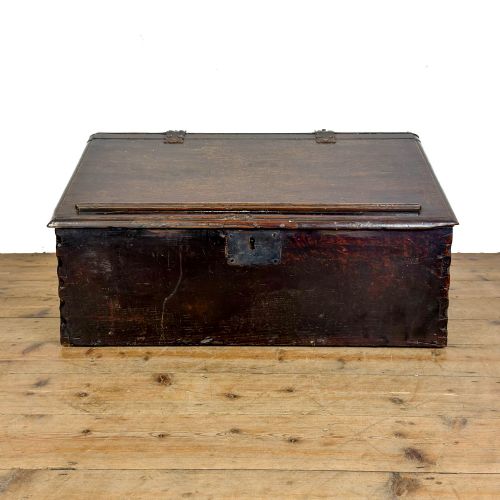
These slanted top wooden box examples are functional writing desks and storage pieces designed for domestic or ecclesiastical use, built to keep manuscripts and household papers secure.
Slanted Top Wooden Box
When you search for a slanted top wooden box, you encounter practical storage containers spanning multiple centuries of British cabinetmaking. The selection ranges from early oak bible boxes to Victorian stationery cabinets and Georgian knife boxes.
Early examples include seventeenth-century and eighteenth-century oak pieces intended for scripture or correspondence, often featuring steeply angled lids. Later nineteenth-century versions adapt the slant front for modern desk organisation and coal storage.
Origins stretch from William III periods through the Georgian era and into late Victorian decades, maintaining the characteristic sloping lid that serves as a writing slope or protective cover.
Materials and construction methods
Construction relies heavily on solid oak and mahogany timbers, joined to create robust storage compartments with hinged sloping lids. Cabinetmakers employed durable hardwoods capable of withstanding daily handling in homes and churches.
Metal fittings such as brass hinges, locks, and iron accents appear frequently to secure the lids and reinforce corners. Additional detailing incorporates inlaid wood, paper linings, and bone elements to finish the interiors.
Slanted Top Wooden Box Retail Price Guide 2026
Typical asking prices for slanted top wooden box among the pieces listed under this phrase on Sellingantiques today, from the lower quarter to the upper quarter. They describe what is for sale here now, not the wider market.
Listings span from the seventeenth century through the Georgian era to the late Victorian period, utilising oak, mahogany, brass, and iron.
Distinguishing quality and craftsmanship
Quality rests upon the selection of timber and the precision of the joinery used to construct the sloping lid and body. Finer pieces demonstrate careful attention to grain alignment and durable hinging mechanisms that endure centuries of use.
Higher tier examples display refined secondary materials like brass hardware, intricate inlay work, or sophisticated internal stationery compartments rather than plain utility structures.
The Slanted Top Wooden Box Glossary
- Bible box
- A portable wooden box with a slanted lid designed to hold a large volume and writing materials. These early forms often date to the seventeenth or eighteenth century.
- Slant front
- An inclined lid configuration that provides an ergonomic surface for reading or writing. This feature defines the primary aesthetic and functional shape of the box.
- Stationery cabinet
- An upright or lidded storage piece compartmented for paper, envelopes, and writing implements. These emerge more frequently in Victorian iterations.
- Knife box
- A tapered wooden receptacle with a sloping lid, originally intended for cutlery but frequently repurposed for letters. Georgian examples showcase fine mahogany craftsmanship.
Slanted Top Wooden Box: Frequently Asked Questions
What is a slanted top wooden box used for?
These boxes served as portable desks or secure receptacles for documents, bibles, and household stationery. The slanted lid provided a convenient angle for reading manuscripts or writing letters.
Over time, makers adapted the form from early seventeenth-century oak Bible boxes into nineteenth-century stationery cabinets and specialised storage pieces. Their enclosed design kept valuable papers protected from dust and dampness in homes and ecclesiastical settings.
How do I date an antique wooden box?
Dating relies on examining the timber species, construction techniques, and hardware style. Early pieces are predominantly constructed from solid oak with hand-cut joinery, while later Georgian and Victorian items often utilise mahogany and brass.
Period characteristics such as William III styling or late Victorian mechanisms provide further chronological markers. Comparing the hinge types, lock mechanisms, and interior layouts helps establish the era of manufacture.
Are these boxes suitable for daily use?
Most pieces remain robust enough for everyday domestic tasks such as holding modern stationery or organising desk accessories. Solid hardwood construction ensures structural longevity despite centuries of previous handling.
Owners should consider the internal dimensions and hinge condition to ensure the compartment meets modern storage needs. Gentle treatment of antique wood and brass hardware preserves the integrity of the piece.
What is the difference between a Bible box and a writing box?
Bible boxes typically feature a simple rectangular body with a sloping lid designed to house a single large volume and basic writing tools. They are heavily rooted in seventeenth and eighteenth-century oak craftsmanship.
Writing boxes and stationery cabinets usually include internal dividers, compartments for inkwells, and more complex mechanisms for holding loose paper. The distinction lies primarily in the internal fittings rather than the exterior slanted lid.