

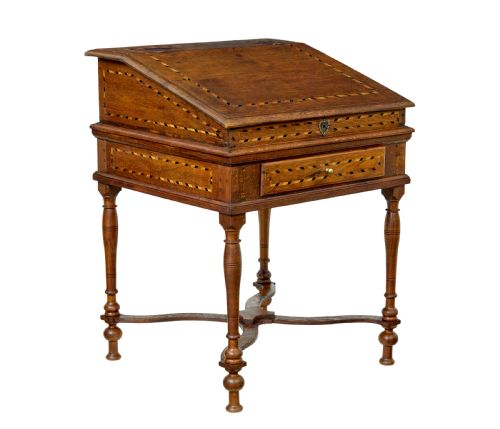


Carved Oak Slope
A carved oak slope gives you a solid writing surface that folds away, bringing tactile grain and centuries of craftsmanship directly to your desk.
Carved Oak Slope
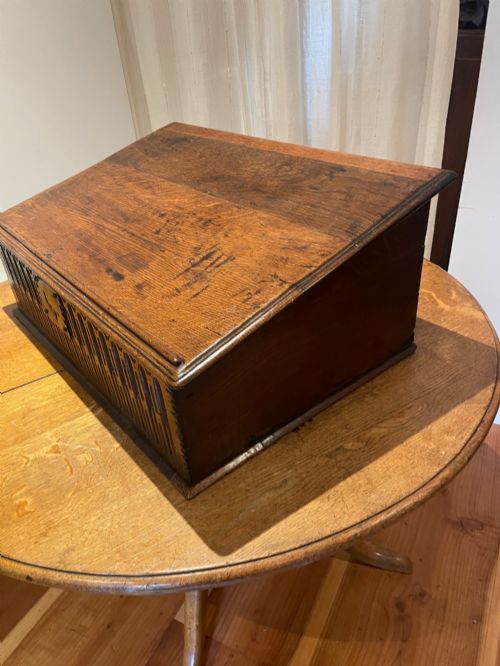
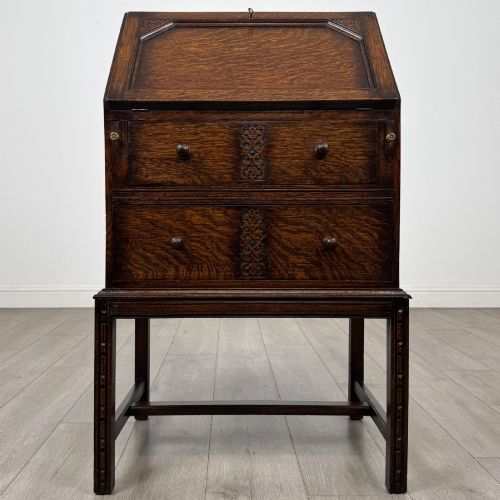
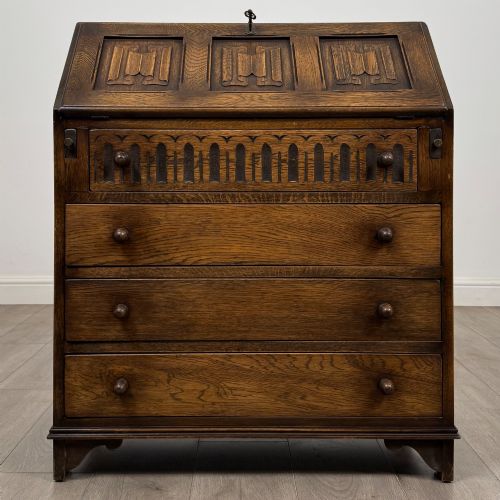
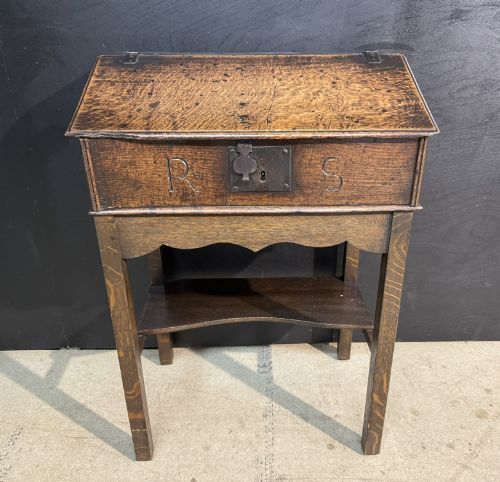
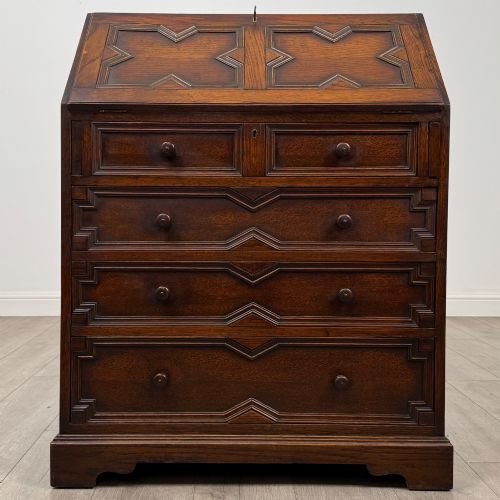
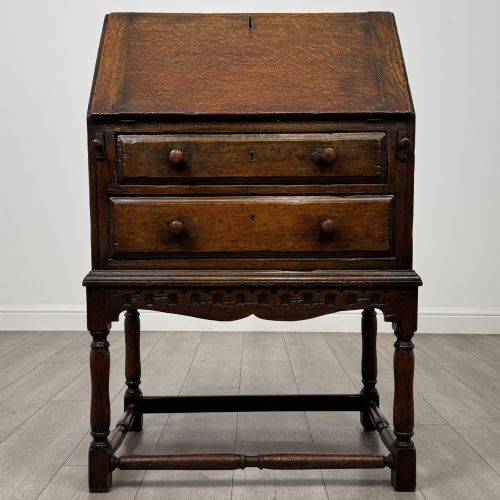
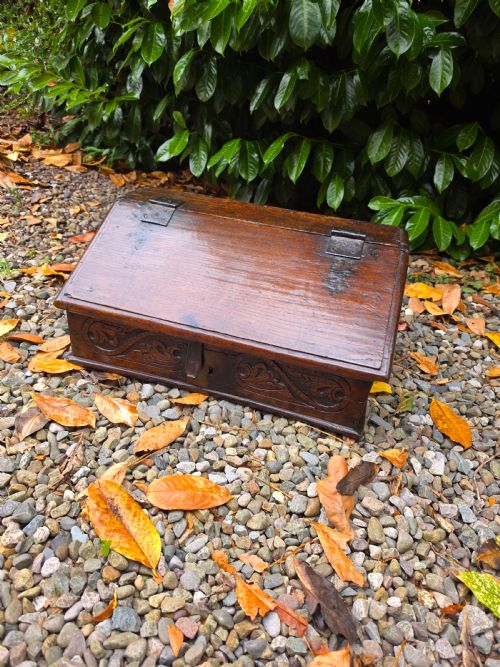
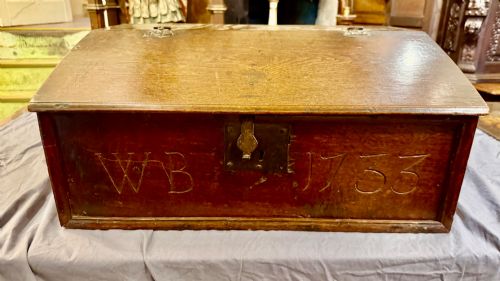
When you search for a carved oak slope, you encounter practical writing equipment spanning from the seventeenth century through to the Edwardian era. These pieces range from simple desk boxes and Bible boxes to fitted writing desks, bureaux and Davenport desks.
The most common items you meet on this page are seventeenth-century bible boxes and Edwardian carved oak bureaux. These forms provide compartmentalised storage for papers and stationery beneath an angled lid designed for handwriting.
Origins stretch from English vernacular workshops to Dutch pieces featuring inlaid details. Alongside standard oak, you find variants executed in pollard oak, burr oak and fruitwood, sometimes augmented with brass, iron or leather fittings.
How they were made
Joinery relies heavily on solid oak boards assembled with traditional techniques, frequently enhanced by hand-carved panels displaying linenfold motifs, Green Man imagery or Gothic Revival tracery. Carving depth and relief vary according to the period and regional workshop traditions.
Surface decoration incorporates contrasting materials such as holly and bog oak inlay, alongside applied brass hinges, locks and iron brackets. Interior compartments often utilise secondary timbers and simple joinery to organise inkwells, pens and correspondence.
Carved Oak Slope Retail Price Guide 2026
Typical asking prices for carved oak slope among the pieces listed under this phrase on Sellingantiques today, from the lower quarter to the upper quarter. They describe what is for sale here now, not the wider market.
Listings span from the 17th Century through to the 1920s, featuring oak, pollard oak, brass, iron and leather across various desk forms.
What varies in quality
The distinction between ordinary and exceptional pieces rests upon the crispness of the carving and the integrity of the timber. Deeply relief-carved panels executed by skilled hands display sharper detailing and better preservation of the natural oak grain.
Proportion and configuration dictate utility, where unusual internal drawer layouts or integrated stands elevate the piece. Original hardware, undisturbed surface patination and contemporary locks separate honest period survivals from heavily restored examples.
Thomas Turner
The Carved Oak Slope Glossary
- Bible Box
- A small wooden chest with a sloping lid, originally made to hold a family Bible and writing materials.
- Davenport Desk
- A compact writing desk featuring a sloping top over a pedestal of drawers, popular during the Victorian period.
- Linenfold
- A style of wood carving that imitates folded linen, frequently seen on Tudor and Jacobean panels.
- Pollard Oak
- Timber taken from trees that have been pollarded, producing a heavily knotted, highly decorative grain pattern.
- Vernacular
- Everyday objects made by local craftsmen using regional styles, contrasting with high-style metropolitan furniture.
Carved Oak Slope: Frequently Asked Questions
What is a carved oak slope used for?
These pieces provide a tilted writing surface designed for handwriting with fountain pens or quills. The sloping lid lifts to reveal storage compartments for paper, ink and correspondence.
Today, they function well as desktop writing stations or decorative storage chests in studies and living rooms.
How do I date an oak slope?
Dating relies on construction methods, hinge types and stylistic carving details. Seventeenth-century examples often feature boarded box construction and simpler, robust joinery.
Later Victorian and Edwardian pieces incorporate more complex internal fittings, dovetail drawers and Revivalist decorative motifs.
Are these slopes made of solid oak?
Most pieces utilise solid oak for their primary structural panels and exterior surfaces. Some variations incorporate oak veneers over secondary timbers or feature contrasting inlay woods.
Internal partitions and secondary drawer linings frequently employ softer woods or fruitwoods alongside the main oak structure.
How do I care for antique oak furniture?
Maintain the wood by keeping it away from direct heat sources and sudden humidity changes to prevent splitting. Regular dusting with a dry, soft cloth preserves the natural wax finish.
Avoid silicone-based polishes, opting instead for traditional beeswax when the surface requires nourishment.