





Seventeenth Century Bible Box
Seventeenth century bible box pieces are robust wooden receptacles designed for holding texts and documents, offering tangible utility and period character.
Seventeenth Century Bible Box
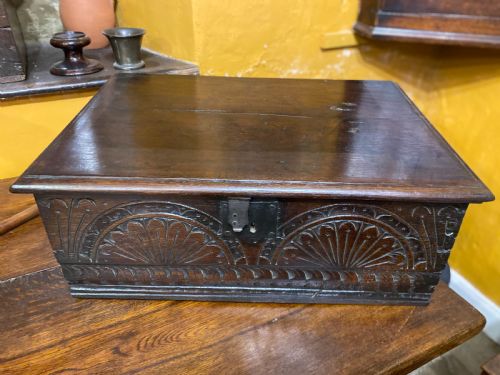
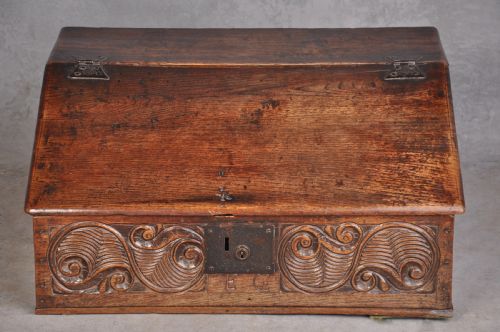
A seventeenth century bible box represents a compact form of storage utilised for sacred texts, documents, and valuables in early domestic settings. These items appear as desk boxes, table boxes, document boxes, and safe boxes across the inventory.
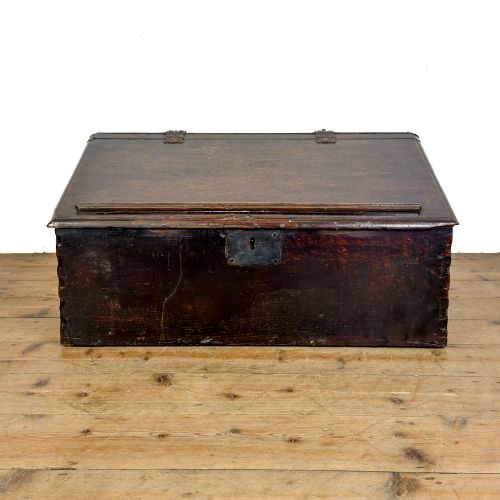
Most examples found here date from the seventeenth century, though the selection includes pieces attributed to the eighteenth century and around eighteen hundred. They frequently feature hinged lids, internal drawers, and sloping or flat tops configured for writing.
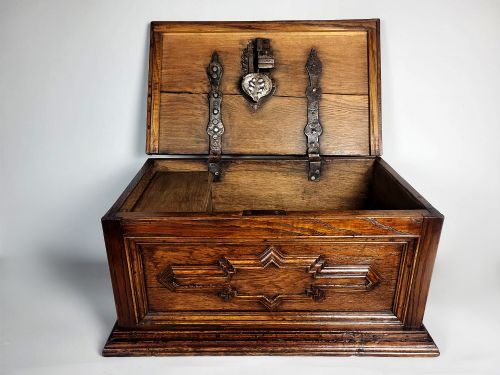
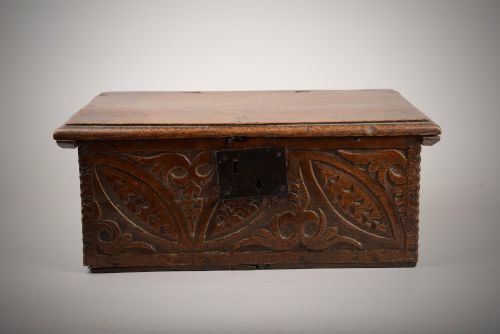
Forms span simple vernacular pieces to chip carved varieties, alongside pieces with demi-lune front panels or complex steel locks. Welsh oak variants also emerge within the broader category of seventeenth century bible box examples.
How they were made
Makers utilised oak as the primary timber for construction, building these robust boxes with sturdy board or frame construction suited to daily handling. Iron and steel appear in the operational hardware, notably for hinges and complex locking mechanisms.
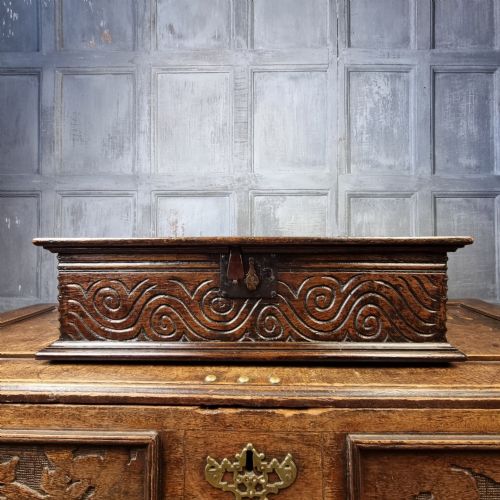
Surface ornamentation relies on chip carving and carved details directly into the timber panel fronts, reflecting Jacobean, Charles II, and William & Mary stylistic influences.
One dated box preserves the initials MB and the year 1695, letting an unknown maker whisper across three centuries.
What varies in quality
Differentiation across the range rests on the complexity of the surface carving, such as intricate chip carving or demi-lune front panels, compared to plain vernacular surfaces. The presence of original operational iron or complex steel locks and internal drawers also distinguishes finer examples from simpler containers.
The integrity of the structural timber and the retention of early surfaces dictate the standing of individual pieces, separating standard utilitarian boxes from more sophisticated desk boxes.
The Seventeenth Century Bible Box Glossary
- Bible box
- A small wooden receptacle designed to house a family bible and important papers. These pieces often feature sloping lids that double as writing surfaces.
- Chip carved
- A style of ornamentation created by chipping small triangles or chips from a wooden surface to form geometric patterns. This technique appears frequently on seventeenth century panels.
- Jacobean
- The stylistic period spanning the reign of James I, characterised by sturdy proportions and geometric carved decoration. Pieces of this character inform several boxes in the collection.
- Safe box
- A reinforced container fitted with robust metal hardware and secure locking mechanisms. The inventory includes examples with original complex steel locks for added security.
- Vernacular
- Everyday utilitarian objects made by local tradesmen rather than urban cabinetmakers. These items show regional traditions rather than court styles.
Seventeenth Century Bible Box: Frequently Asked Questions
What is a seventeenth century bible box?
A seventeenth century bible box is a small wooden chest built to hold a household bible and important papers securely. They were often placed on tables or desks for daily reading and writing.
These pieces reflect the domestic storage needs of the period, utilising durable materials like oak and iron to protect valuable texts from dampness and loss.
How were these boxes used?
Owners used these boxes to store heavy bibles, legal documents, and personal letters safely away from household activity. The flat or sloping lids provided a convenient surface for resting books or writing.
Many examples include internal drawers for smaller items like inkwells, quills, and seals, functioning as early portable desks.
What woods were used?
Oak serves as the primary timber for the construction of these boxes, chosen for its strength and local availability. Iron and steel appear in the hinges and locks.
This combination of sturdy timber and metal hardware ensured the contents remained secure during everyday handling in seventeenth century households.
How do I identify the period?
Period identification relies on construction methods, timber characteristics, and decorative styles such as chip carving or Jacobean motifs. Hardware like original complex steel locks also offers clues to the date.
Comparing the form against dated examples helps narrow down whether a piece belongs to the seventeenth century or later vernacular revivals.