


Tabletop Writing Slope
These tabletop writing slope pieces offer compact portable desks in oak, mahogany and satinwood, built for letter writing and document storage across the centuries.
Tabletop Writing Slope
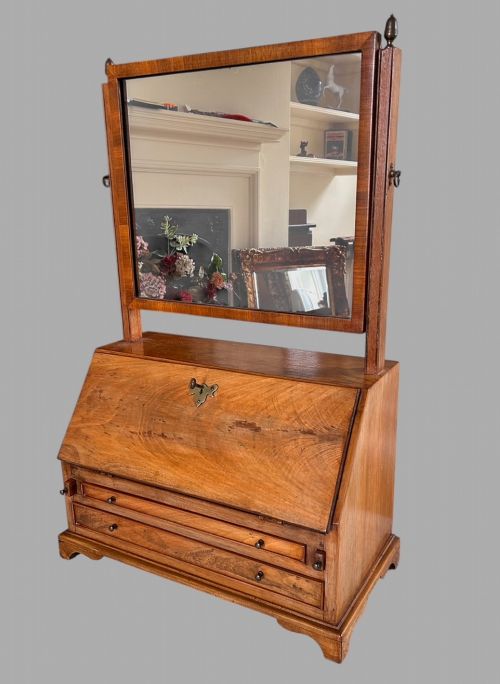
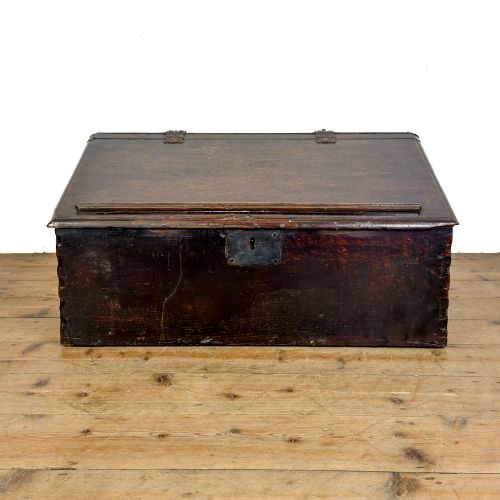
A tabletop writing slope brings a portable desk surface to any table, holding correspondence and ink inside a compact wooden chest. These pieces include sloping bureau boxes, reading stands and Bible boxes designed to sit flat during use.
The selections span from the seventeenth century through the Victorian era and Edwardian period, utilising sturdy timbers like oak, elm and mahogany. Most examples show simple domestic forms, alongside occasional campaign styles and painted Swedish desks.
Earlier formats often take the form of heavy oak Bible boxes and desk boxes with sloping lids. Later nineteenth-century iterations introduce satinwood, brass mounts and fitted interiors for stationery.
How they were made
Cabinetmakers constructed these writing slopes primarily in solid oak, mahogany, elm and satinwood, utilising durable joinery suited for daily use. Iron and brass fittings provide structural reinforcement and secure locking mechanisms for the lids.
Surfaces range from plain polished timber to painted finishes and mirror glass additions on dressing mirror combinations. Interior compartments accommodate inkwells, pens and stationery within fitted wooden dividers.
Listings feature oak, mahogany, satinwood, elm and rosewood, spanning periods from the seventeenth century through the Edwardian era.
What varies in quality
The distinction in quality rests upon the selection of timber and the sophistication of the interior arrangement. Finer examples display figured mahogany or satinwood veneers, whereas utilitarian pieces rely on plain domestic oak and elm.
Construction details such as dovetailed box joints and integrated brass campaign hardware separate standard utility boxes from superior cabinetwork. The presence of specialised reading stands and fall-front mechanisms adds complexity to the design.
The Tabletop Writing Slope Glossary
- Bible Box
- A small wooden chest originally built to hold a family Bible, often featuring a sloping lid that doubles as a desk surface. These early pieces form the foundation of later writing box designs.
- Campaign Table Top Reading Stand
- A portable reading or writing slope designed for travel, typically fitted with brass corners and sturdy carrying mounts. These nineteenth-century examples prioritize robust portability.
- Table-Top Bureau
- A miniature desk with a sloping fall front or lid that opens to reveal internal pigeonholes and small drawers. They sit directly upon larger furniture pieces rather than standing on legs.
- Fall Front Desk
- A desk featuring a hinged writing panel that drops down to a horizontal position for writing. This mechanism conceals the inner stationery compartments when closed.
Tabletop Writing Slope: Frequently Asked Questions
What is a tabletop writing slope?
A tabletop writing slope is a portable box with an angled lid designed to provide a comfortable writing surface on top of a table or desk. The interior stores letters, paper and writing implements.
These pieces range from seventeenth-century oak Bible boxes to nineteenth-century mahogany and satinwood slope desks.
How were these boxes used historically?
People used these compact desks for personal correspondence, keeping important documents secure and organising writing materials in homes without dedicated libraries.
The sloping lid allowed writers to maintain a comfortable posture while drafting letters by hand.
What materials are most common?
Oak appears frequently in seventeenth and eighteenth-century examples, while mahogany and satinwood dominate the nineteenth-century pieces.
Additional materials include iron hardware, brass mounts, elm and occasional painted finishes.
How do I date a writing slope?
Dating relies upon stylistic markers, timber choice and construction methods, ranging from early joined oak pieces to later veneered Victorian bureau boxes.
Earlier seventeenth and eighteenth-century forms often show heavy oak construction, while later eras introduce exotic woods and refined brass fittings.