

Gothic Brass Lighting
Gothic brass lighting brings architectural drama to domestic interiors through ecclesiastical forms and robust metalwork.
Gothic Brass Lighting
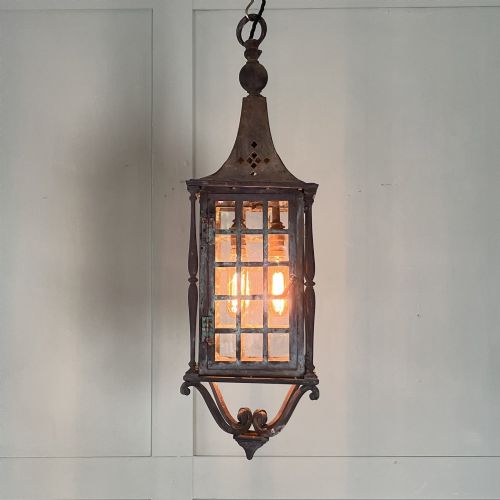
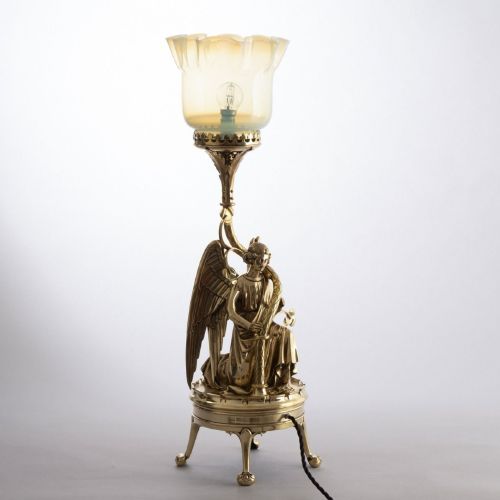
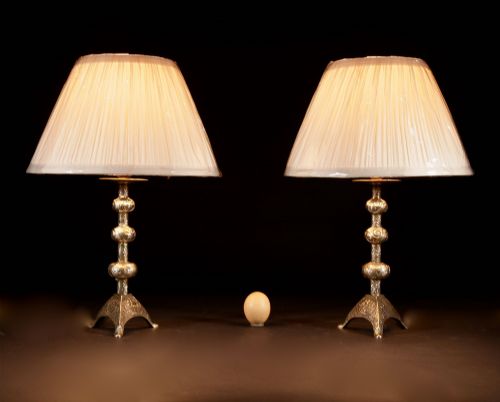
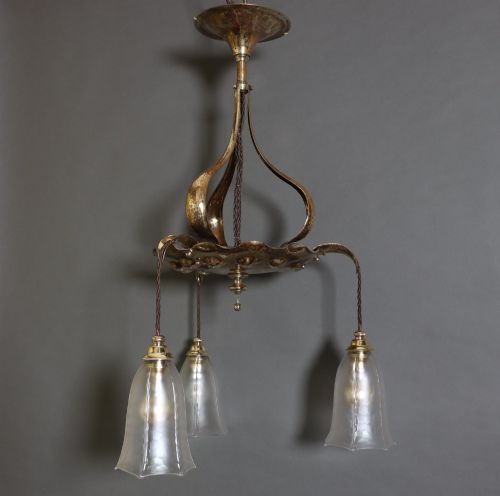
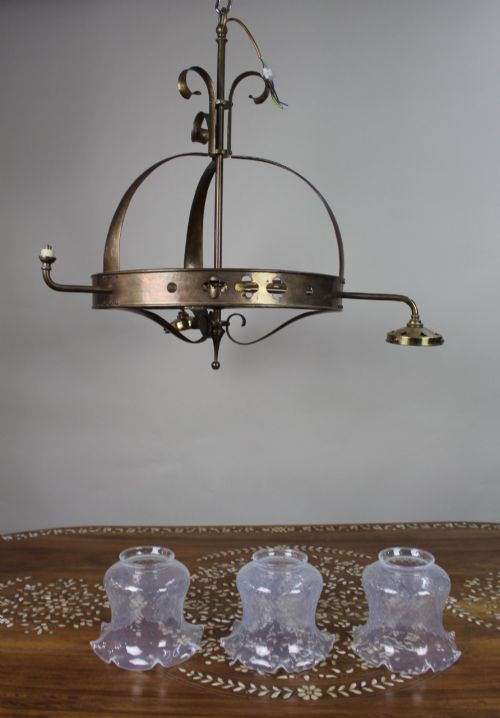
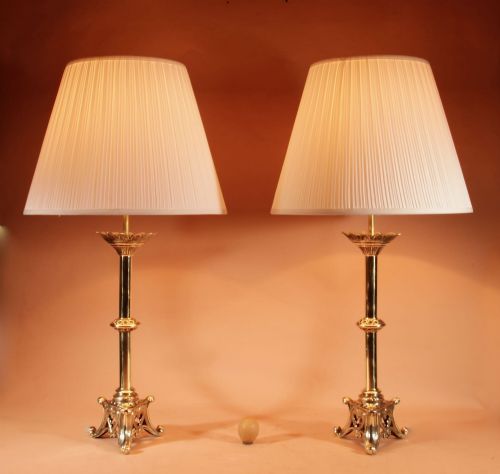
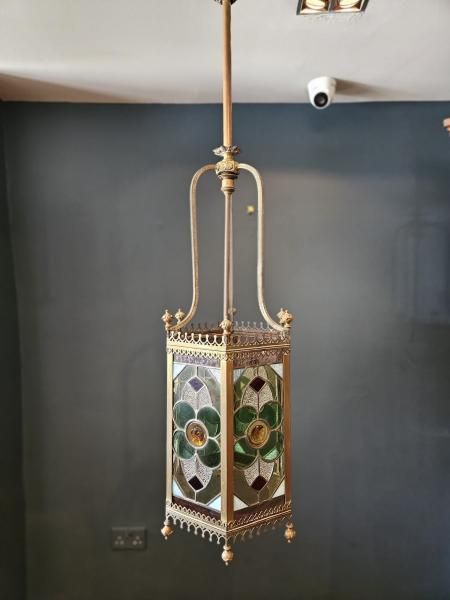
Gothic brass lighting encompasses candlesticks, lanterns, and chandeliers created across the nineteenth and early twentieth centuries. Pieces draw directly from medieval ecclesiastical design, translating heavy church fittings into domestic lighting.
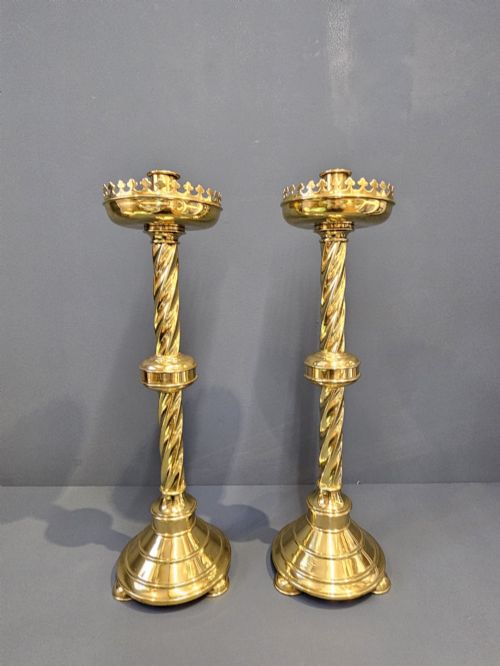
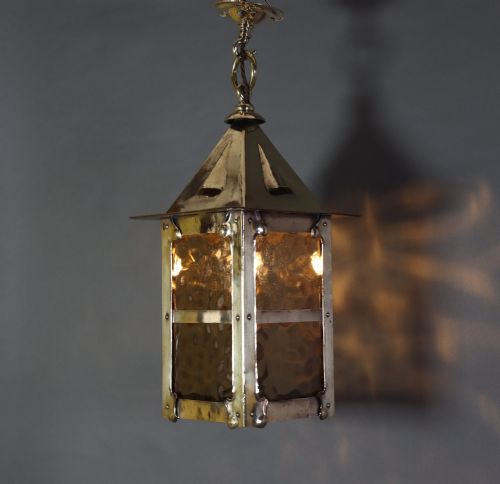
The version most commonly met on this page is the Victorian church candlestick or brass hall lantern. These items span the Victorian, Edwardian, and Arts and Crafts eras, often adapted later for electricity.
Evaluating the Metalwork
Quality rests upon the crispness of the casting and the thickness of the brass gauge. Heavy gauge metal and fine hand-chasing distinguish superior ecclesiastical candlesticks from lighter commercial reproductions.
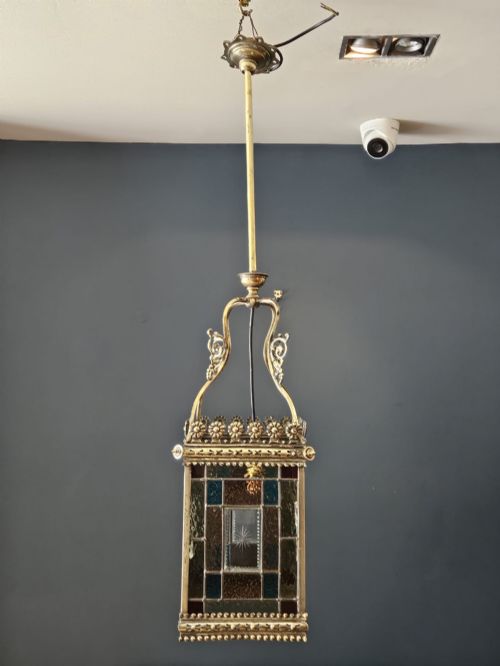
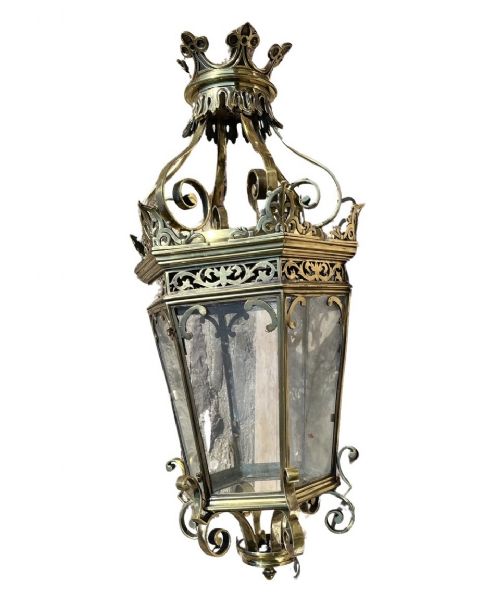
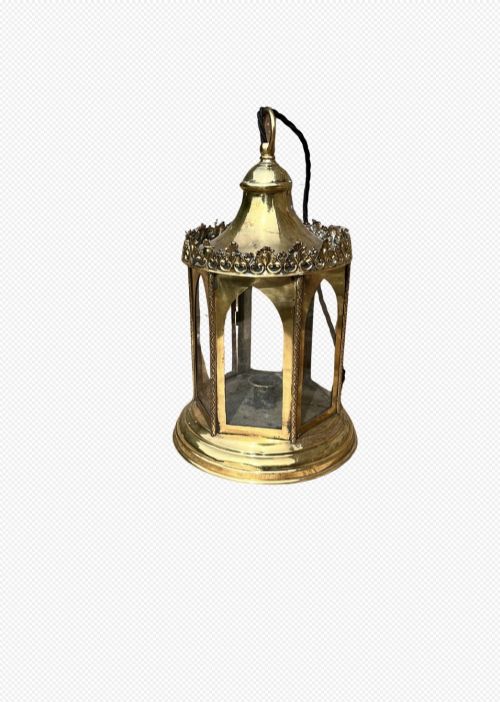
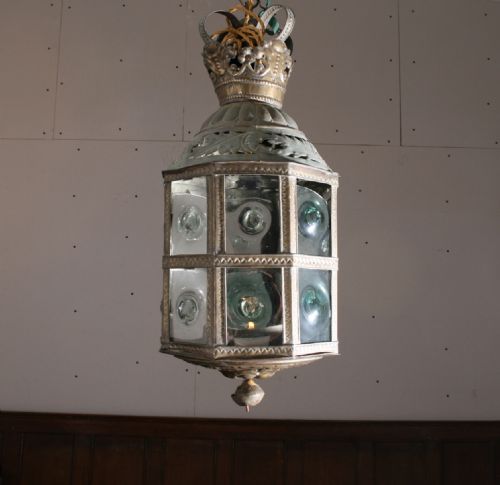
The integrity of the glass panels and the precision of the lead work determine the merit of lanterns and shade-bearing fixtures.
Listings span the nineteenth and early twentieth centuries, featuring distinct design movements from Victorian Gothic Revival to Arts and Crafts.
Wm. Tonks & Sons
The Gothic Brass Lighting Glossary
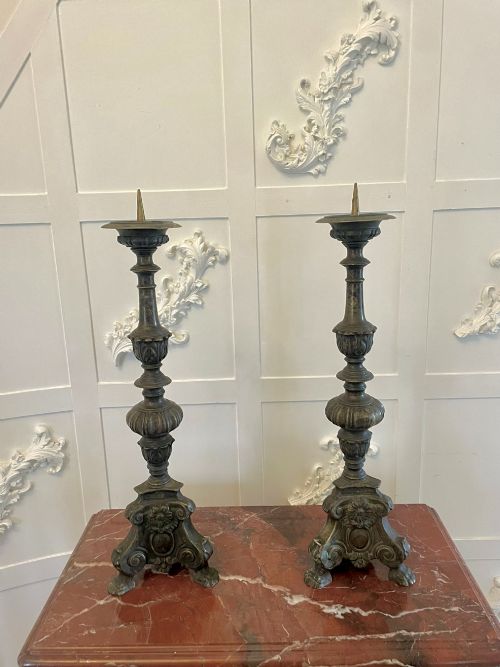
- Pricket candlestick
- A candleholder featuring a sharp central spike that secures the base of the candle rather than a socket. This form is common in church and altar metalwork.
- Gasolier
- A decorative ceiling light or chandelier designed specifically to burn coal gas before widespread electrification. Many examples are subsequently converted to electricity.
- Vaseline glass
- A type of glass containing uranium dioxide that glows under ultraviolet light, frequently utilised for lampshades and lantern panels during the Victorian period.
- Ecclesiastical
- Design elements or objects originating from or inspired by Christian church architecture and furnishings. These pieces often display pronounced Gothic Revival characteristics.
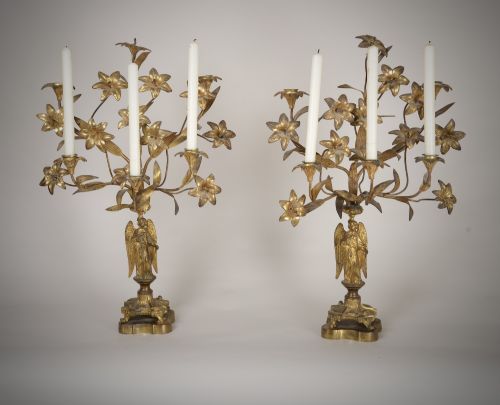
- Articulated
- Featuring movable joints or adjustable arms that permit the user to reposition the light source. This mechanical complexity appears on select nineteenth-century candelabra.
Gothic Brass Lighting: Frequently Asked Questions
How do I light my home with Gothic brass lighting?
These pieces suit spaces needing strong architectural character, such as hallways or dining rooms. Hall lanterns cast patterned shadows through leaded glass, while heavy candlesticks anchor a mantelpiece.
Many antique lamps and lanterns arrive wired for modern electricity, though pricket sticks remain designed for candles. Position them away from heavy foot traffic to protect delicate glass panels and tall arms.
How do I tell Victorian Gothic from Arts and Crafts pieces?
Victorian Gothic items lean heavily on ecclesiastical ornamentation, featuring elaborate tracery, heavy cast prickets, and rich church iconography. They evoke medieval stone cathedrals directly.
Arts and Crafts pieces focus on honest construction, simpler silhouettes, and visible hammer marks. Designers from this later movement favoured functional restraint over ornamental revival.
What is the difference between a pricket and a socket candlestick?
A pricket candlestick uses an upright metal spike to skewer the base of a wax candle, a style preserved from medieval church altars. This design holds thick, taperless candles securely.
A socket candlestick employs a cylindrical cup to cradle the candle base, which became more common for domestic table use in later periods.