


Gothic Revival Chandelier
A gothic revival chandelier brings medieval architecture and ecclesiastical presence into domestic spaces through heavy metalwork and pointed arches.
Gothic Revival Chandelier
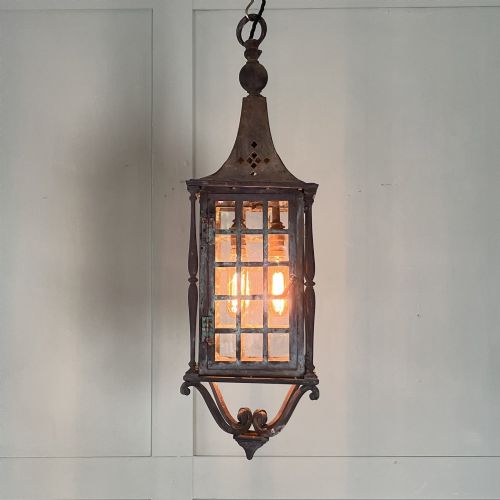
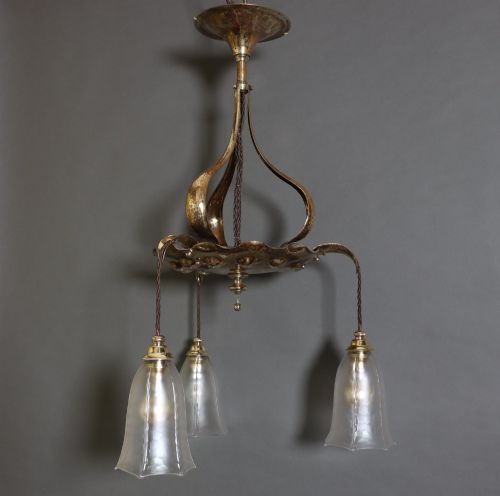
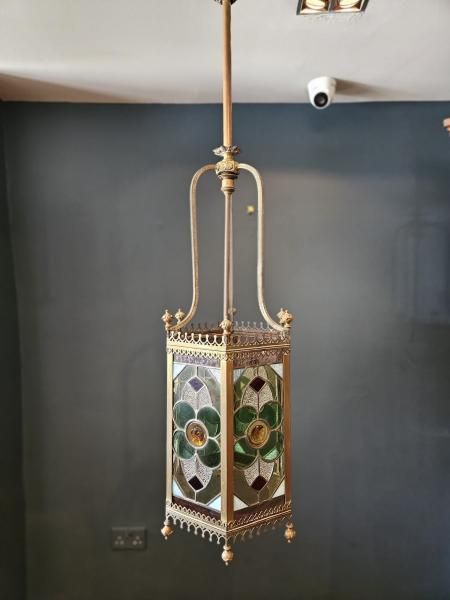
A gothic revival chandelier draws upon medieval architectural motifs, taking the form of hanging light fittings, coronas, and hall lanterns for domestic and ecclesiastical interiors. You will find pieces originating from the nineteenth century alongside later Edwardian and twentieth century interpretations of the style.
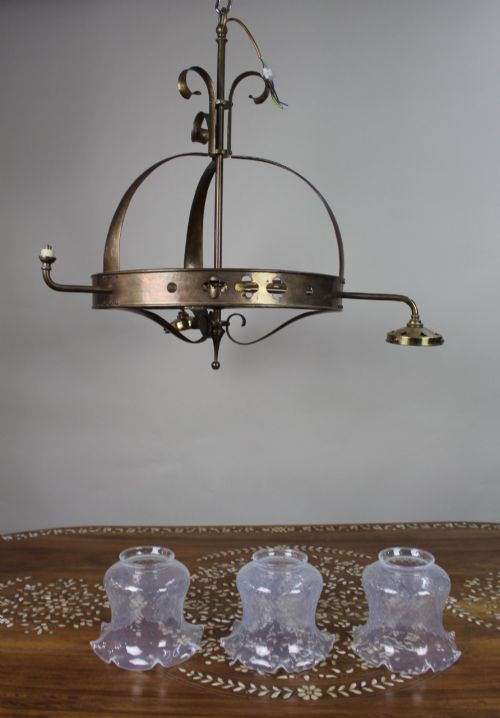
The selection ranges from large multi-branched gilt brass and bronze chandeliers to simpler brass ceiling lights and leaded glass hall lanterns. Many examples incorporate opalescent glass shades or glass globes to diffuse the light.
Makers and designers of the period adapted gothic tracery, quatrefoils, and pointed arches for domestic lighting, whether originally configured for gas or candles or electrification. The scale spans from single-bulb pendant lights up to substantial seven-light and five-branch fixtures.
How they were made
Construction relies heavily on cast and spun brass, gilt brass, and bronze, often combined with wrought iron for structural support and decorative flourishes. Metal components are frequently chased or gilded to achieve rich surface textures.
Glass elements include leaded panels, opalescent shades, and blown glass globes that soften the illumination. These materials are assembled using traditional mechanical joints, rivets, and solder appropriate to nineteenth and early twentieth century metalworking.
Gothic Revival Chandelier Retail Price Guide 2026
Typical asking prices for gothic revival chandelier among the pieces listed under this phrase on Sellingantiques today, from the lower quarter to the upper quarter. They describe what is for sale here now, not the wider market.
What varies in quality
Quality rests in the crispness of the metal casting and the depth of the chasing on brass and bronze components. Finer pieces display sharply defined gothic tracery and substantial metal gauges rather than thin pressed sheet metal.
The integrity of the glass elements and the retention of original gilding or patination distinguish superior examples. Finer chandeliers also exhibit harmonious proportions across multiple branches and well-integrated suspension hardware.
Joseph Wilmotte
The Gothic Revival Chandelier Glossary
- Gothic Revival
- An architectural and decorative style drawing inspiration from medieval design, featuring pointed arches and structural verticality. This movement dominated nineteenth century design across architecture and decorative arts.
- Corona
- A circular crown-shaped light fitting suspended by chains, historically adapted from church lighting. These fixtures often hold multiple candles or bulbs around a central ring.
- Gasolier
- A light fixture designed specifically for gas lighting before the widespread adoption of electricity. Many survive converted to electric wiring.
- Opalescent Glass
- Glass containing particles that create a milky, translucent appearance with subtle colour shifts. It diffuses light gently without harsh glare.
- Leaded Glass
- Pieces of glass held together by lead cames to form geometric or pictorial patterns. This technique originates in medieval stained glass windows.
Gothic Revival Chandelier: Frequently Asked Questions
How do I clean a brass chandelier?
Dust regularly with a soft dry cloth to prevent grime accumulation on the metalwork and glass.
Avoid abrasive polishes that strip historical patina, using only mild soapy water on glass components if necessary.
Can these chandeliers be rewired for modern use?
Most antique fixtures accept modern electrical wiring safely when handled by a qualified specialist. Internal channels usually accommodate standard modern flex cables.
Original brass sockets and candle tubes can often be retained while updating the internal wiring for safety.
What ceiling height do I need?
Substantial multi-branch chandeliers require high ceilings to allow proper clearance beneath the lowest hanging point. Hall lanterns and pendant lights suit lower residential rooms.
Measure the drop of the fixture including suspension chains before hanging in hallways or above dining tables.
How do I date a brass light?
Examine the construction methods, screw threads, and material composition to establish the manufacturing period. Nineteenth-century pieces often show hand-finishing and heavier casting.
Stylistic shifts towards Arts and Crafts or Art Deco provide clues for pieces dating around nineteen hundred and later.