


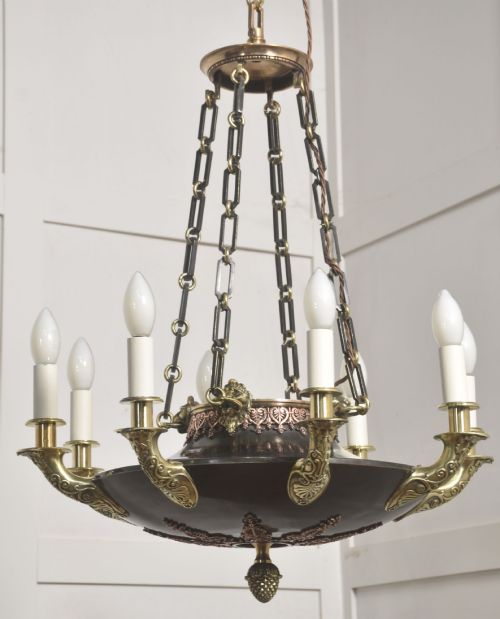
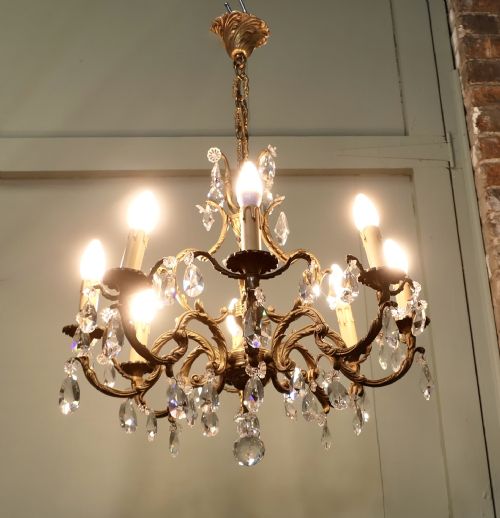
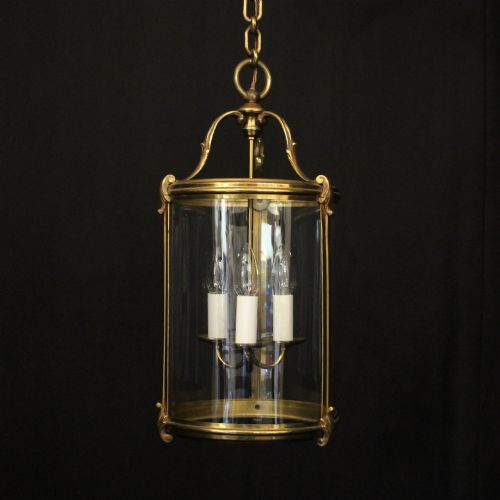
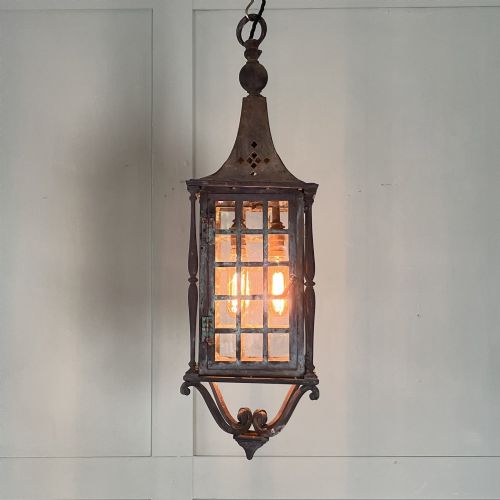
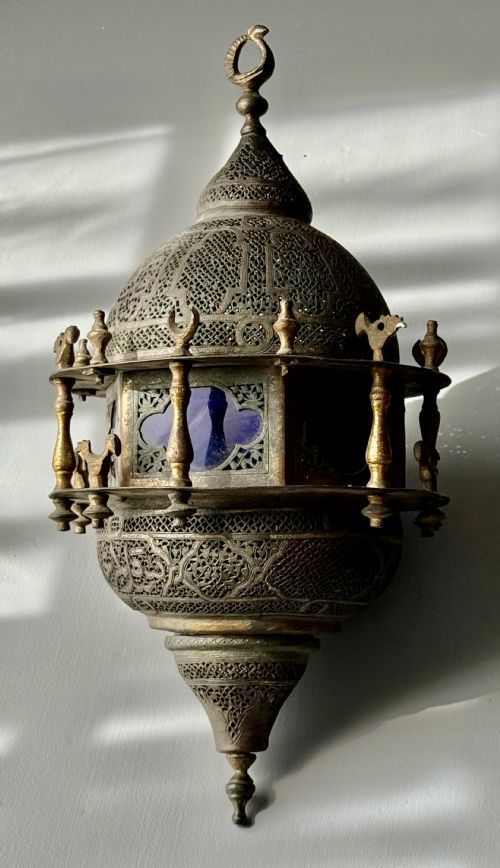
Brass Hanging Pendant
These brass hanging pendant lights bring functional overhead illumination and decorative presence to hallways and principal rooms, drawing on centuries of metalwork traditions.
Brass Hanging Pendant
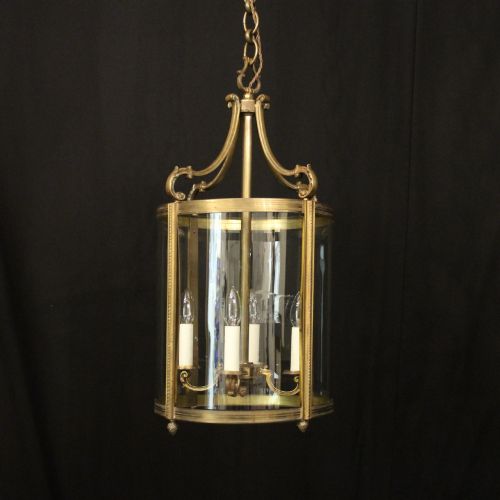
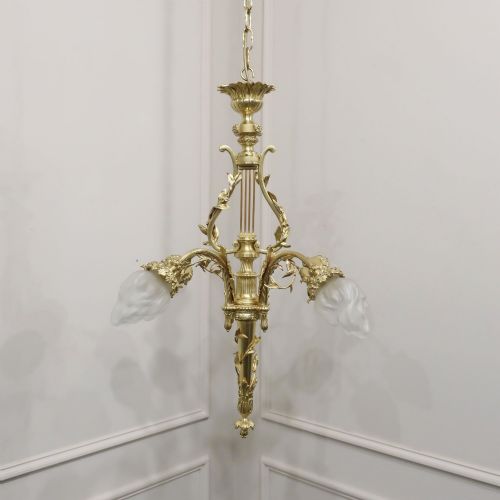
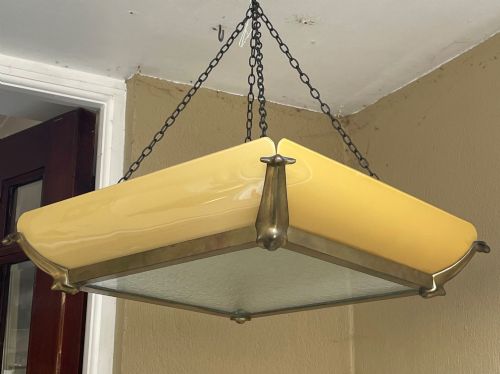
A brass hanging pendant encompasses various suspended ceiling fixtures designed to illuminate interiors, ranging from simple globes to multi-armed chandeliers and enclosed hall lanterns. The selection on this page relies heavily on French and English designs spanning the Victorian, Edwardian, and Art Deco periods, alongside Arts & Crafts interpretations.
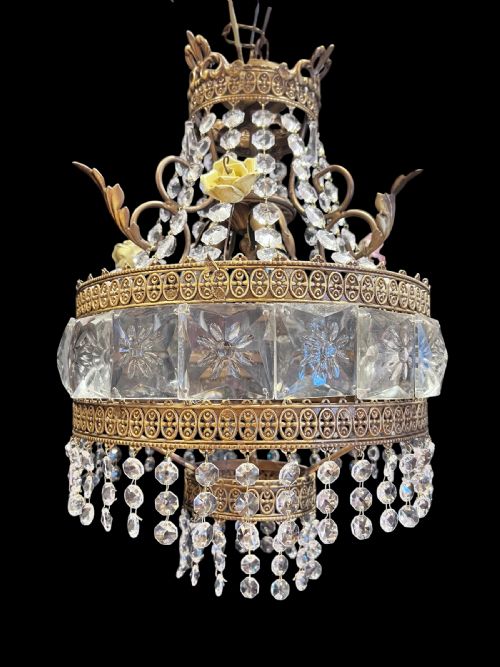
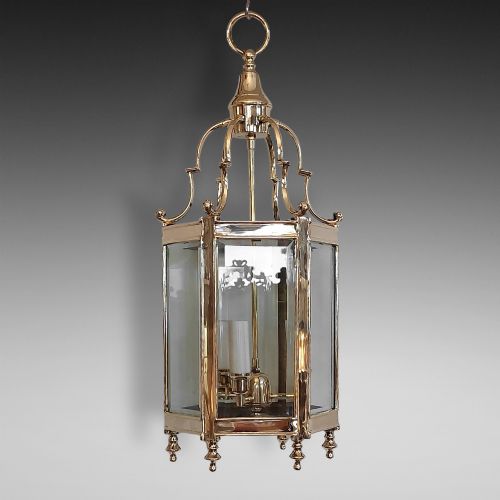
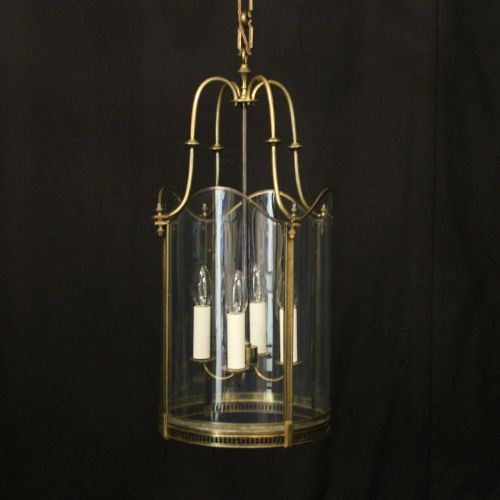
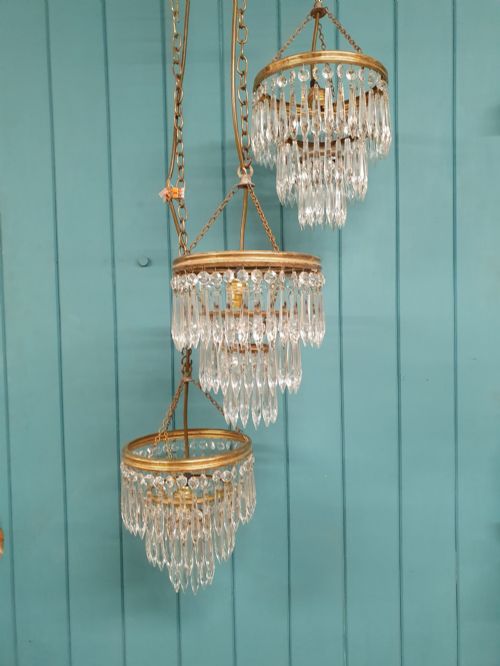
Buyers frequently encounter hexagonal and convex glass lanterns framed in brass or gilt bronze, as well as multi-light chandeliers embellished with cut glass, crystal lustres, or porcelain elements. These fixtures serve as central lighting solutions for entrance halls, stairwells, and reception rooms.
Dating ranges from the nineteenth century through the early twentieth century, specifically covering decades like 1900, 1910, 1920, and 1930. The assortment includes regional variations such as Moorish pierced brass work, Italian styles with floral details, and American industrial pieces.
Materials and Construction
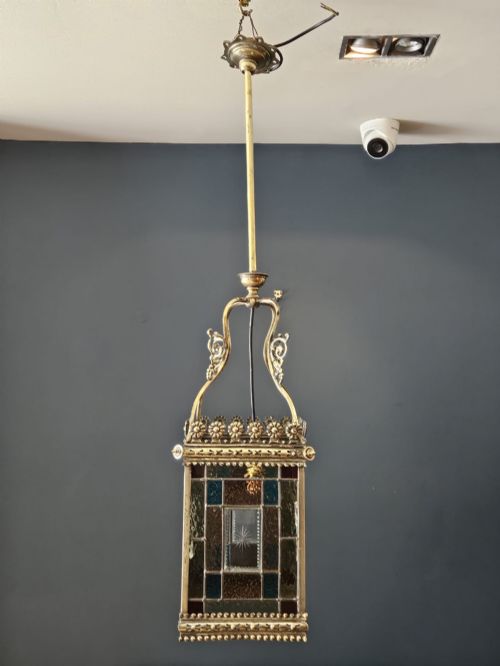
Makers utilised cast, pierced, and gilt brass as the primary structural metal for frames, lanterns, and chandelier bodies, frequently combining it with copper, bronze, and gilt bronze. This metal framework supports various glass components, including lead glass, bevelled glass, cut glass, opalescent glass, and moonstone shades.
Decorative detailing incorporates specialised techniques such as acid etching on glass panels, hand-pierced metalwork in Moorish styles, and the integration of crystal lustres or porcelain flowers. Frames are assembled with structural joints, chains, and ceiling caps suited to support the weight of multi-light configurations.
The listings on this page include pieces from the 19th Century, Edwardian era, and the 1920s and 1930s, utilising brass, glass, gilt bronze, and copper.
Distinctions in Quality
Quality in a brass hanging pendant rests upon the crispness of the metal casting, the weight of the brass or gilt bronze frame, and the complexity of hand-finishing details like piercing or engraving. Superior examples feature substantial cast elements and thick, well-bevelled or etched glass panes rather than thin pressed metal and plain glass.
The integrity of the hanging mechanism, the quality of the crystal or cut glass components, and the purity of the gilding elevate finer pieces from standard production items. Provenance and adherence to specific design movements, such as Arts & Crafts or French Neoclassical, further differentiate high-tier examples.
The Brass Hanging Pendant Glossary
- Plafonnier
- A ceiling-mounted or closely suspended light fixture featuring a glass bowl or shade held within a metal mount.
- Gilt bronze
- Bronze metal that has been treated with a thin layer of gold or gold-coloured alloy to impart a rich, reflective surface finish. This material appears frequently in French chandeliers and lanterns.
- Lead glass
- Glass manufactured with lead oxide to increase clarity, weight, and brilliance, often utilised in heavy lantern panels and cut glass shades.
- Lustre
- A cut crystal pendant or drop suspended from a chandelier to refract light and enhance visual sparkle.
- Convex lantern
- A hanging light fixture featuring curved glass panels that bulge outward, common in French hall lantern designs from the early twentieth century.
- Ormolu
- Gilt bronze ornamentation applied to furniture and lighting fixtures, providing a bright golden appearance associated with neoclassical and formal styles.
Brass Hanging Pendant: Frequently Asked Questions
Where should I hang a brass pendant light?
These fixtures suit entrance halls, high-ceilinged landings, and principal reception rooms where a suspended light source provides both illumination and a decorative focal point. Hall lanterns work particularly well in narrow corridors and vestibules.
Larger multi-light chandeliers and star-shaped pendants require sufficient vertical clearance to hang above walking height while remaining visually anchored to the room proportions.
How do I identify an Edwardian lantern?
Edwardian pieces often feature lighter brass frames, geometric shapes like hexagons, and clean lines that transition away from heavy Victorian ornamentation. They frequently incorporate clear or bevelled glass panels.
Makers during this period also drew inspiration from earlier styles while adopting simpler mounting hardware suited to early twentieth-century domestic interiors.
Can these antique lights be rewired for modern wiring?
Most antique brass fixtures can be adapted to meet current electrical standards by qualified professionals using compatible lamp holders and modern internal wiring. The original metal frame and glass components remain undisturbed during this process.
Buyers should consult a specialist electrician to ensure the suspension chain and ceiling canopy safely support the weight of heavier bronze and crystal pieces.