
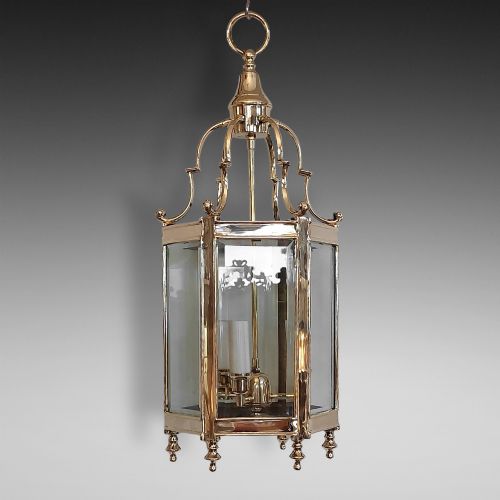
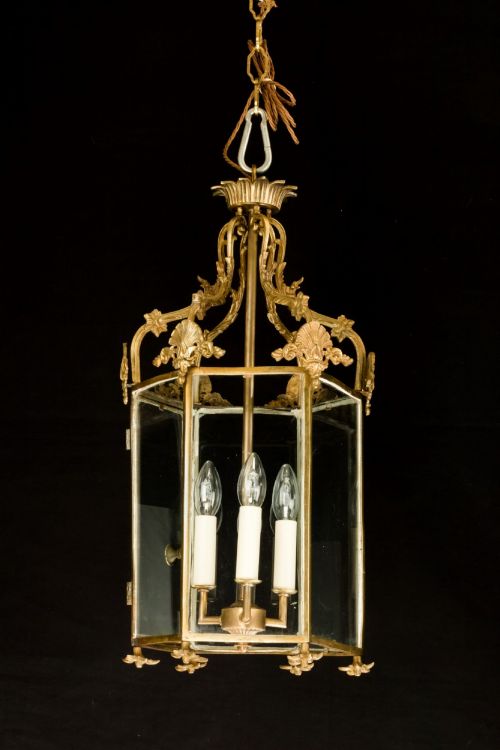
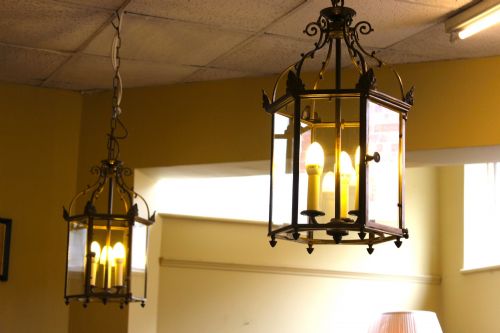
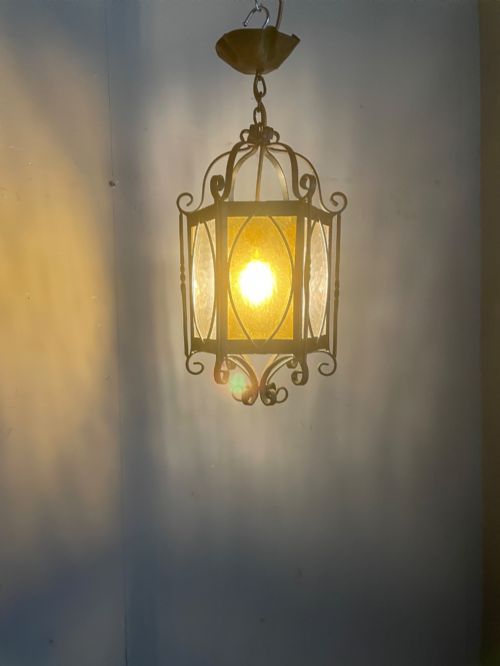


Hexagonal Glass Lantern
These hexagonal glass lantern fixtures bring period character and practical illumination to a hallway.
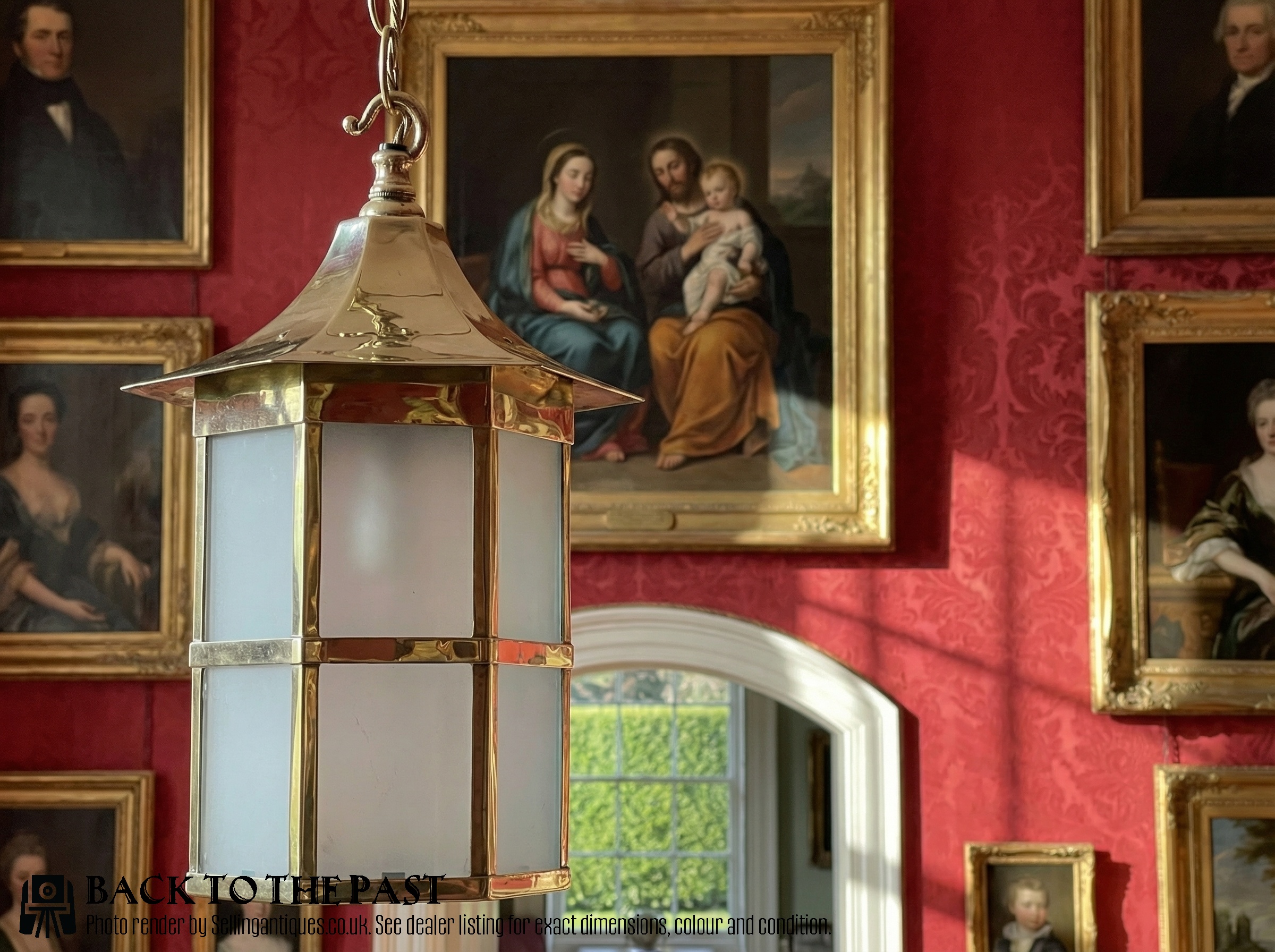
Hexagonal Glass Lantern
A hexagonal glass lantern is a six-sided hanging light fixture designed primarily for entrance halls, vestibules, and stairwells. The evidence shows these pieces spanning the nineteenth century through the 1930s, encompassing Edwardian, Victorian, and early twentieth-century examples.
The most common iterations on this page pair brass or bronze frames with glazed panels, functioning as ceiling lights, pendant lights, or dedicated hall lanterns. Stylistic influences across the inventory include Neo-Classical, Gothic Revival, Arts and Crafts, and French Chateau designs.
Makers and designers drew on historical vocabularies, producing pieces that range from restrained Edwardian brass work to elaborate gilt brass rococo styles of Regence period design. Buyers encounter both single hanging lights and matched pairs suited to larger spaces.
Materials and construction methods
Frames are constructed from metals such as brass, bronze, copper, wrought iron, steel, and gilded bronze, joined to support multiple glazed panels. The glass itself varies from standard panes to bevelled glass, amber glass, and stained glass.
Construction techniques rely on traditional metalworking, casting, and soldering to secure the six-sided geometry of the frame around the internal light fittings. Gilded finishes and patinated metal surfaces demonstrate the decorative secondary treatments applied to the structural frames.
Hexagonal Glass Lantern Retail Price Guide 2026
Typical asking prices for hexagonal glass lantern among the pieces listed under this phrase on Sellingantiques today, from the lower quarter to the upper quarter. They describe what is for sale here now, not the wider market.
One nineteenth-century copper lantern incorporates a green man motif, bringing a touch of woodland myth straight to the hallway ceiling.
Distinctions in execution and design
Quality in a hexagonal glass lantern rests upon the weight and casting finish of the metal frame, alongside the precision of the glazed panel joinery. Substantial bronze or brass castings with crisp decorative detailing distinguish finer pieces from simpler utilitarian mountings.
The sophistication of the stylistic execution also sets examples apart, ranging from plain functional hall lights to ornate pieces incorporating cast brass ornament, bevelled glass panes, or specialised period detailing such as green man copper motifs.
The Hexagonal Glass Lantern Glossary
- Bevelled glass
- Glass panes featuring angled, polished edges that refract light and add a decorative dimension to the lantern sides.
- Hall lantern
- A hanging light fixture specifically proportioned and positioned for entrance hallways and corridors.
- Gilded bronze
- Bronze metal treated with a thin layer of gold or gold-coloured leaf to create a rich, reflective surface finish.
- Neo-Classical
- A decorative style drawing inspiration from the classical art and culture of ancient Greece and Rome.
- Wrought iron
- Iron beaten into shape by hand with tools, yielding a sturdy and textured dark metal frame.
Hexagonal Glass Lantern: Frequently Asked Questions
Where should I hang a hexagonal glass lantern?
These fixtures suit entrance halls, vestibules, and stairwells where downward illumination and six-sided symmetry create a distinct focal point.
Their proportions work best in spaces with sufficient ceiling height to allow the pendant light to hang clear of foot traffic.
How do I date a brass lantern?
Dating relies on examining the construction methods of the metal frame, the fixings, and the style of decoration present.
Pieces from the nineteenth century often display heavier cast components, whilst Edwardian and later examples introduce lighter brass framing and specific stylistic revivals.
Are these lanterns suitable for modern wiring?
Most antique hanging lights require rewiring to meet current electrical standards before installation in a modern home.
Buyers should consult a qualified electrician to adapt the internal fittings safely while preserving the original metal and glass structure.