


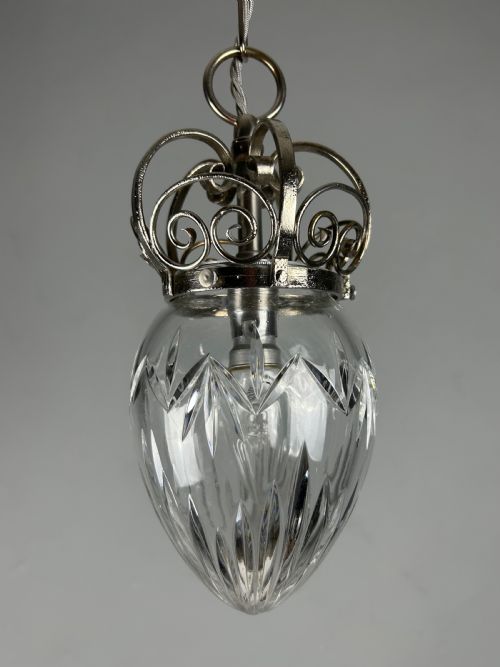


Silver Hanging Light
A silver hanging light illuminates a room with period character, offering a suspended fixture crafted from metal and glass.
Silver Hanging Light
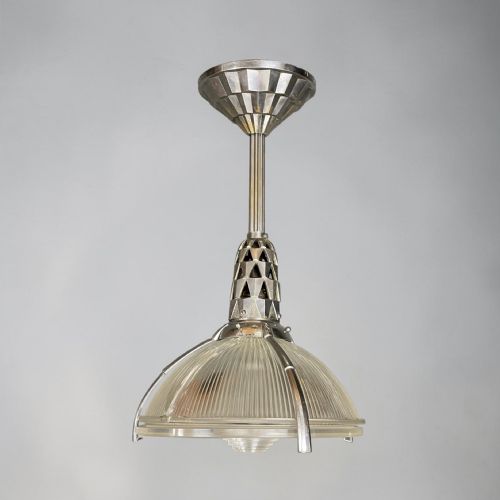
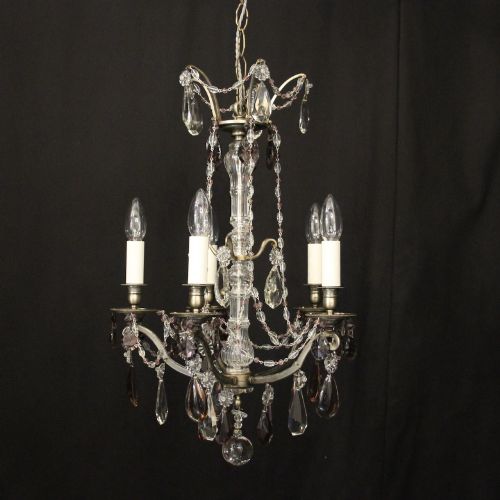
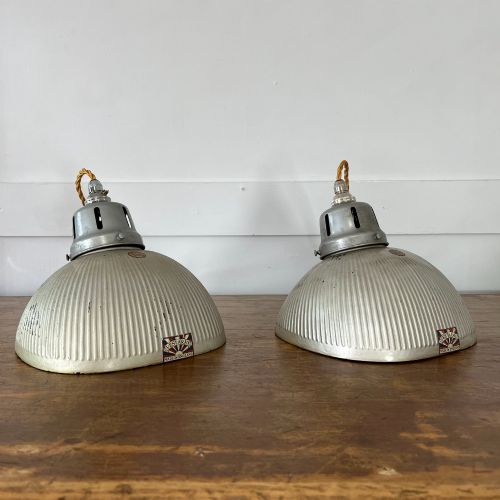
A silver hanging light encompasses a variety of suspended ceiling fittings, including chandeliers, lanterns, and pendant lights. These pieces originate from periods spanning the mid-nineteenth century through the 1930s, incorporating Victorian, Edwardian, and Art Deco designs.
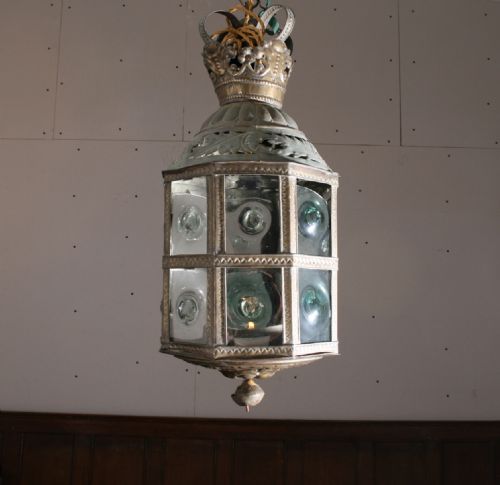
The most frequent examples on this page are French lanterns and chandeliers dating from the 1920s and 1930s. Alongside these, English pendant lights and Gothic revival fixtures appear regularly.
Buyers look for these ceiling lights to provide functional illumination while introducing historical metalwork and decorative glass into an interior. Each piece hangs from above, casting light downward through cut glass, bullseye glass, or open frames.
How they were made
Maker workshops constructed these fixtures using robust metals such as brass, steel, bronze, and silver-plated copper, often applying silver gilding or silvered bronze finishes to create reflective surfaces. Structural components like frames and arms were cast, forged, or soldered together to support multiple lights.
Glass elements were integrated through hand-blowing techniques, producing bullseye panes, or through precision cutting to form faceted pendants and shades. Mercury mirrored glass also appears, providing an alternative reflective medium for diffusing light.
Materials documented across these ceiling fixtures include brass, steel, silvered bronze, chrome, and hand-blown bullseye glass.
What varies in quality
The calibre of a silver hanging light depends heavily on the execution of its metalwork and the complexity of its glass components. Heavier cast bronzes and substantial steel and brass frames separate robust architectural pieces from lighter constructions.
Finishing techniques also dictate standard, particularly the depth of silver gilding, the presence of hand-blown or heavy cut glass, and the sophistication of period styling such as French neoclassical or Art Deco geometry.
Émile-Jacques Ruhlmann·VESTARAY
The Silver Hanging Light Glossary
- Chandelier
- A branched ceiling fixture designed to hold multiple lamps or candles. These units distribute light across a wider area.
- Lantern
- An enclosed hanging light fitted with glass panels around a metal frame. They protect the internal light source from drafts.
- Pendant light
- A single light fixture suspended from the ceiling by a cord, chain, or rod. They direct illumination downward onto specific spaces.
- Silvered bronze
- Bronze treated with a silver coating to combine a sturdy metal base with a bright reflective finish. This material resists corrosion while maintaining a pale metallic sheen.
- Bulls eye glass
- Thick, round blown glass panes featuring a central circular distortion left by the pontil rod. They diffuse light unevenly across the room.
Silver Hanging Light: Frequently Asked Questions
How do I hang a silver hanging light?
Suspension typically relies on a matching chain or rod secured to an appropriate ceiling ceiling hook or joist. Weight distribution varies between smaller single pendants and multi-branch chandeliers.
Electrical wiring runs down through the suspension mechanism. Professional installation ensures the fixture hangs securely at the correct height.
Where do I place a hanging lantern?
Hallways, entryways, and high-ceilinged rooms suit hanging lanterns well because their enclosed glass frames direct light outward and downward. They create an immediate focal point upon entering a space.
Placement should account for door swings and foot traffic clearance. Scale remains important in smaller rooms.
How do I clean silvered bronze and glass?
Metal surfaces require gentle dusting with a soft cloth to preserve silver gilding and silvered bronze finishes. Abrasive cleaners strip away historic platings.
Glass panels and cut pendants can be removed where possible or wiped carefully with a damp cloth. Mild soap safely clears dust from hand-blown panes.
How do I identify an Art Deco light?
Art Deco fixtures from the 1920s and 1930s feature geometric lines, chrome plating, and streamlined forms. They often pair metal with stark glass shades.
Earlier Victorian and Edwardian pieces display more ornate scrolling, floral motifs, or Gothic revival details. Comparing the silhouette clarifies the era.